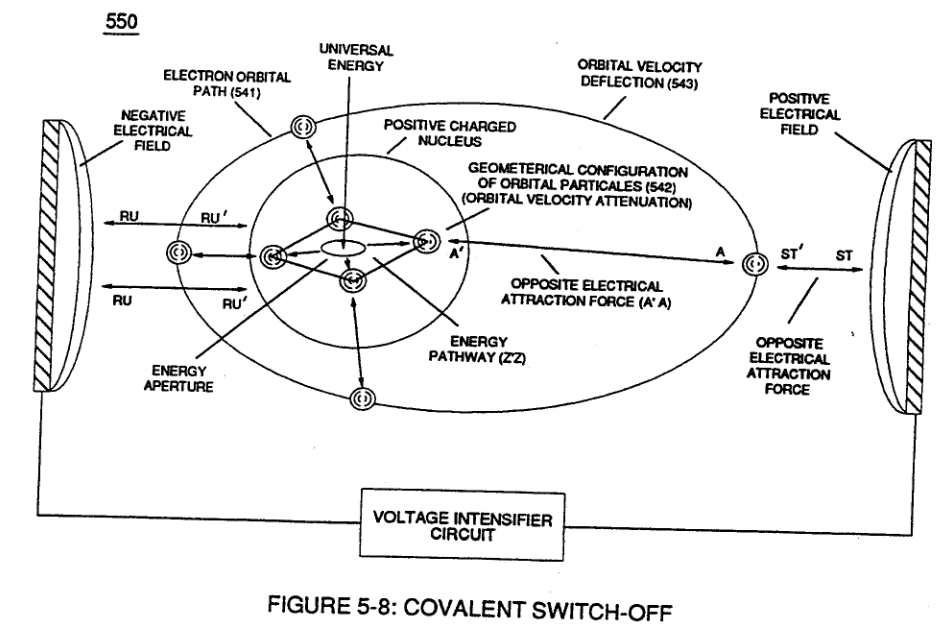
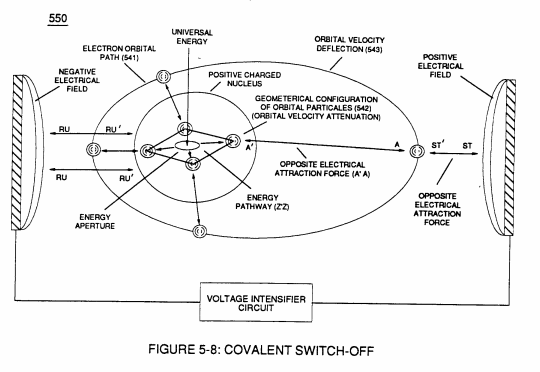
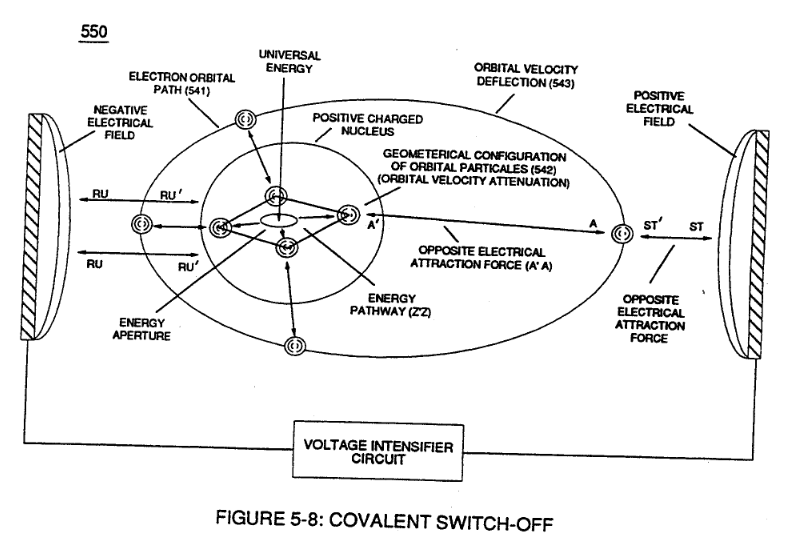
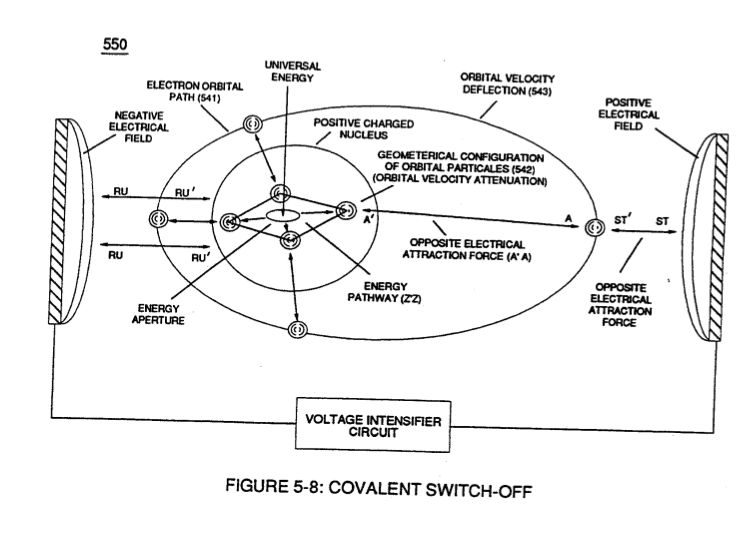
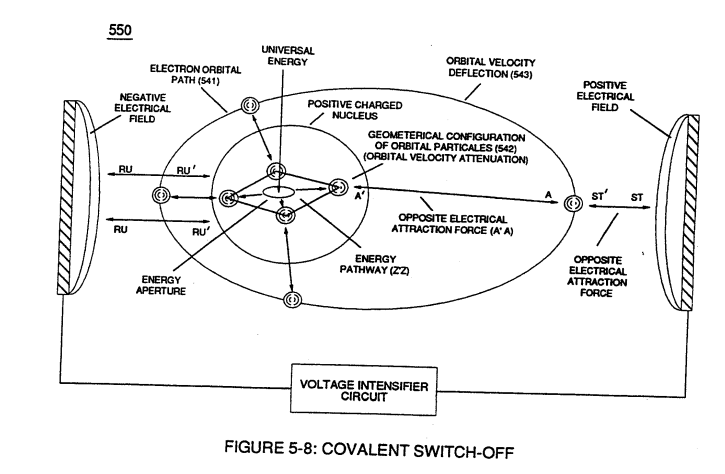
Figure (5-8)
Covalent Switch-off
Also written Interlocking Cap S
How it is written
Drawings 10
-
Captioned as this figure · Differential Air-Gas Inlet Control
-
Figure (5-8) · Energy Pumping Action
-
(550) of Figure (5-8) · In Application of Usage
-
(550) of Figure (5-8) · Covalent Switch-Off
-
(7) of Figure (5-8) · Energy Aperture of the Atom
-
(550) of Figure (5-8) · Solar Energy Actuator
-
(550 of Figure 5-8) · 8-4 - State Space (Sp)
-
"Electrovalent Switch-off" phenomenon (550) of Figure (5-8) · WFC Exhaust Air Reclaimer
-
hydrogen energy aperture (7) of (550) of Figure (5-8) · Optical Thermal Lens
-
Captioned as this figure · Degaussing Radioactive Material
On this figure 7
- 7 Energy Aperture
- 49 Voltage Pulse frequency
- 542 Sub-Particle
- 550 —
- Poe Particle Oscillation
- V Voltage Amplitude
- Vpp Voltage Peak Potential
Where it is named · 26
Energy Pumping Action 2×
-
Figure (5-8)
In Application of Usage 2×
-
(550) of Figure (5-8)
Covalent Switch-Off 2×
-
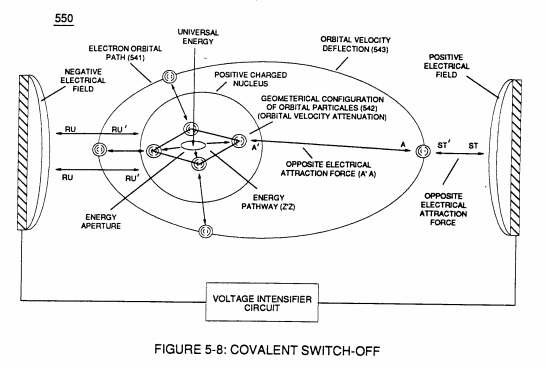
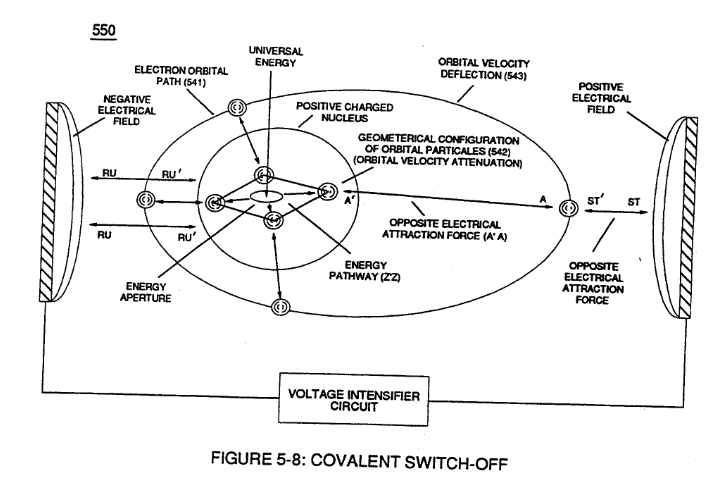
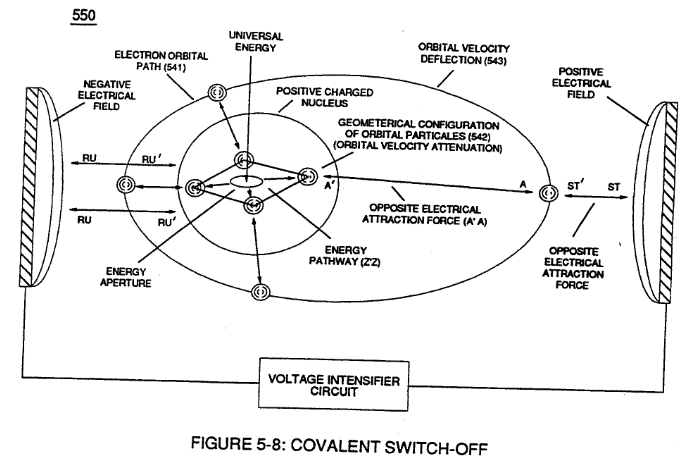
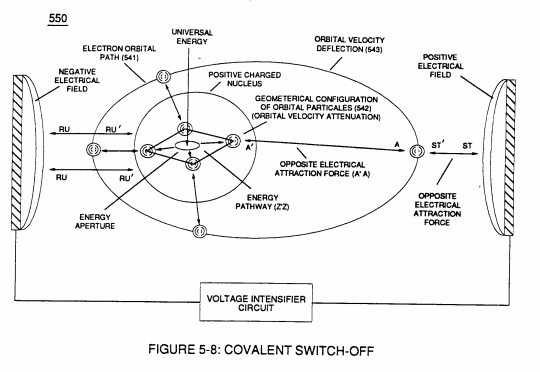
which, when occurring, directly weakens the covalent bonding of the water molecule (q-q') by attenuating the electromagnetic fields of each atom Structure of the water molecule (210) of Figure (3-27) (Memo WFC 422DA) being subjected to and undergoing Electrical Polarization Process (160) of Figure (3-26) (Memo WFC 422DA), as further illustrated in (550) of Figure (5-8).
-
(550) of Figure (5-8)
Energy Aperture of the Atom 2×
-
Energy Aperture (7) of Figure (5-8) exists in all atomic structures (individual atoms) and functions as a one-way energy valve when the Incoming Energy Vortex transfers a given or discrete amount of "Universal Energy" (having higher en …
-
(7) of Figure (5-8)
Solar Energy Actuator 2×
-
(550) of Figure (5-8)
8-4 - State Space (Sp) 5×
-
Electrical Attraction Force intensity (RR' - SS' as to RU/RU' - ST/ST' as to 550 of Figure 5-8) at Peak Voltage Potential (Vpp) is either increasing or decreasing or remaining constant as to Voltage Peak Excursion Point "P" trace-position which scans the exact Pulse Wave-Form (66- 583/67-602) being produced, as illustrated in (780B) of Figure (8-2).
-
… al (Vpp) then greater atomic interaction (585) of Figure (8-1) (see WFC memo 424 titled Atomic Energy Balance of Water, once again) occurs when particle oscillation (Poe) of deflection of atomic mass (see 550 of Figure 5-8) (atom elongation) is electrically stressed farthest from the point of state of atomic-equilibrium by way of opposite Voltage Electrical Attraction Force (RR' - SS' as to RU/RU' - ST/ST'), as further …
-
… n greater atomic interaction (585) of Figure (8-1) (see WFC memo 424 titled Atomic Energy Balance of Water, once again) occurs when particle oscillation (Poe) of deflection of atomic mass (see 550 of Figure 5-8) (atom elongation) is electrically stressed farthest from the point of state of atomic-equilibrium by way of opposite Voltage Electrical Attraction Force (RR' - SS' as to RU/RU' - ST/ST'), as further …
-
(550 of Figure 5-8)
WFC Exhaust Air Reclaimer 3×
-
… ircuit (110) of Figure (4-9) is pulsed sensitive (49a xxx 49n) to tune-in to the dielectric properties of the airborne gas-molecule to not only activate Covalent Switch-Off phenomenon (550) of Figure (5-8) by restricting amp influxing to cause "Electrical Stress" across capacitor gap (Cp) (690) of Figure (7-6) but, also, elongates the electrically polarized Nitric Oxide NO molecule to change the time s …
-
Air purification by atomic deflection (900) of Figure (9-1) is possible since airborne atoms are neither destroyed nor created during exposure to "Voltage" pulse-stimulation (E11/E12 ... 49a xxx 49n) propagating "Electrical Stress" pulse-waves (Mm'- ASS') which, in turn, induces "Electrovalent Switch-off" phenomenon (550) of Figure (5-8).
-
"Electrovalent Switch-off" phenomenon (550) of Figure (5-8)
Optical Thermal Lens 2×
-
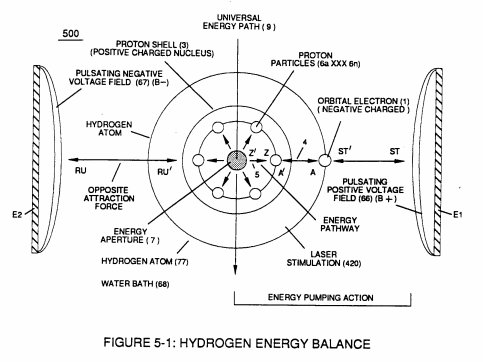
The Energy Pumping Stage (520) of Figure (5-3) as to (500) of Figure (5-1) attenuates the hydrogen energy aperture (7) of (550) of Figure (5-8) when applied Opposite Voltage Potential (Va xxx Vn) (49a xxx 49n) (B+/B-) produces pulsating Electrical Stress Wave-form (opposite electrical attraction force) (RU/RU' - ST/ST'a xxx RU/RU' ST/ST'n) during Pulsing Operations.
-
hydrogen energy aperture (7) of (550) of Figure (5-8)
A Technique Called "Easer" 2×
-
(550) of Figure (5-8)
Degaussing Radioactive Material 1×
-
… city of the atom orbiting sub-particles inside the nucleus of the atom [see WFC Figure (10-6) titled “Voltage Tickling of State,” WFC Memo (429) titled “Optical Thermal Lens” as to WFC Figure (5-8) titled “Covalent Switch-off,” WFC Memo (424) titled “Atomic Energy Balance of Water”] to become unbalanced by causing a change or deflection to take place in the orbital pathways of the moving particles ... …
WFC Atomic Degaussing Process 1×
-
… ting within the nucleus of the atom functions as a “Energy Regulator” (orbital velocity attenuator) since the overall electrical bonding force (zz') of the orbital sub-particle(s) (542) of Figure (5-8) (geometrically grouped together) is directly linked to the Energy Aperture (7) by way of electrical intensity (qq') (electrical attraction force that exists between Opposite charged mass entities) wh …
State of Unbalance 2×
-
Once absorbed, the atom reaches a “State of Unbalance” when the orbital sub-particles pathway (s) (542) of Figure (5-8) are deflected (moved) to a higher energy state which, in turns, induces a change in the orbital pathway (s) from an circular to an elliptical configuration since the orbiting sub-particles (542) are regrouped to from a different and distorted arrangement... …
-
To achieve and bring about atomic decay in an instant of time, one needs only to expose the unstable atom to a high pulsating “Electrical stress” across the individual radioactive atom by way of opposite voltage potential, as so illustrated in (550) of Figure (5-8) by the use of WFC Voltage Intensifier Circuit as so defined in WFC memo 426 titled “VIC Matrix Circuit.”