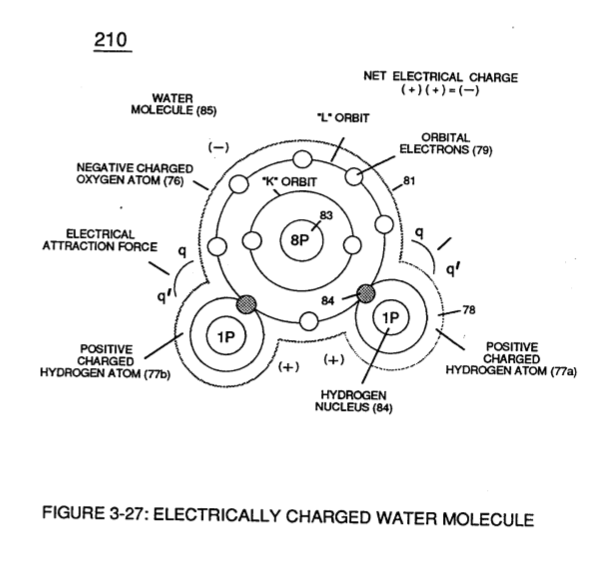
Figure (3-27)
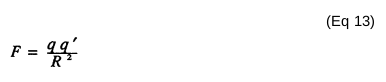
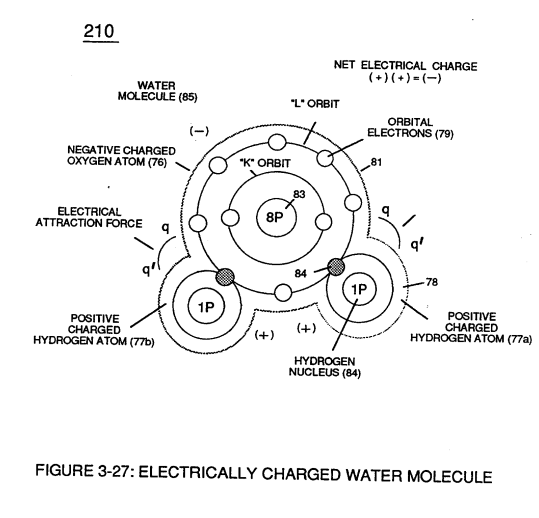
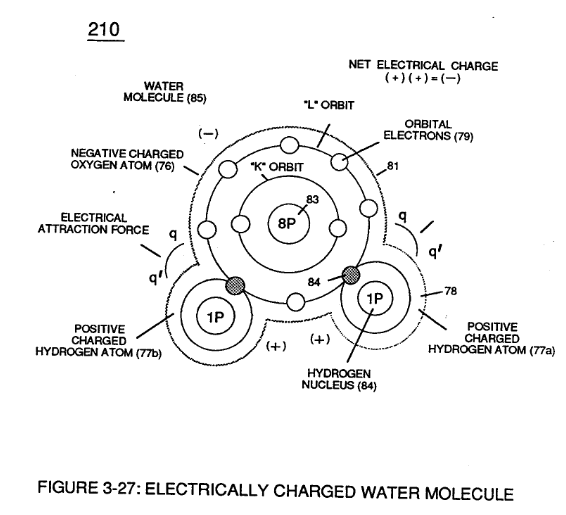
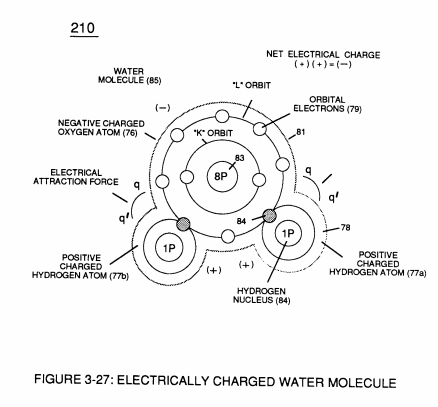
Electrically Charged Water Molecule
How it is written
- (3-27) 16×
Drawings 7
-
Figure (3-27) · Voltage Intensifier Circuit (60)
-
Captioned as this figure · Electrically Charged Water Molecule
-
Captioned as this figure · WFC 422DA - Illustrations
-
Figure (29) · Water Fuel Injector (Taper Resonant Cavity Chamber)
-
(210) of Figure (3-27) (Memo WFC 422DA) · Covalent Switch-Off
-
(210) of Figure (3-27) · Inductance (FL)
-
(210) of Figure (3-27) · Electrovalent Bonding
On this figure 10
- 65 Voltage Potential
- 76 Oxygen Atom
- 77 Hydrogen Atom
- 78 Voltage Expander Coils
- 79 Electrons
- 81 Negative Electrical Charged
- 84 Negative Charged Covalent Electrons
- 85 Water Molecule
- 190 Voltage Intensifier Circuit
- 210 Water Molecule
Where it is named · 16
Voltage Intensifier Circuit (60) 2×
-
Figure (3-27)
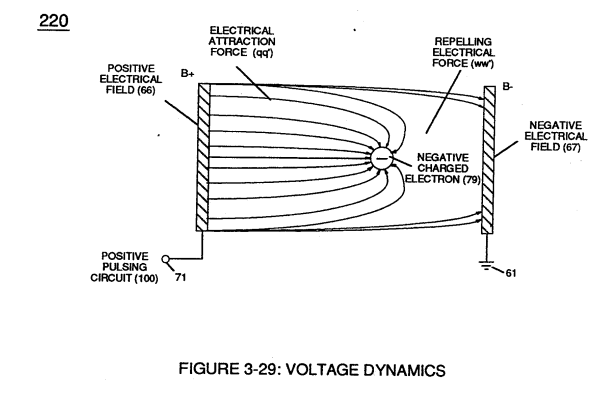
Voltage Dynamics 1×
-
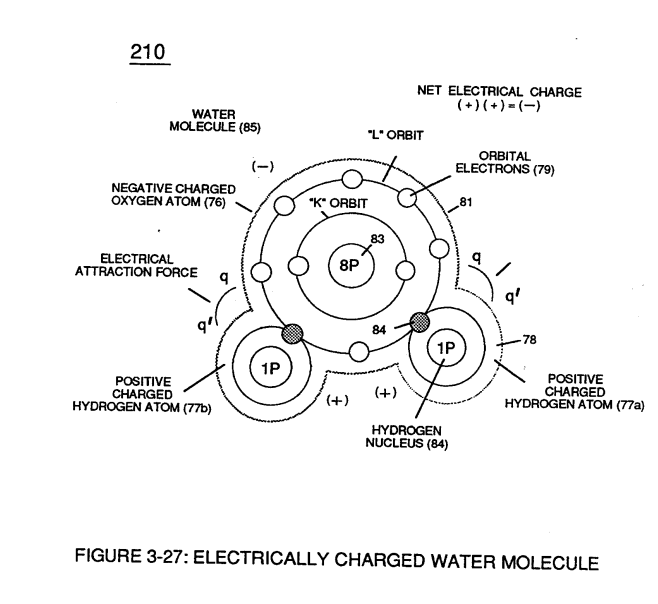
Whereby, net force (F) is the "electrical attraction force" (qq') between opposite electrically charged entities (210) of Figure (3-27), and, is given by Coulomb's law (Eq 13)
Electrically Charged Water Molecule 3×
Electrical Polarization process 4×
-
… voltage zones 66/67) of Figure (3-29) as to Figure (3-26) while inhibiting and preventing electron flow within voltage intensifier circuit (190) of Figure (3-23) causes water molecule (210) of Figure (3-27) to separate into its component parts (released hydrogen and oxygen gases) by pulling away (utilizing opposite attraction forces SS' and RR') its charged water molecule atoms (76n7), as illustrated in …
-
Figure (3-27)
-
… ng voltage-wave (65) increases in voltage amplitude from several millivolts to several hundred volts during each pulse train (65a xxx 65n) which, in application, causes water molecule (210) of Figure (3-27) charged atoms (76/77) to elongate (increasing distance between unlike atoms 76/77) to the point where covalent hydrogen electrons (84) of Figure (3-27) breaks away from electrostatic force (qq').
Covalent Switch-Off 2×
-
(210) of Figure (3-27) (Memo WFC 422DA)
-
which, when occurring, directly weakens the covalent bonding of the water molecule (q-q') by attenuating the electromagnetic fields of each atom Structure of the water molecule (210) of Figure (3-27) (Memo WFC 422DA) being subjected to and undergoing Electrical Polarization Process (160) of Figure (3-26) (Memo WFC 422DA), as further illustrated in (550) of Figure (5-8).
Inductance (FL) 2×
-
The established Dielectric Value of Water (85) being 78.54 ohms since the electron "L" orbit of the water molecule (210) of Figure (3-27) occupies the maximum allowable number of eight electrons when covalent linkup of 'unlike oxygen atom (76) and hydrogen atoms (77a/b) occurs' stabilizing Water molecule (85) into existence ... …
-
(210) of Figure (3-27)
Electrovalent Bonding 2×
-
In similar manner by which polar Water Molecule unlike atoms (Hydrogen Atoms 78 / Oxygen Atom ID (210) of Figure (3-27) take-on opposite electrical Charges (B+ / B-), other gas-atoms molecule (s) experience the same Electrical Charge Effect (q - q') when covalent-electron sharing occurs, as illustrated in polar-molecu …
-
(210) of Figure (3-27)