(87)
Oxygen
Also written oxygen atom · Gas Nozzle Port · Exit-Port
Where it is first named
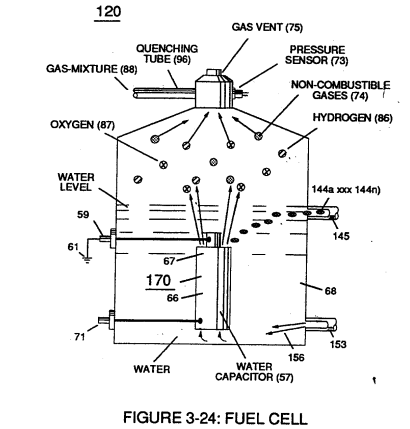
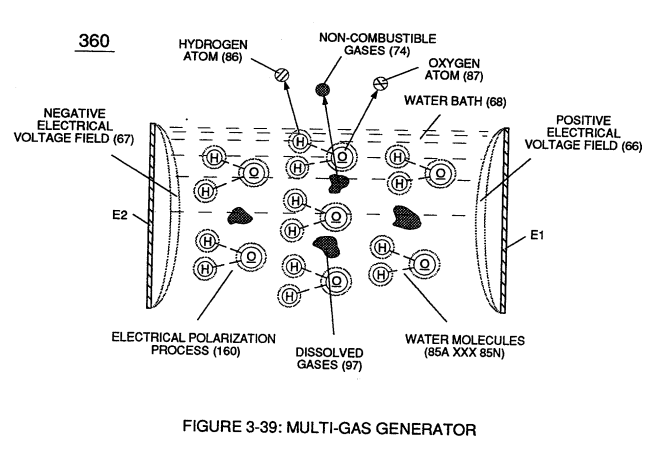
Repetitive duplication of voltage pulse (65a xxx 65n) continues to separate or split apart other water molecules (85a xxx 85n) which, in turns, forms hydrogen (86) and oxygen (87) gas-mixture (88) of Figure (3-24).
How it is written
- (87) 8×
Drawings 24
-
Carries this number · WFC 421 - Illustrations
-
Figure (3-25) · Voltage Intensifier Circuit (60)
-
Figure (3-39) · Resonant Action
-
"Gas Modulator Process" (320) of Figure (3-36) · Gas Modulator Process
-
Carries this number · WFC 422DA - Illustrations
-
Carries this number · WFC 422DA - Illustrations
-
Carries this number · WFC 422DA - Illustrations
-
Carries this number · WFC 422DA - Illustrations
-
Carries this number · Water Fuel Injector (Taper Resonant Cavity Chamber)
-
Carries this number · Energy Pumping Action
-
(57 of Figure 3- 25 ~35 of Figure 6-2) · Instant Explosion of Water
-
Figure (3-24) · Inductance (FL)
-
(370) of Figure (3-40) · Taper Resonant Capacitor (ERt)
-
Quenching Circuit (370) of Figure (3-40) · Capacitance Reactance
-
(170) of Figure (3-25) · 8-4 - State Space (Sp)
-
Figure (3-24) · Voltage Amplitude Control Circuit (50)
-
Figure (3-24) · Electrical Polarization process
-
(340) of Figure (3-38) · Gas Modulator Process
-
(340) of Figure (3-38) · Gas Modulator Process
-
engine cylinder (102) of Figure (3-38) · Gas Processor
-
Fuel Cell (120) of Figure (3-24) · Operational Parameters
-
The figure it sits on · WFC 422DA - Illustrations
-
The figure it sits on · Water Fuel Injection System
-
The figure it sits on · Water Fuel Injection System - Page 1
Where it is named · 8
Electrical Polarization process 1×
-
oxygen (87)
Repetitive duplication of voltage pulse (65a xxx 65n) continues to separate or split apart other water molecules (85a xxx 85n) which, in turns, forms hydrogen (86) and oxygen (87) gas-mixture (88) of Figure (3-24).
Gas Modulator Process 5×
-
oxygen (87)
… s (97) of Figure (3-39) being uniformly released from water bath (85) via the Electrical Polarization Process (160) of Figure (3-26) is automatically intermixed with released hydrogen (86) and oxygen (87) gas atoms (also derived from water bath 85) to form Fuel-Gas mixture (88) of Figure (3-24) having a hydrogen gas burn-rate of approximately 47 centimeters per seconds (cm/see) in ambient air, as illu …
-
oxygen atom (87)
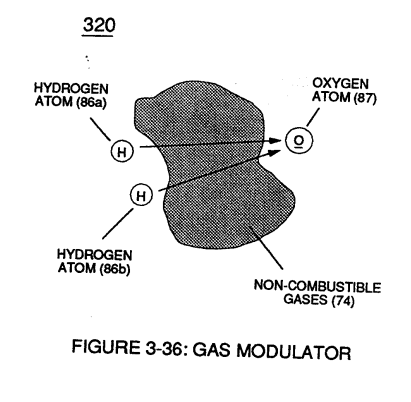
The non-combustible gases (74) physically retards and slows down the speed by which oxygen atom (87) unites with (covalent link up) hydrogen atoms (86a / 86b) to bring on and support gas ignition process (gas combustion process) (98), as further illustrated in (340) of Figure (3-38).
-
oxygen atom (87)
Water bath (68) of Figure (3-39) as to Figure (3-24), now, becomes and functions as a "Gas Mixing Regulator" since the highest possible thermal explosive energy yield (gtnt) obtainable from hydrogen during "normal" gas ignition (98) is the exact composition of water where two hydrogen atoms (86a / 86b) unite with oxygen atom (87).
-
oxygen (87)
… ss steel (T304 material) voltage zones (E1 / E2) submerged in natural water (68) sustains and maintains gas mixing ratio (88) by simply preventing the consumption of both the hydrogen (86) and oxygen (87) gases by way of not encouraging "electrical heat" or "chemical interaction" associated with amp consumption.
-
oxygen (87)
As fuel-gas (88) enters into engine cylinder (102) and is exposed to thermal gas ignition process (98), the incoming and moving fuel-gases (88) are converted into non-combustible gases (99) (gases passing through the gas combustion process) since both the hydrogen (86) and oxygen (87) gas atoms are being consumed during the formation of superheated water mist (103)
Funneling Effect 2×
-
Gas Nozzle Port (87)
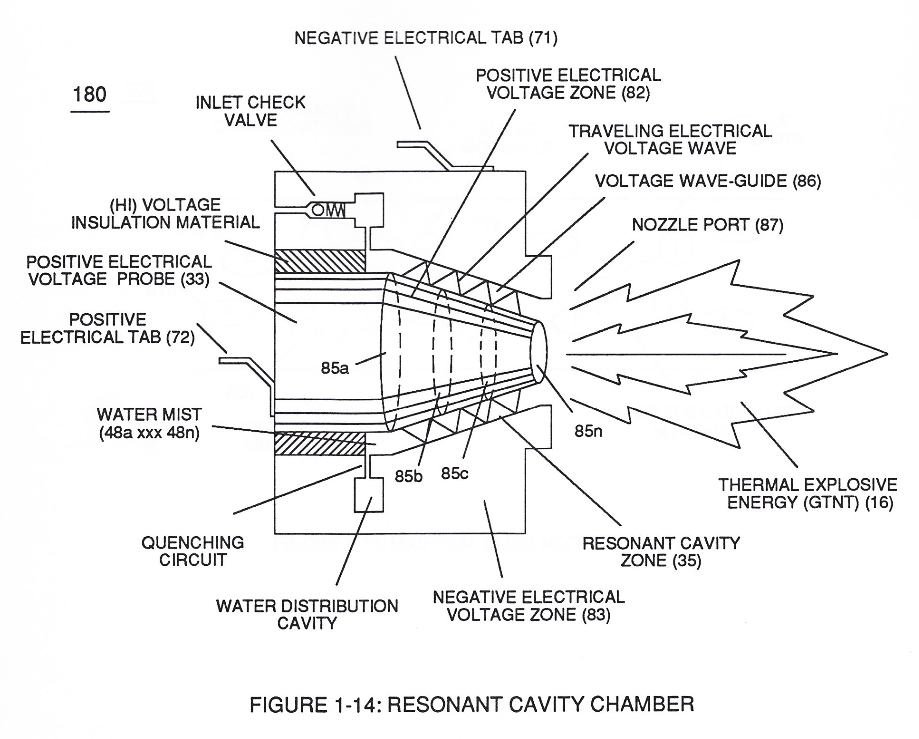
At termination point (85), voltage intensity (VL x Va x Vb x Vc x Vn) is, now, increased to the point to cause Gas Ignition as Combustible Gas Atoms (76, 77a - 77b) which are, then, expelled from Gas Nozzle Port (87) of Figure (14) under dynamic pressure to allow thermal gas expansion (16) ... releasing thermal explosive energy (gtnt) beyond and away from Resonant Cavity Chamber (180), as illustrated in Figure (14).
-
Exit-Port (87)
To prevent pre-ignition of gases traveling toward Exit-Port (87), Resonant Cavity (35) open space (open resonant cavity) parallel dimension between positive voltage surface (82) and negative voltage surface (83) is small enough (typically .010 or so) to function as a Quenching Circuit, as illustrated in Figure (24SD) (missing image) (WFC Memo 420).