(330)
Hydrogen Burn-Rate
Also written burn-rate
Where it is first named
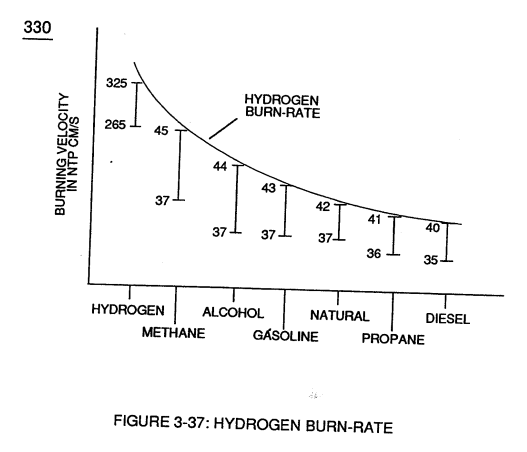
… (also derived from water bath 85) to form Fuel-Gas mixture (88) of Figure (3-24) having a hydrogen gas burn-rate of approximately 47 centimeters per seconds (cm/see) in ambient air, as illustrated in (330) of Figure (3-37).
How it is written
- (330) 8×
Drawings 3
-
(330) of Figure (3-37) · Gas Modulator Process
-
burn-rate (330) of Figure (3-37) · Diesel Application
-
Carries this number · WFC 422DA - Illustrations
Where it is named · 8
Gas Modulator Process 6×
-
… (also derived from water bath 85) to form Fuel-Gas mixture (88) of Figure (3-24) having a hydrogen gas burn-rate of approximately 47 centimeters per seconds (cm/see) in ambient air, as illustrated in (330) of Figure (3-37).
-
(330) of Figure (3-37)
-
hydrogen burn-rate (330)
To further reduce hydrogen burn-rate (330) of Figure (3-37) to other fossil-fuel burning levels, additional non-combustible gases (99a xxx 99n) (supplied via ambient air 101) is added to gas-mixture (88) by way of gas ignition process (98) occurring inside internal combustion engine (55) piston cylinder (102), as illustrated in (340) of Figure (3-38).
-
hydrogen burn-rate (330)
hydrogen burn-rate (330) of Figure (3-37)
-
… 1) without engine change by simply metering the proper amount of exhaust gases (99a xxx 99n) to comply with and co-equaling any type or different fossil-fuel burning levels, as further illustrated in (330) of Figure (3-37).
-
(330) of Figure (3-37)
Diesel Application 2×
-
burn-rate (330)
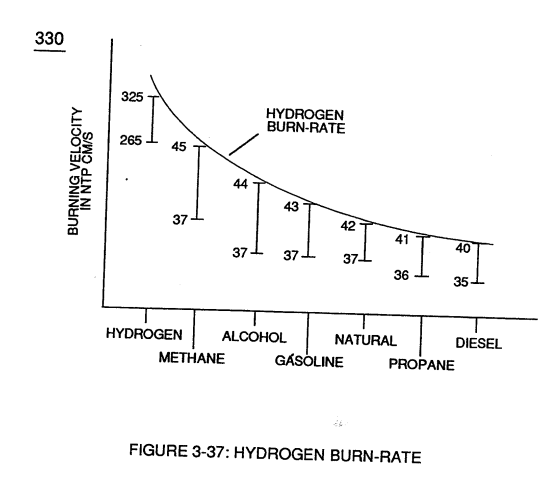
By simply adjusting Fuel-gases (88) of figure (3-38) burn-rate (330) of Figure (3-37) from (43 - 37 cm/s) (Gasoline) to (40 - 35 cm/s) (Diesel) burning levels, now, allows WFC Hydrogen Gas Management System to be directly retrofitted to conventional Diesel Engines sin …