(EI0)
Voltage Zones
Where it is first named
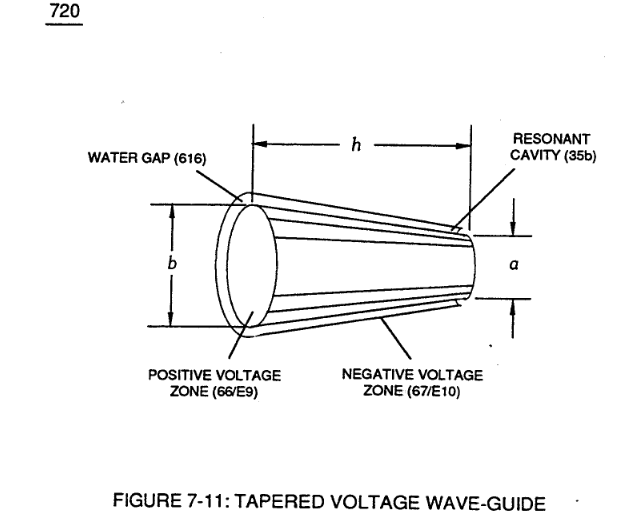
In like manner, the stainless steel (s/s) T304 material that forms Voltage Zones (E9/EI0) undergo particle alignment of its atomic structure within the atomic infrastructure of plate-material (E9/E10) when exposed to the same applied electrical voltage fields (66/67) after a pre-set time
How it is written
- (E9/EI0) 2× with (E9) Capacitor
- (E9 / EI0) 1× with (E9) Capacitor
Drawings 12
-
(650) of Figure (7-4) · Amp Inhibiting Circuit Vs Voltage Enhancement
-
(650) of Figure (7-4) · Resistance (Rs)
-
The figure it sits on · Inductance (FL)
-
(650) of Figure (7-4) · Inductance (FL)
-
(650) of Figure (7-4) · Capacitance (Cd)
-
"Voltage Deflection" of Figure (7-4) · Capacitance Reactance
-
Opposite Electrical Attraction Force (SS' ~ 617 ~ RR' - T3 - SS' ~ 617 - RR') of Figure (7-4) · Electron Bounce Phenomenon
-
The figure it sits on · WFC 426 - Illustrations
-
The figure it sits on · 8-2 - Traveling Voltage Wave-Guides
-
(650) of Figure (7-4) · 8-4 - State Space (Sp)
-
(650) of Figure (7-4) · 8-6 - VIC Voltage Sync-Pulse Circuit
-
The figure it sits on · Propagating Electrical Stress
Where it is named · 3
Capacitance (Cd) 2×
-
Voltage Zones (E9/EI0)
In like manner, the stainless steel (s/s) T304 material that forms Voltage Zones (E9/EI0) undergo particle alignment of its atomic structure within the atomic infrastructure of plate-material (E9/E10) when exposed to the same applied electrical voltage fields (66/67) after a pre-set time
-
... causing molecular electrical movement to occur within the surface-material (E9/EI0)
8-2 - Traveling Voltage Wave-Guides 1×
-
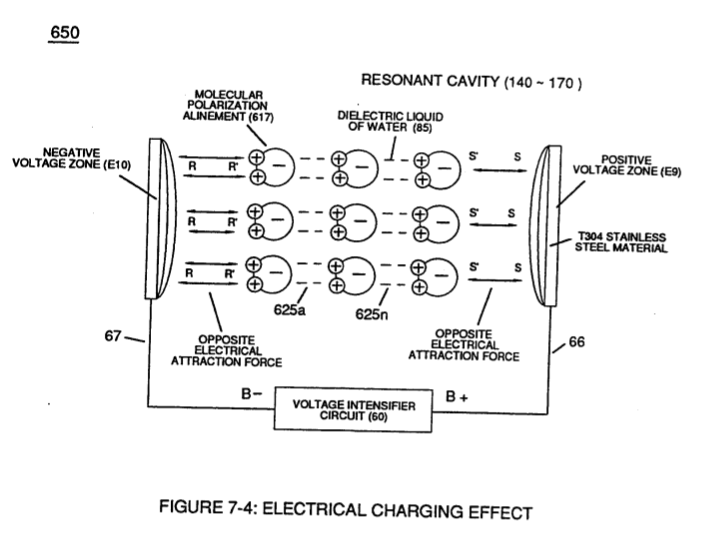
The surface tension of water (584) adjacent to both voltage surfaces (E9 / EI0) further aids the transmission of voltage potential (66/67) since Electrical Charging Effect (585) of Figure (7-4) does not change or alter the dielectric value of water (Re).