(Ar)
Argon
Also written Argon atom · Argon Gas · Argon ion
Where it is first named
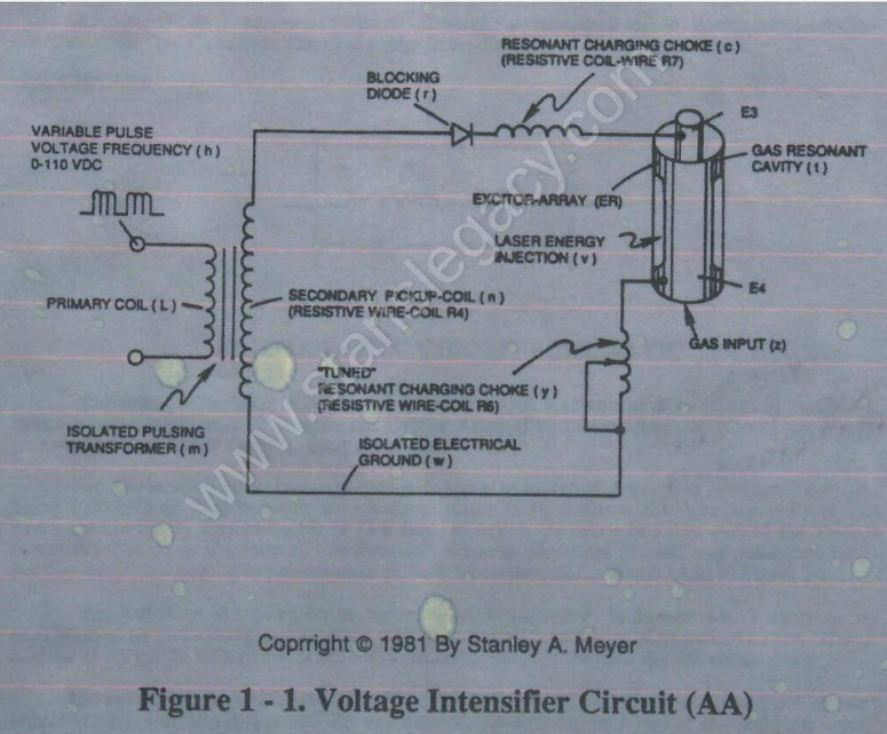
Gas Molecule or Gas atom of Argon (Ar) now becomes part of the Voltage Intensifier Circuit in the form of “resistance” between electrical ground and pulse-frequency positive-potential... helping to prevent electron flow within the pulsing circuit (AA) of Figure 1-1.
How it is written
- (Ar) 4×
- (Ar+) 1×
Drawings 7
-
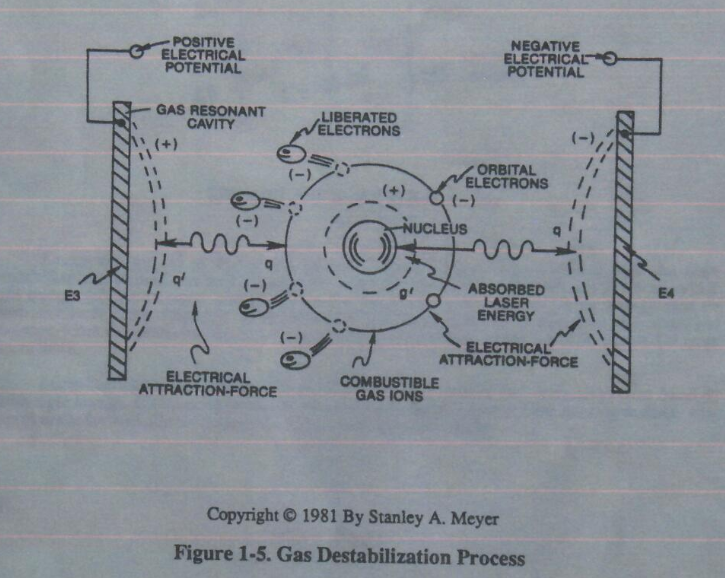
weakening the electrical attraction-force (qq') between the orbital electrons and the nucleus, as illustrated in Figure 1-5 as to Figure 20JX. · LASER INTERACTION
-
The forming Argon ion (Ar+) is now exposed to Iron ions (Fe+) (magnetic properties) experiencing and undergoing the same Electron Extraction Process. · Magnetic Gas Lattice
-
Figure (1-5) · LC Voltage
-
Figure (1-8) · Atomic Interaction to Voltage Stimulation
-
Figure (1-8) · Electron Extraction Process
-
Laser activated or laser primed gas ions repel the "dislodged" electrons being consumed as illustrated in Figure (1-8) as to Figure (1-20). · Electron Extraction Process
-
The figure it sits on · Funneling Effect
Where it is named · 5
CIRCUIT COMPONENT INTERACTION 1×
-
Argon (Ar)
Gas Molecule or Gas atom of Argon (Ar) now becomes part of the Voltage Intensifier Circuit in the form of “resistance” between electrical ground and pulse-frequency positive-potential... helping to prevent electron flow within the pulsing circuit (AA) of Figure 1-1.
ATOMIC INTERACTION TO VOLTAGE STIMULATION 1×
-
Argon Gas (Ar)
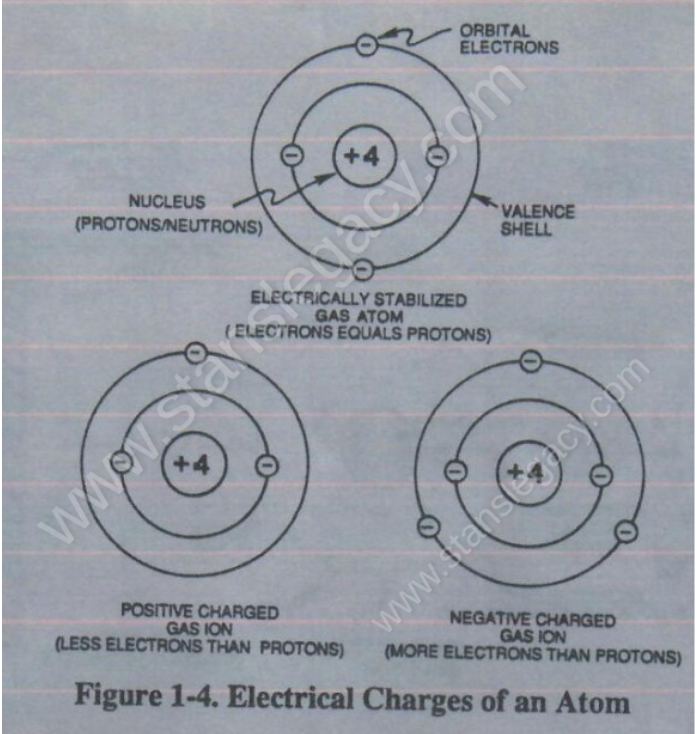
The atom of Argon Gas (Ar) is, naturally, electrically stabilized when the number of electrons around the number of protons equal the atomic number of 18 on the Periodic Table of Elements.
Gas Destabilization Process 1×
-
Argon (Ar)
Placement of a pulse-voltage potential across the Excitor-Array (ER) of Gas Resonant Cavity (t) while inhibiting or preventing electron flow within the Voltage Intensifier Circuit (AA) causes the Gas Atom of Argon (Ar) to become an positive charged ion by pulling away orbital electrons from the gas molecule or gas atom, as illustrated in Figure 1-5.
Magnetic Gas Lattice 2×
-
Argon ion (Ar+)
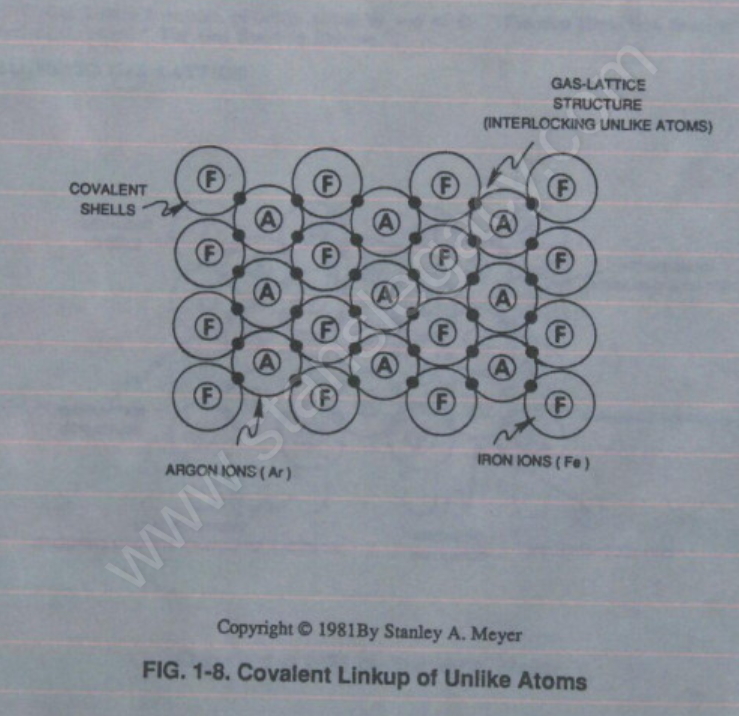
Covalent bonding of Iron ions (Fe+) to the Argon ion (Ar+) continues until a geometrical Gas-Lattice Structure is formed, as illustrated in Figure 1-8.
-
Argon atom (Ar)
Stable-state of the Gas-Lattice occurs when the covalent shell of each unlike atom structure becomes full or filled up… the Argon atom (Ar) sees an covalent shell of 8 electrons while, at the same time, the Iron atom (Fe) sees an covalent shell (M shell) of 14 electrons.