Figure (11-2)
Figure (11-2)
How it is written
- (11-2) 6×
Drawings 3
-
gated pulse-voltage waveform (1020) of Figure (11-2) · Voltage Flexing Process
-
Captioned as this figure · VIC Switchover Circuit
-
Beside the passage · Wobbling Effect
On this figure 5
- 68 Water Bath
- 1020 Gated Pulse-Voltage Waveform
- 1030 —
- 1040 Differential Voltage Wave-guide
- 1060 Electrical Crossover Switching Circuit
Where it is named · 6
Wobbling Effect 1×
-
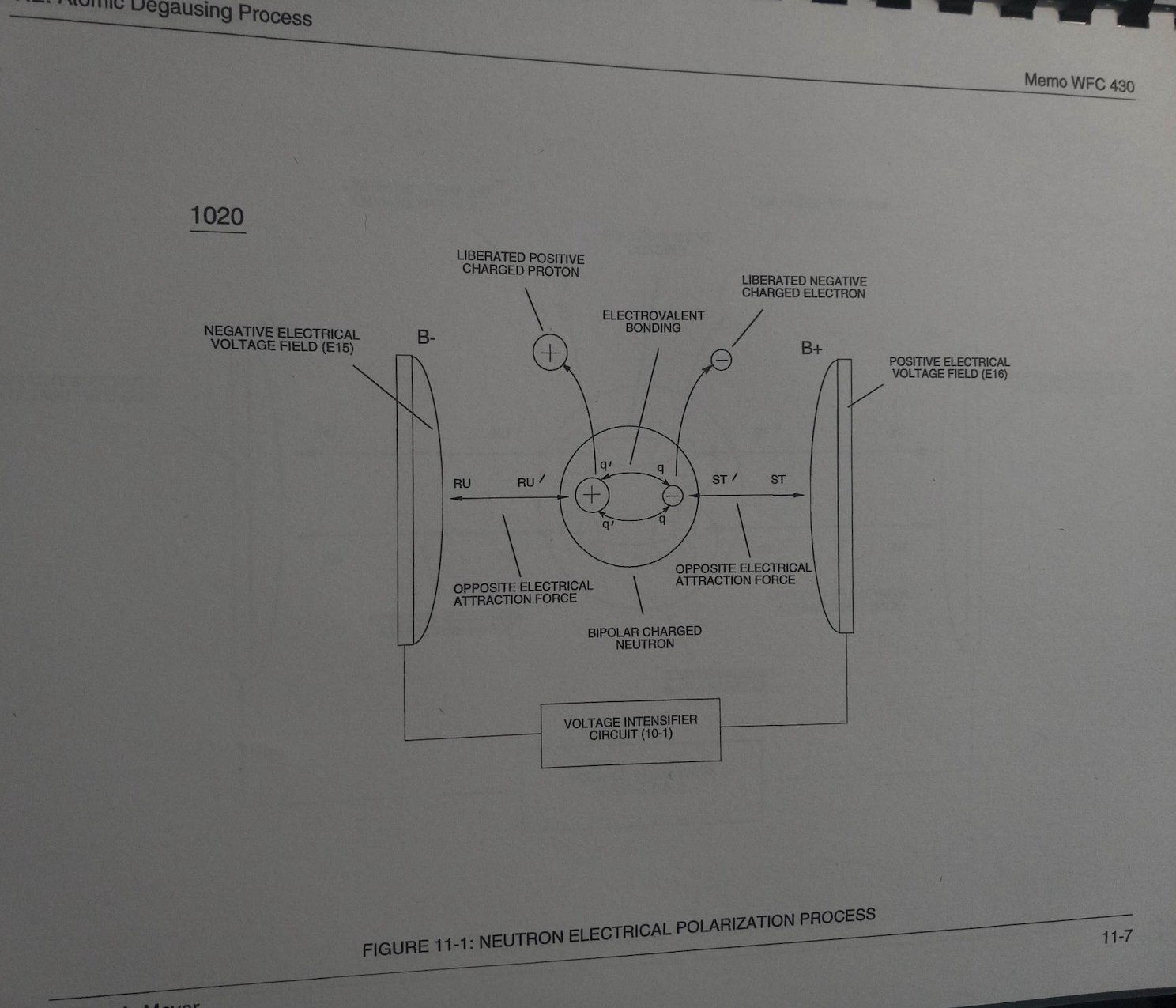
… ons from the de-materializing alpha Particles, further, contributes to the Atomic Degaussing Process, when exposed to the same pulsating “Electrical Stress,” as so illustrated in (1030) of Figure (11-2) titled “Alpha Electrical Polarization Process.” The WFC Atomic Degaussing Process can be used to alter the state of any unstable atom (s) that has become radioactive since each atom has the same electrical charged particle mass entities, just different in atomic numbers. …
Voltage Flexing Process 2×
-
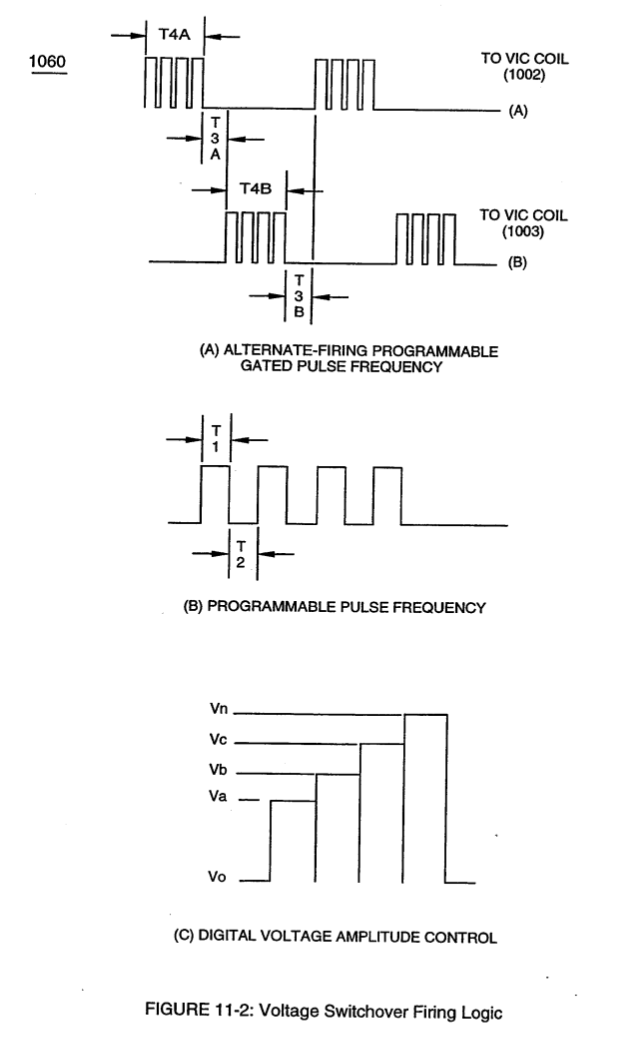
Repetitive formation of pulse voltage fields (952a xxx 952n) - 953a xxx 953n) or (954a xxx 954n- 956a xxx 956n) continues this "Voltage Energized Thermal Transference Effect" (1050) of Figure (11-5) (hereinafter called Atomic Flexing Process) during each and every pulse voltage on-time, as so illustrated by way of gated pulse-voltage waveform (1020) of Figure (11-2).
-
gated pulse-voltage waveform (1020) of Figure (11-2)
VIC Switchover Circuit 3×
-
(T4A) of Figure (11-2)
-
Varying the gated pulse-width (T4A f T4B), attenuating voltage amplitude (xxx Vn), and the Switchover pulse frequency rate (Sopr), collectively determines the rate by which the water temperature rises as the water medium (68) travels through the Differential Voltage Wave-Guild (1040), as so illustrated in (1060) of Figure (11-2) as to (1040) of Figure (11-6).