(1020)
Gated Pulse-Voltage Waveform
Where it is first named
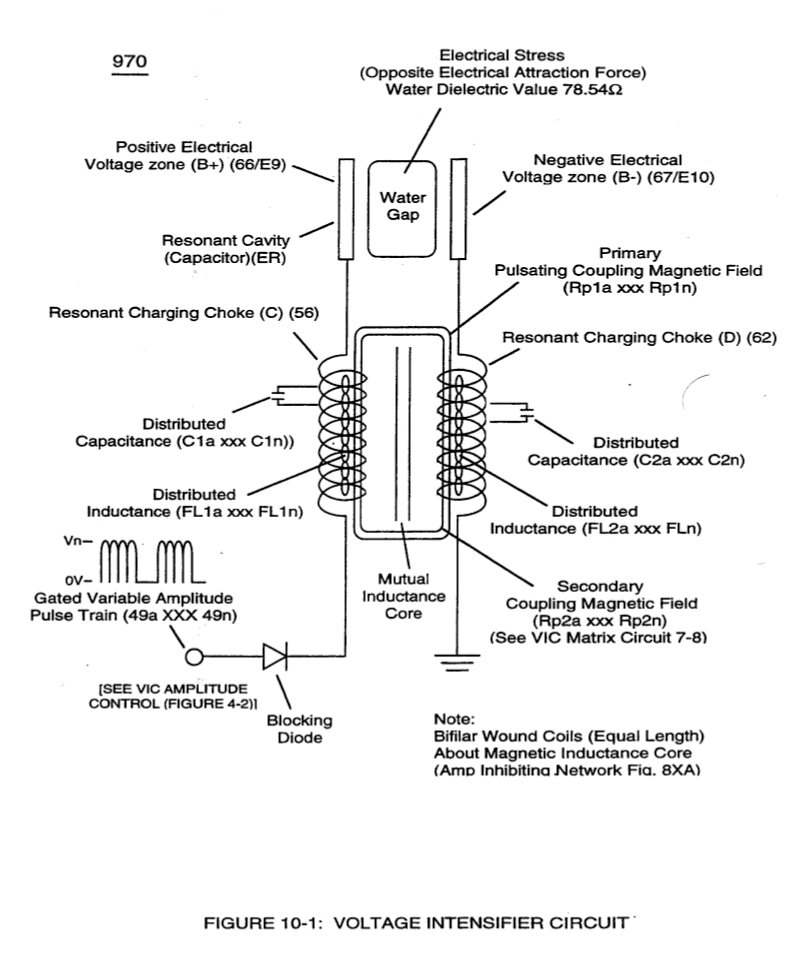
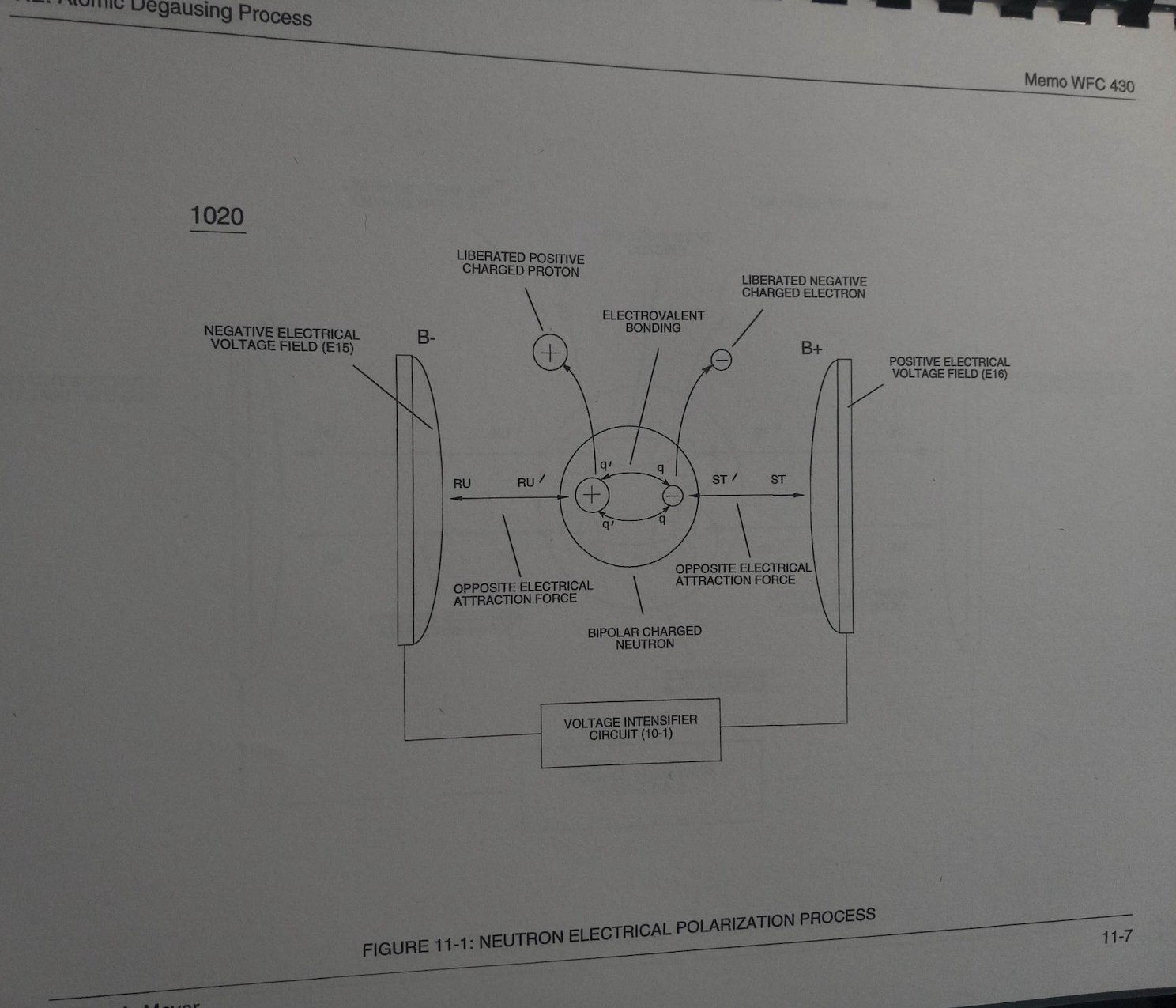
… up between the electrical charged sub-particles of the atom and the recurring pulsating electrical voltage fields (E15/E16) of opposite electrical polarity of potential (B+/B-), as so illustrated in (1020) of Figure (11-1) titled “Neutron Electrical Polarization Process” as to Figure (10-1) titled “Voltage Intensifier Circuit”.
How it is written
- (1020) 4×
Drawings 5
-
Carries this number · Dual Switchover Circuit
-
Carries this number · WFC 430-2 Illustrations
-
gated pulse-voltage waveform (1020) of Figure (11-2) · Voltage Flexing Process
-
dual unipolar voltage pulse circuit (1010) of Figure (11-1) · Voltage Flexing Process
-
The figure it sits on · VIC Switchover Circuit
Where it is named · 4
Wobbling Effect 2×
-
… up between the electrical charged sub-particles of the atom and the recurring pulsating electrical voltage fields (E15/E16) of opposite electrical polarity of potential (B+/B-), as so illustrated in (1020) of Figure (11-1) titled “Neutron Electrical Polarization Process” as to Figure (10-1) titled “Voltage Intensifier Circuit”.
-
The surplus electromagnetic energy (gamma ray absorption), if any, is simply absorbed into the energy spectrum of the atom when the atom transmutes into another element (s) during the Neutron Electrical Polarization Process, as so illustrated in (1020) of Figure (11-1).
Voltage Flexing Process 2×
-
gated pulse-voltage waveform (1020)
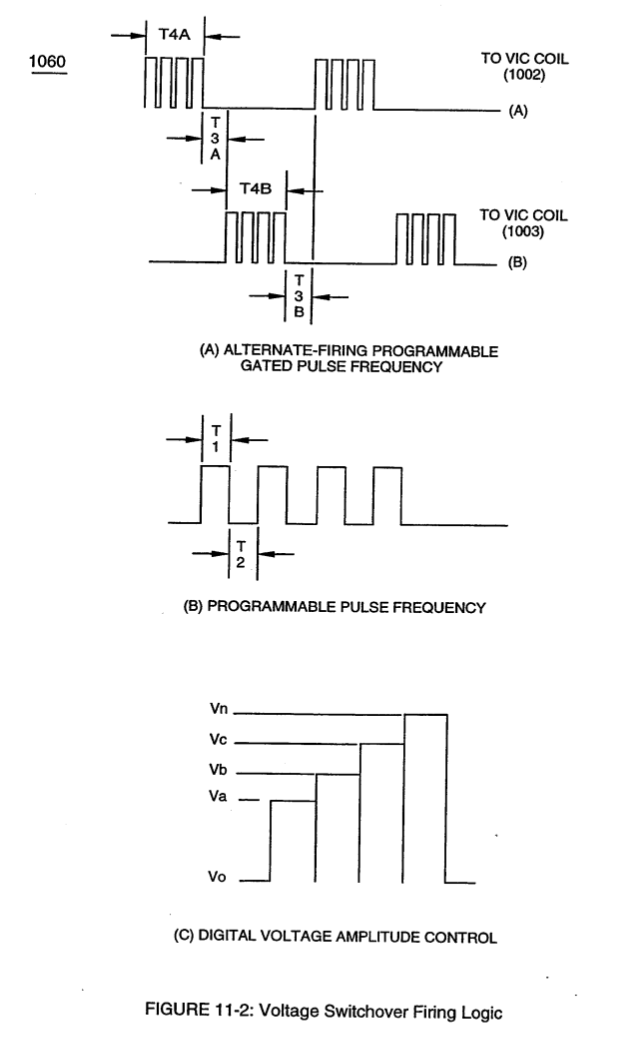
Repetitive formation of pulse voltage fields (952a xxx 952n) - 953a xxx 953n) or (954a xxx 954n- 956a xxx 956n) continues this "Voltage Energized Thermal Transference Effect" (1050) of Figure (11-5) (hereinafter called Atomic Flexing Process) during each and every pulse voltage on-time, as so illustrated by way of gated pulse-voltage waveform (1020) of Figure (11-2).
-
gated pulse-voltage waveform (1020) of Figure (11-2)