(LI)
Both Inductors
Where it is first named
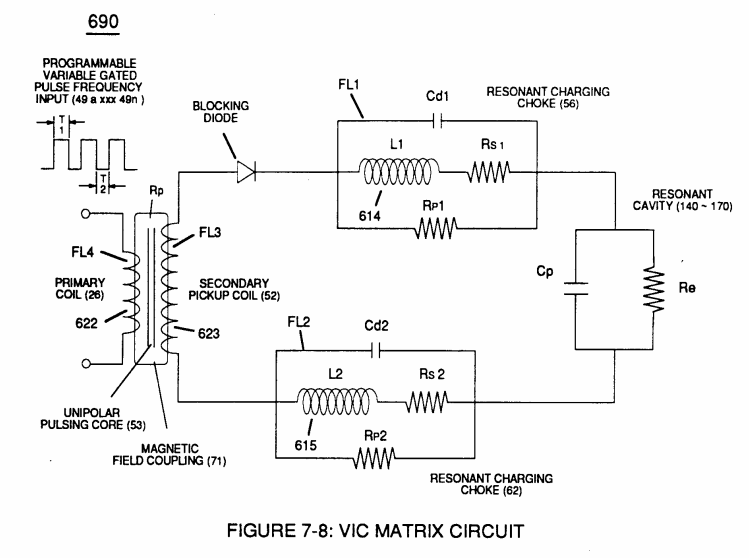
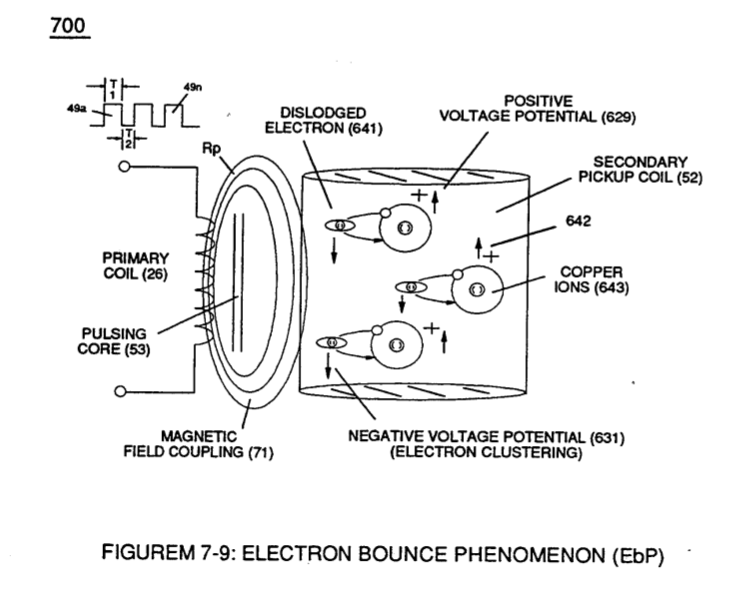
Both Inductors (LI/L2) are Bifilar wound in equal length to optimize the electromagnetic field strength (FL) in equal electromagnetic intensity (FL1 = FL2) to encourage and promote "Electron Bounce" phenomenon (700) of Fig …
How it is written
- (LI) 1×
- (LI/L2) 1× with (L2) Inductors
Drawings 5
-
(700) of Figure (7-9) · Instant Explosion of Water
-
"Electron Bounce" phenomenon (700) of Figure (7-9) · Inductance Reactance (Rs - Cd - FL)
-
"Electron Clustering" (Grouping/collecting negative charged particles at a given point) (700) of Figure (7-9) · Transformer Action
-
(700) of Figure (7-9) · Electron Bounce Phenomenon
-
(631) of Figure (7-9) · 8-3 - Electrical Voltage-Pulse Wave-Transmission
Where it is named · 2
Inductance Reactance (Rs - Cd - FL) 1×
-
Both Inductors (LI/L2)
Both Inductors (LI/L2) are Bifilar wound in equal length to optimize the electromagnetic field strength (FL) in equal electromagnetic intensity (FL1 = FL2) to encourage and promote "Electron Bounce" phenomenon (700) of Fig …
Circuit Resistance 1×
-
(Z2) is determined by inductance field strength (FL1) and resistive value (RS1) (typically 11.6 KQ) of stainless steel (s/s) wire-coil (56) (LI) when being exposed to external magnetic coupling field strength (Rp),