(RU)
Electrical Stress
Also written Pulsating Opposite Electrical Stress · Opposite Electrical Stress · Voltage Intensity
Where it is first named
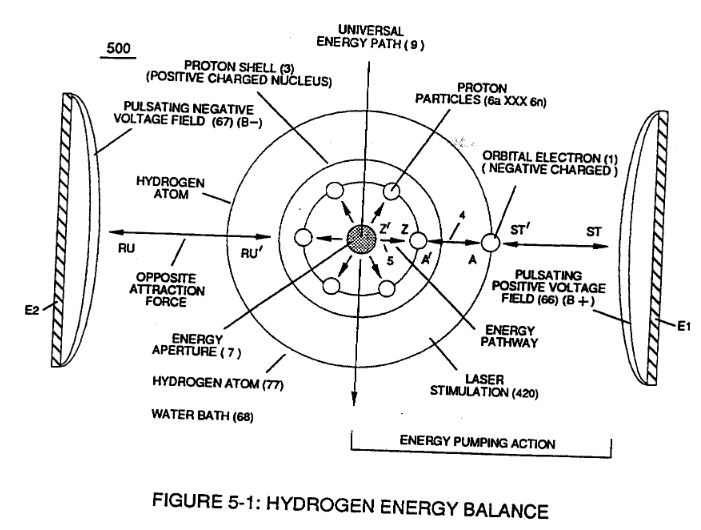
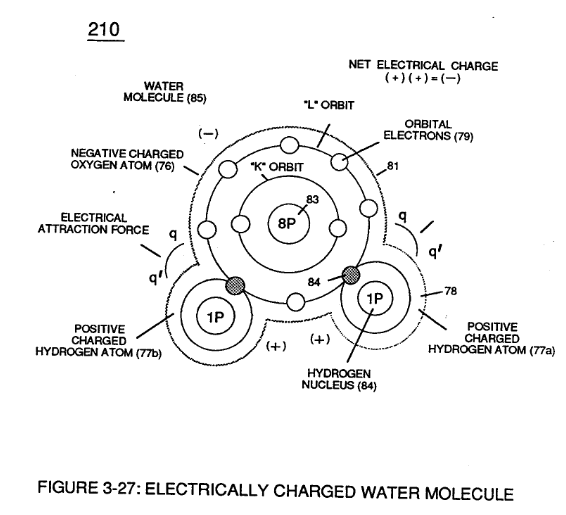
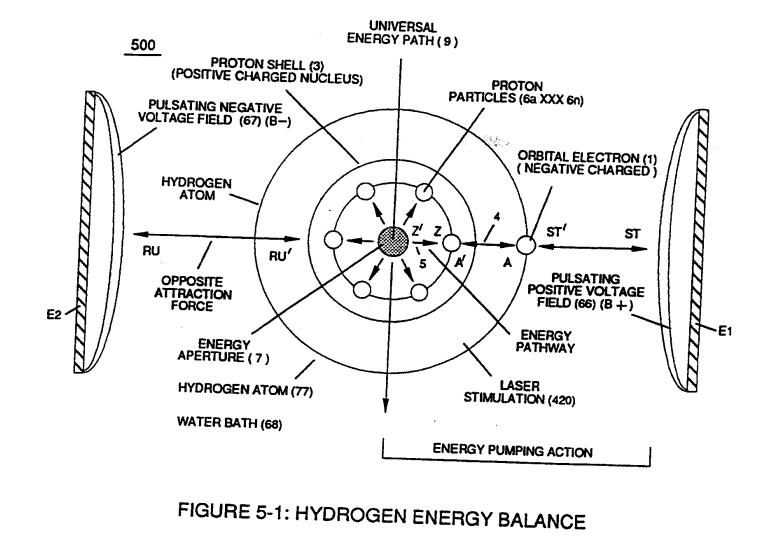
Applied voltage fields (66-El/67-E2) causes and forms both opposite attraction forces (ST - ST') and (RU - RU') across exposed Hydrogen Atom (77) since the negative charged hydrogen electron (1) is attracted and deflected toward stationary positive voltage field (66);
How it is written
- (ST-ST' - RU-RU') 3× with (ST) Electrical Stress, (ST') Electrical Stress, (RU') Electrical Stress
- (ST-ST'/RU-RU') 2× with (ST) Electrical Stress, (ST') Electrical Stress, (RU') Electrical Stress
- (RU-RU' - ST-ST') 2× with (RU') Electrical Stress, (ST) Electrical Stress, (ST') Electrical Stress
- (RU-RU' / ST'-ST) 2× with (RU') Electrical Stress, (ST') Electrical Stress, (ST) Electrical Stress
- (RU/RU' - ST/ST') 2× with (RU') Electrical Stress, (ST) Electrical Stress, (ST') Electrical Stress
- (RU - RU') 1× with (RU') Electrical Stress
- (ST - ST' - RU - RU') 1× with (ST) Electrical Stress, (ST') Electrical Stress, (RU') Electrical Stress
- (RU-RU' a xxx ST -ST'n) 1× with (ST) Electrical Stress
Drawings 45
-
(770 B) of Figure (8-1) · 8-4 - State Space (Sp)
-
(585) of Figure (8-1) · 8-4 - State Space (Sp)
-
Carries this number · 8-6 - VIC Voltage Sync-Pulse Circuit
-
Carries this number · WFC 427 Illustrations
-
"Voltage Tickling of State Space" (770B) of Figure (8-1) · WFC Exhaust Air Reclaimer
-
Dynamic Electrical Charging Effect (612) of Figure (8-1) · Propagating Electrical Stress
-
Carries this number · Quartz Tube Configuration & Operational Parameters
-
... establishing variable Dynamic Electrical Charging Effect (612). · Quartz Tube Configuration & Operational Parameters
-
Carries this number · WFC 430-2 Illustrations
-
Carries this number · WFC 430-2 Illustrations
-
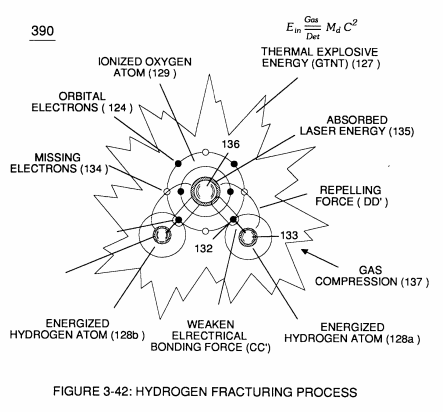
This atomic thermal-interaction between sub-critical combustible gas atoms (127 and 128a/b) is, now, herein after called "The Hydrogen fracturing Process. " · Hydrogen Fracturing Process
-
The figure it sits on · WFC 422DA - Illustrations
-
The figure it sits on · Differential Air-Gas Inlet Control
-
The figure it sits on · Differential Air-Gas Inlet Control
-
The figure it sits on · Water Fuel Injector (Taper Resonant Cavity Chamber)
-
(390) of Figure (41) · Water Fuel Injector (Taper Resonant Cavity Chamber)
-
The figure it sits on · Funneling Effect
-
Hydrogen Fracturing Process (390) of Figure (3-42) · Water Fuel Injection System - Page 1
-
Figure (5-1) · Energy Pumping Action
-
This established increase or decrease in Electrical Pressure (4 / 5 ), now causes Energy Aperture (7) to either enlarge or become smaller as to applied voltage amplitude (VO xxx Vn), respectively. · Energy Pumping Action
-
The figure it sits on · Energy Pumping Action
-
(520) in Figure (5-3) · Resonant Propagation
-
(390) of Figure (3-42) · In Application of Usage
-
(520) of Figure (5-3) · In Application of Usage
-
(500) of Figure (5-1) · In Application of Usage
-
610 of Figure 6-4 · In Application of Usage
-
(57) of Figure (6-2) · In Application of Usage
-
Figure (6-4) · In Application of Usage
-
(520) of Figure (5-3) · Solar Energy Actuator
-
The figure it sits on · Illustrations
-
The figure it sits on · Illustrations
-
Activation Process (590) of Figure (6-2) · Voltage Intensifier Coil-Assembly
-
Hydrogen Fracturing Process (520) of Figure (5-3) · Voltage Intensifier Coil-Assembly
-
The figure it sits on · WFC 425 - Illustrations
-
(390) of Figure (3-42) · Resistance (Rs)
-
(590) of Figure (6-2) · Capacitance (Cd)
-
(390) of Figure (3-42) · Capacitance Reactance
-
(E9/10) of Figure (6-2) · Voltage Amplitude Switch-Off
-
(520) of Figure (5-3) · 8-2 - Traveling Voltage Wave-Guides
-
Energy Pumping Action (520) of Figure (5-3) · WFC Development Objectives
-
Energy Priming Stage (500) of Figure (5-1) · Propagating Electrical Stress
-
... emitting Coherent Energy Wave-Form (917), as so illustrated in (980) of Figure (10-2). · Optical Thermal Lens
-
WFC Figure (5-1) · WFC Atomic Degaussing Process
-
energy aperture (7) of Figure (5-1) · Voltage Flexing Process
-
(500) of Figure (5-1) · Voltage Flexing Process
Where it is named · 16
Energy Pumping Action 2×
-
Applied voltage fields (66-El/67-E2) causes and forms both opposite attraction forces (ST - ST') and (RU - RU') across exposed Hydrogen Atom (77) since the negative charged hydrogen electron (1) is attracted and deflected toward stationary positive voltage field (66);
-
Voltage Intensity (ST - ST' / RU - RU')
Interlocked together, the resultant "Electrical Tension of Forces" (4/5) is directly related to Voltage Intensity (ST - ST' / RU - RU' ) of applied voltage fields (66/67) which is variable as to applied voltage amplitude ( Vo xxx ). Increasing voltage amplitude ( xxx Vn) still further increases electrical tension (4 / 5 ) being applied to Energy Aperture (7) or vice versa.
In Application of Usage 1×
-
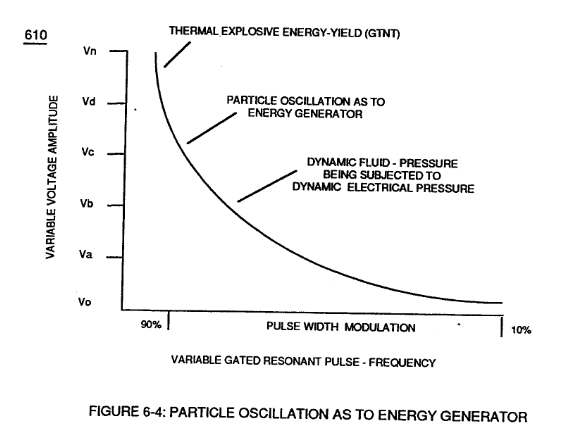
Energy Pumping Action (500) of Figure (5-1) as to (510) of Figure (5-2) undergoing "Resonant Propagation" of opposite electrical stress (ST-ST'/RU-RU') oscillates the "Energy Aperture" (7a -- 7n ) of the combustible gas atoms to increase the atomic energy level (see graph 610 of Figure 6-4) of the combustible gas atoms prior to gas ignition.
Covalent Switch-Off 1×
-
Opposite Electrical Stress (ST-ST'/RU-RU')
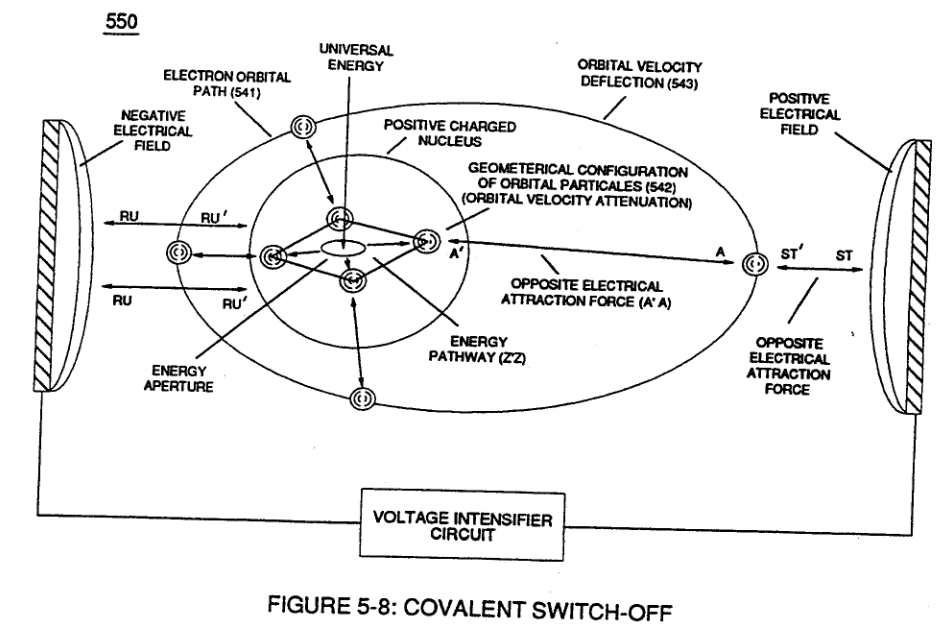
Covalent Switch-Off occurs when deflected and elongated Orbital Electron Pathway (541) reaches a point where applied Opposite Electrical Stress (ST-ST'/RU-RU') (A-A'/Z-Z') is sufficient enough to cause the Gyroscopic Action (542) of Nucleus Particles (543a xxx 543n) to be reduced in orbital spin-velocity ...
Water Fuel Injector 1×
-
Voltage potential of opposite electrical polarity (ST - ST' - RU - RU') of Figure (5-1) (Memo WFC 424) titled "Atomic Energy Balance of Water" is further enhanced by simply electrically interfacing voltage intensifier (VIC) circuit coil-assembly (580) of Figure (6-1) wit …
Resistance (Rs) 2×
-
... causing and allowing the applied Electrical Stress of opposite voltage polarity (ST-ST' - RU-RU') to trigger Hydrogen Fracturing Process (390) of Figure (3-42) in an instant of time
-
... allowing applied opposite Voltage potential (ST-ST' - RU-RU') to perform work without amp "influxing", as systematically depicted in VIC Matrix Circuit (690) below.
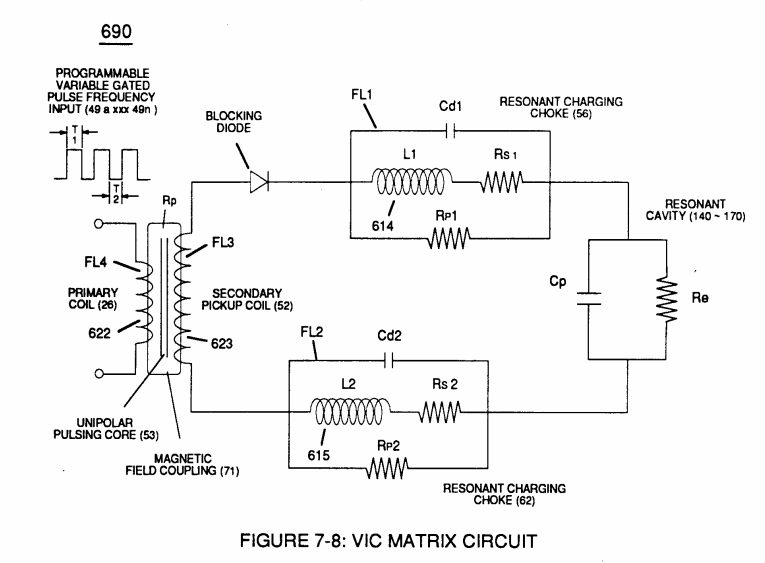
8-6 - VIC Voltage Sync-Pulse Circuit 1×
-
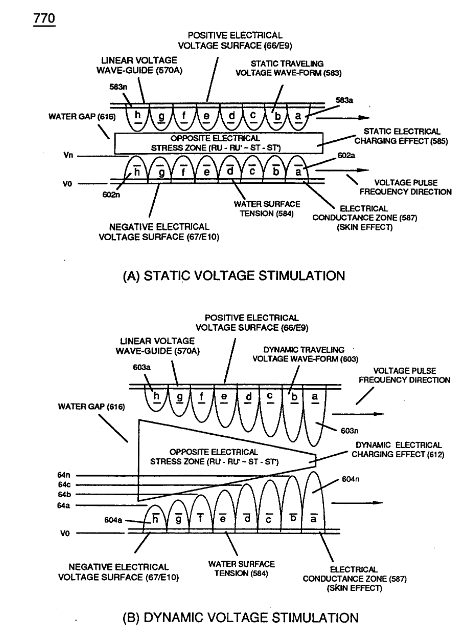
This non-voltage shift (Balanced Phasing of opposite Voltage Potential) helps prevents atom displacement during "Snapping-Action" by which "Resonant Electrical Stress" of opposite electrical polarity (RU/RU' - ST/ST') is applied equally across Water Molecule (s) (85) to propagate either Static (585) or Dynamic (612) Electrical Charging Effect (s) at elevated Voltage Peak Potential (s).
Propagating Electrical Stress 2×
-
Electrical Stress (ST-ST' - RU-RU')
... thereby, preventing amp "in-fluxing" (discouraging electron arc over) across Dielectric Capacitor Gap (ER)(66/67) while Electrical Stress (ST-ST' - RU-RU') of Opposite Voltage Polarity (B+/B-) brings on Energy Priming Stage (520) of Figure (5-3) which is refer to, herein, as "Voltage Tickling of State Space."
-
Electrical Stress (RU/RU' - ST/ST')
... allowing the developed "Electrical Stress" (RU/RU' - ST/ST') of Figure (5-1/5-2) across Capacitor Gap (Cp) to go to the farthest point beyond the "State of Equilibrium"
Voltage to Amp Differential Ratio 2×
-
Pulsating Opposite Electrical Stress (RU-RU' - ST-ST')
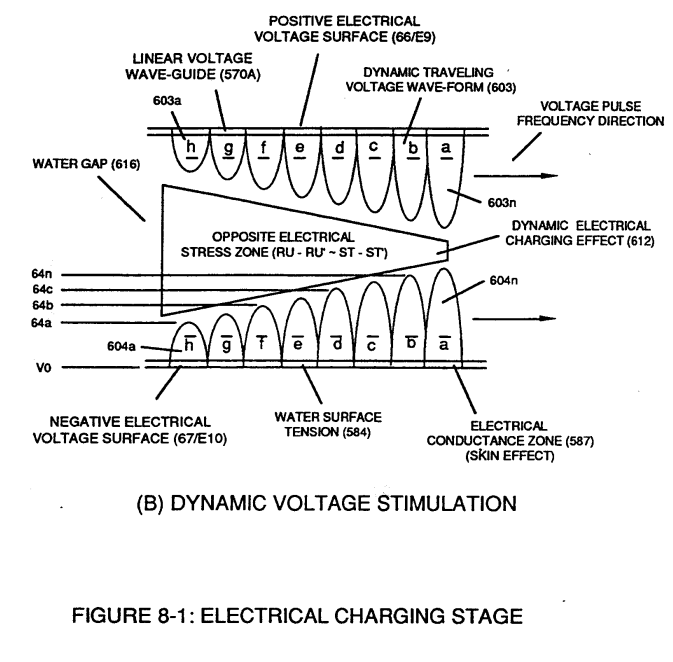
The resultant ever increasing pulsating opposite electrical voltage fields (603/604a xxx 603/604n) of Figure (8-1) having superimposed thereon counter opposing Rippling Voltage-Surfaces (64/B+a xxx 64/B-n) [Dynamic Electrical Charging Effect (612) of Figure (8-1B)], now, set ups, causes, and applies ever increasing (rubberbanding effect) Pulsating Opposite Electrical Stress (RU-RU' - ST-ST') across Water Gap (Cp)
-
Electrical Stress (RU-RU' a xxx ST -ST'n)
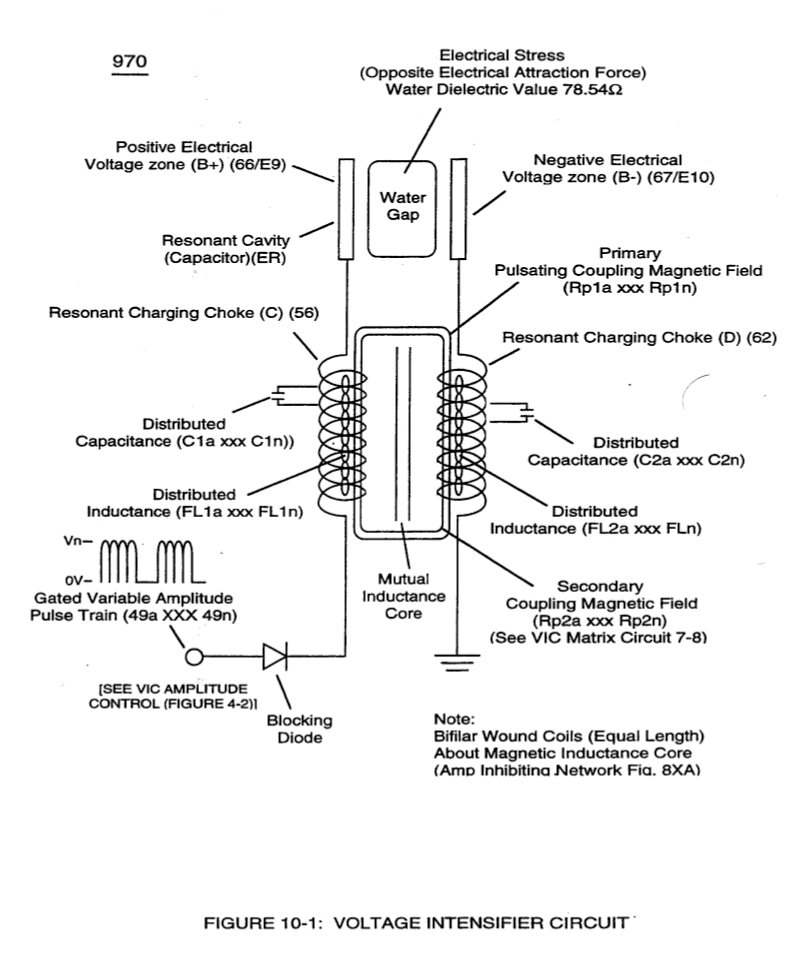
The greater the Electrical Stress (RU-RU' a xxx ST -ST'n) applied (64B+/64B-a xxx 64B+/64B-), the greater amount of thermal explosive energy (16/gtnta xxx 16/gtntn) of Figure (6-2) as to (70) of Figure (4-5) is released from Resonant Water Gap (Cp) (970) of Figure (10-1), as further illustrated in (70) of Figure (4-5).
A Technique Called "Easer" 2×
-
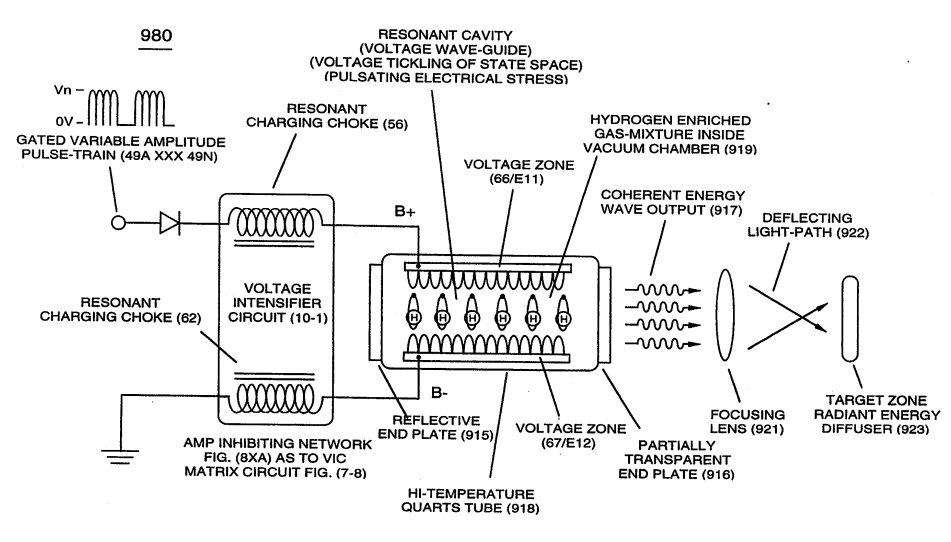
Energy Priming Stage (500) of Figure (5-1) is, now, activated and performed when the hydrogen atom (s) is exposed to applied Voltage-Sync Gate Pulse (Vgp) by which Electrical Voltage Attraction Forces (Electrical Stress) (RU-RU' - ST-ST') causes "Particle Oscillation" of the hydrogen atom (s) to emit radiant energy (Ers) (919), as so illustrated in (980) of Figure (10-2) as to (500) of Figure (5-1).
-
while, simultaneously, applied unipolar Negative Voltage Pulse (B-) (RU-RU') electrically attracts the positive charged Proton, (3) that forms the nucleus of the hydrogen atom
Wobbling Effect 2×
-
Electrical attenuation (Aqq) of the Electrical Bonding Force (qq') of the unstable atom occurs when opposite electrical attraction forces (RU-RU' / ST'-ST) are set up between the electrical charged sub-particles of the atom and the recurring pulsating electrical voltage fields (E15/E16) of opposite electrical polarity of potential (B+/B-), as so illustr …
-
... whereby, the positive charged proton (B+) is deflected toward stationary negative voltage field (B-) (B15) and, simultaneously, the negative charged electron (B-) is deflected in opposite direction toward the stationary positive voltage field (E16) since unlike charges attract (RU-RU' / ST'-ST) under the law of physics … thereby, overcoming electrovalent bonding force (qq').