article
Water as Fuel
1 September 1993
A paper given to the Maritime Division of the Southampton Institute at Warsash, as part of the symposium on the Impact of New Technology on the Marine Industries, September 1993. The text is Griffin's sixth draft, dated 4 July 1993, as he sent it to Meyer and as Meyer bound it into the 1995 International Independent Test-Evaluation Report, pages 113 to 128, where the scans can be read beside it. The figures are cropped from those scans. Spelling and punctuation are his; obvious misreads by the scanner have been corrected against the page.
Abstract
The Earth's main sources of non solar energy are fossil fuels, which cause severe pollution and cannot last indefinitely; nuclear, which is capital intensive, and whose waste disposal is problematical; tidal and wind schemes which are inefficient; and thermal and hydro installations which are efficient but lack flexibility and require major capital investment.
An alternative is water (salt, fresh or distilled) as a cheap and inexhaustible source of global energy which has none of the foregoing disadvantages. The theoretical evidence in support of the relevant technology is briefly described and related to the first and second laws of thermodynamics. Practical evidence is illustrated and the impact of this revolutionary development on the marine industries, with ships floating on their own fuel and thus having no need for either bunkers or ambient air, is indicated.
Much wider and global implications for the environment, industry, defence and political stability are discussed.
Author's biography
A regular executive officer in the Royal Navy for 42 years, the last 5 of which were spent as Controller of the Navy with responsibility for the development and construction of all new surface ships, submarines, aircraft and weapons. Retired from RN in 1975 to become first Chairman of British Shipbuilders from 1975–80; President of the Royal Institution of Naval Architects 1981–84, and founder member of the British Maritime League and the British Maritime Charitable Foundation in 1982.
Introduction
In 1972 the Royal Navy examined how the Fleet should be fuelled when current fossil fuels became too scarce, say in the year 2030. They concluded that the fuel of the future was hydrogen but that, as this gas was not normally available in usable form, it would have to be extracted through either the electrolysis of water or nuclear fusion. Neither appeared to be immediately practicable. Electrolysis needed more power than that of the hydrogen it yielded and was too slow a process to meet the demands of an internal combustion engine. This meant that it would have to be stored in either liquid form or in a fuel cell, both of which involved substantial weight or safety problems. Nuclear fusion appeared to be too distant and expensive an alternative.
This position remains the current generally accepted view of hydrogen as a fuel. It has not however deterred numerous inventors from producing for example over 100 hydrogen fuelled cars in the USA, at least 12 in Germany, and 3 in the UK. The latest is Japan's Mazda HRX car and its Wankel engine as shown in Figure 1.
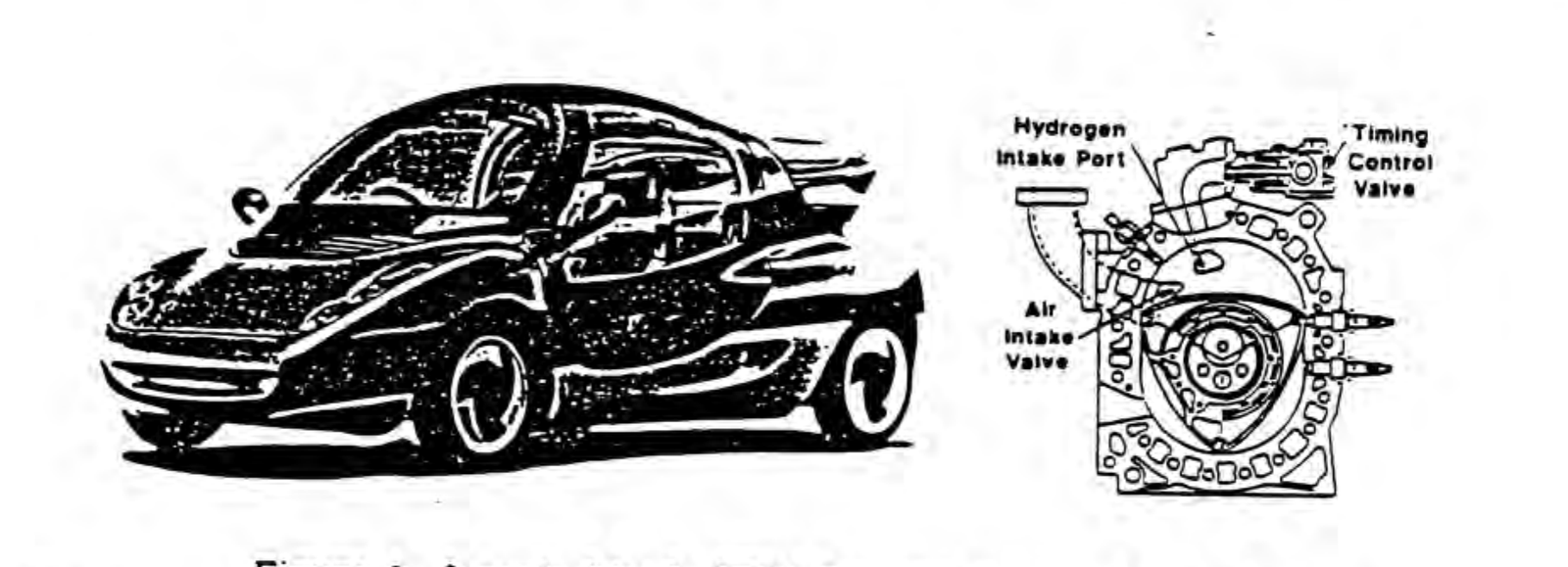
This car was described in June 1992 to the 9th World Hydrogen Energy Conference in Paris. Here the papers referred only to various aspects of hydrogen generation through electrolysis, or its storage or its subsequent application. It is worth recalling that in April 1988, the starboard engine of a three engined Tupolev 255 airliner was modified to run on hydrogen which was seen to be embarked in liquid form from a fuel bowser. The aircraft flew for about twenty minutes on its hydrogen powered engine which showed no exhaust except a trail of water vapour.
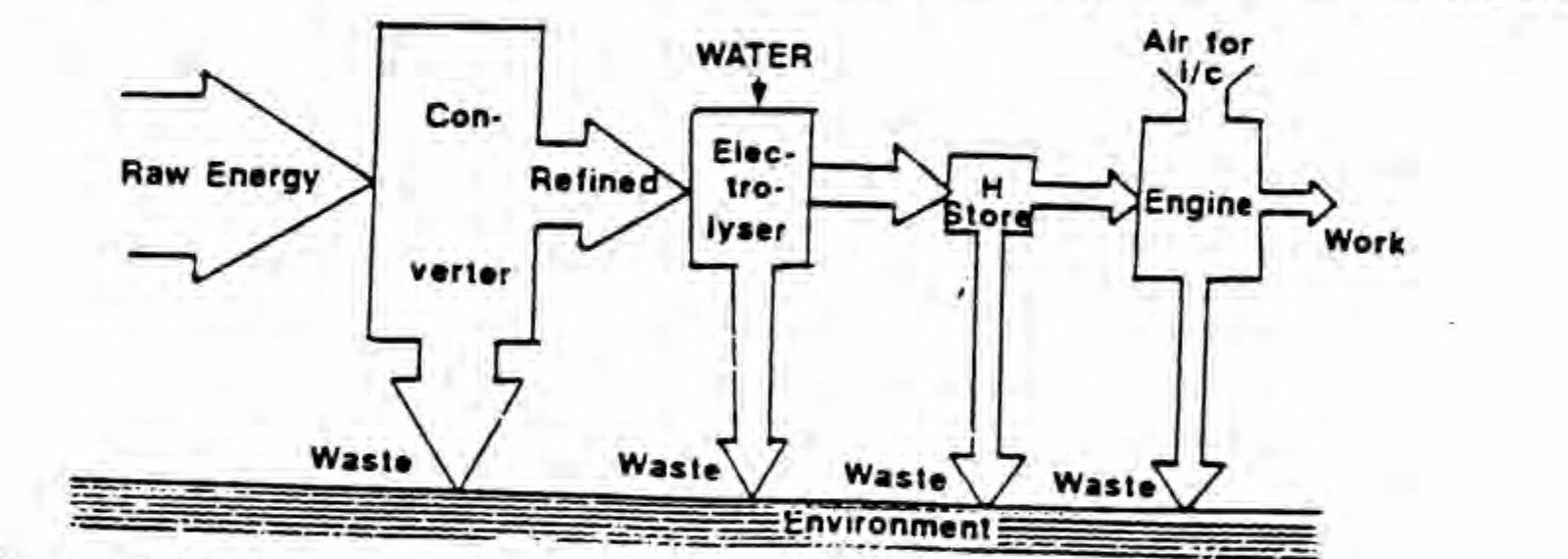
The main attraction in all these cases has been the absence of pollution at the scene of action. However the pollution problem has merely been transferred to the source of the power required to drive the electrolytic process. A schematic diagram of the basic energy sequence of a typical hydrogen powered engine is shown in Figure 2.
Dr Cornish's Hydrogen Supply Unit
A breakthrough was hailed in April 1985 when, at the 13th International Inventions Exhibition in Geneva, Dr Cornish was awarded a gold medal for his Hydrogen Supply Unit. Not long afterwards his photograph appeared in the papers with a hydrogen powered 2CV car in which he planned to cross the Sahara with nothing but water in his fuel tank. A detailed description of the unit together with reports of impressive trials in various cars in New York, appeared in the August 1985 edition of an American publication 'Automotive Engineering'.
Dr Cornish's process was a form of electrolysis in which the energy necessary to dissociate the hydrogen and oxygen atoms in a water molecule was applied through an underwater spark between consumable aluminium electrodes. The process was possibly enhanced by ultra-violet radiation from the spark at a frequency which resonated with that of the first continuum of water. A substantial quantity of hydrogen was generated but although I personally have been experimenting with a preproduction HSU since 1989 I have not succeeded in delivering hydrogen energy amounting to more than 1/3 of that of the electrical energy needed to drive the unit. This is about the norm for conventional electrolysis. A diagram of the HSU is shown in Figure 3.
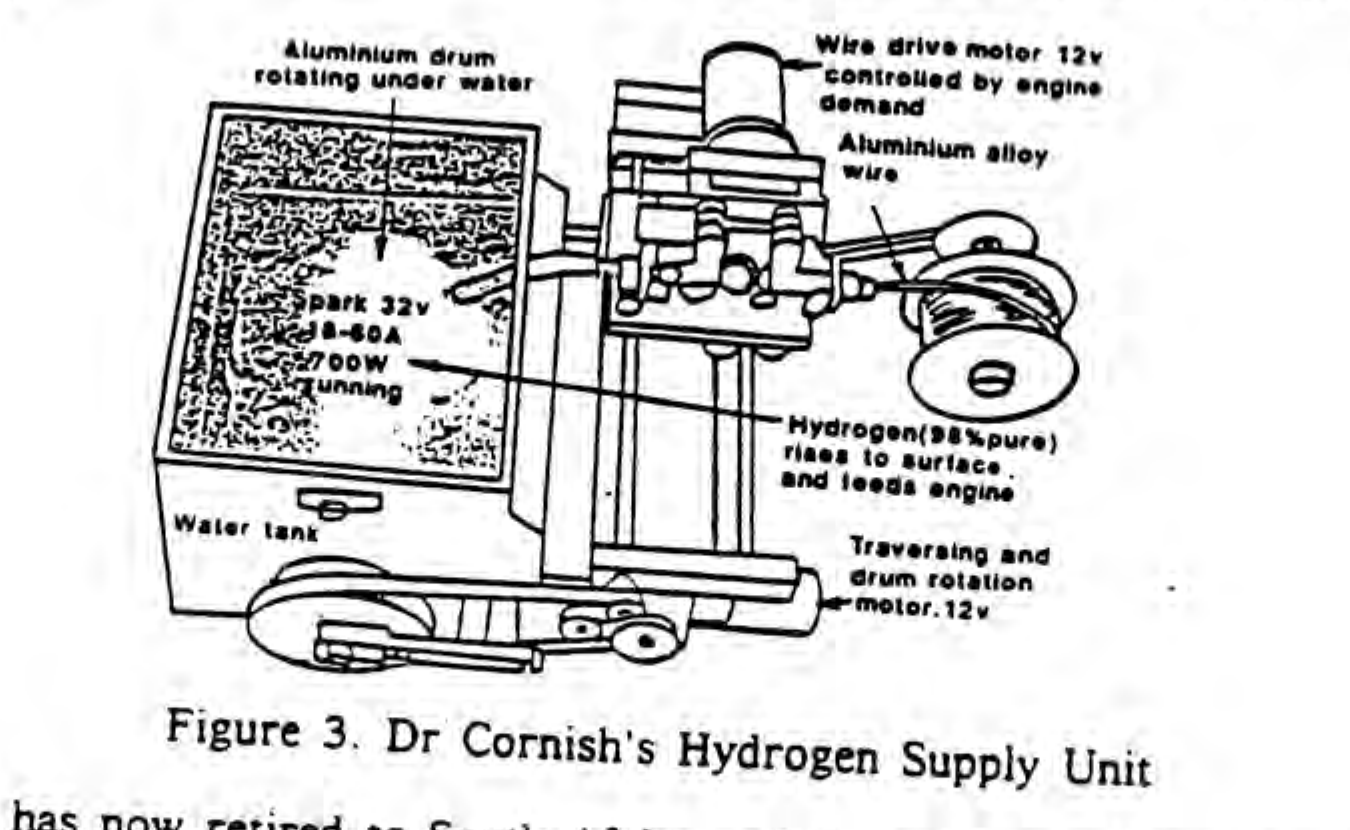
Dr Cornish has now retired to South Africa and all work on his HSU in the UK has ceased. I only mention it because it led to my close association, since mid 1989, with a Mr Stanley A. Meyer, the inventor of an entirely new development, the Water Fuel Cell, in Grove City, Ohio.
Stanley A. Meyer
Born and brought up in Ohio, Meyer took up a technical career, working mainly in electronics, electrodynamics and particle physics. He worked for some time at the Battelle Institute in Columbus Ohio and has advised NASA on several aspects of the space programme notably over the Gemini space capsule and rocket steering mechanisms. For a time he ran his own business in automobile spare parts and made a fortune with which he financed his subsequent work.
In 1975 he began to apply himself to the dissociation of water and in 1980 patented a process by which the energy of the hydrogen yield vastly exceeded the electrical energy needed to achieve it. The basic concept, to be enlarged on later, is embodied in Meyer's original hydrogen generating equipment which has frequently been demonstrated. I first saw it in the company of Professor Laughton, the Dean of Engineering at London University, and Dr Keith Hindley, in October 1990, and have seen the experiment repeated three times since then. A photograph is at Figure 4.
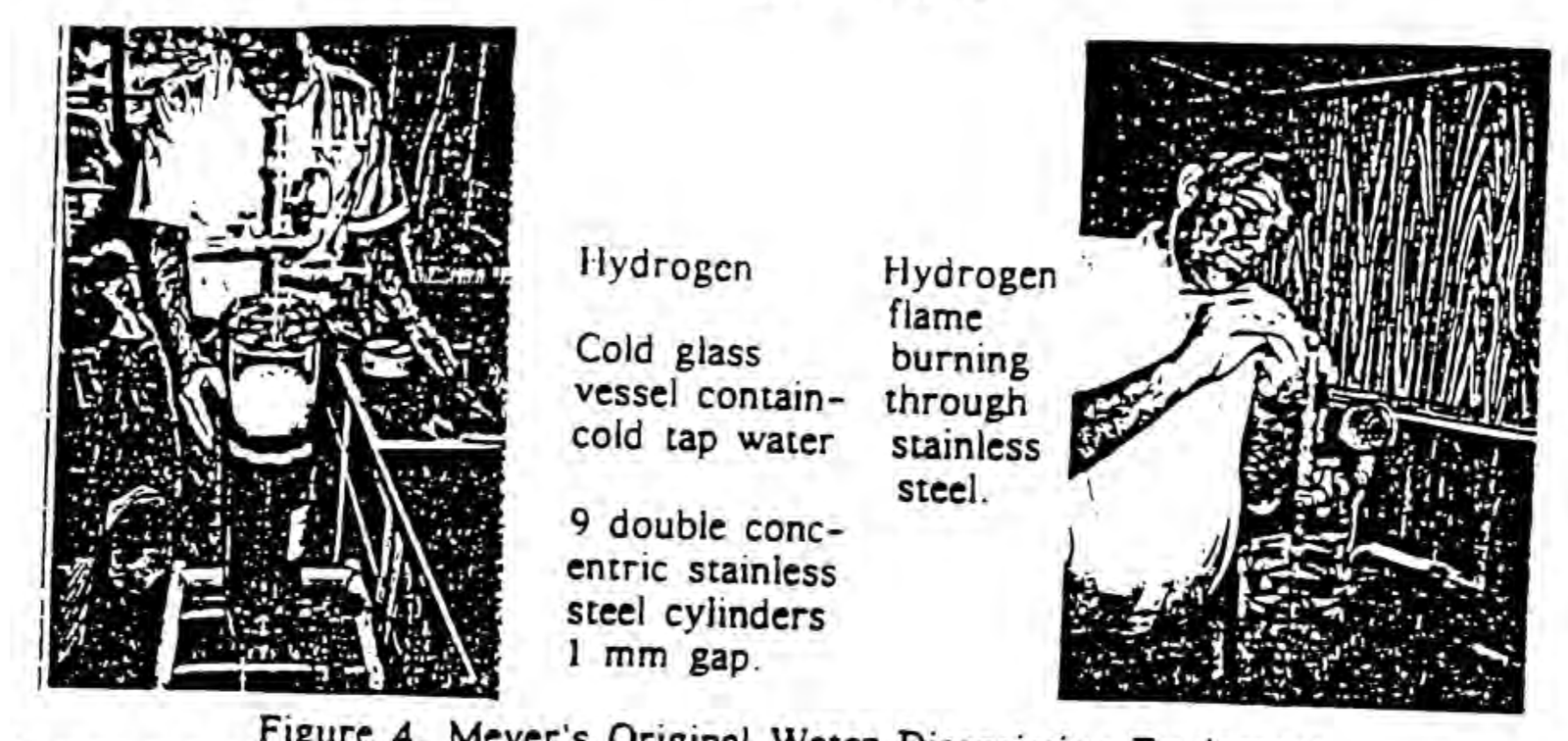
Meyer subsequently developed a complete system comprising all the components for the conversion of any form of internal combustion engine, either petrol or diesel, reciprocating or gas turbine, of up to about 400 bhp, to be fitted in any land, sea or air vehicle. The same principles apply to furnace heating or rocket propulsion.
He first assembled such a system in a rudimentary form and applied it to a 1600cc Volkswagen engine mounted in a running 'dune buggy' in 1985 when he gave a public demonstration as recorded on a video tape held by London University. He then proceeded to refine the design to bring it up to its present preproduction standard. This involved 30 further patents, the majority of which, under a particular regulation of the US Patent Office, needed to be demonstrated before being granted. Some 31 patents have so far been registered, mostly in the USA, Canada and Japan and several are listed under the international Patent Control Treaty.
According to Meyer his dune buggy, travelling at 65 mph, would cover 25 miles per litre of water, (salt, fresh or distilled).
Such a claim is of course revolutionary and what follows next is an attempt to describe, in very broad terms, the theoretical scientific basis of WFC technology and how this relates to the first and second laws of thermodynamics.
Theory of Water Fuel Cell technology
This begins with the basic structures of hydrogen and oxygen atoms and how they are combined in the water molecule.
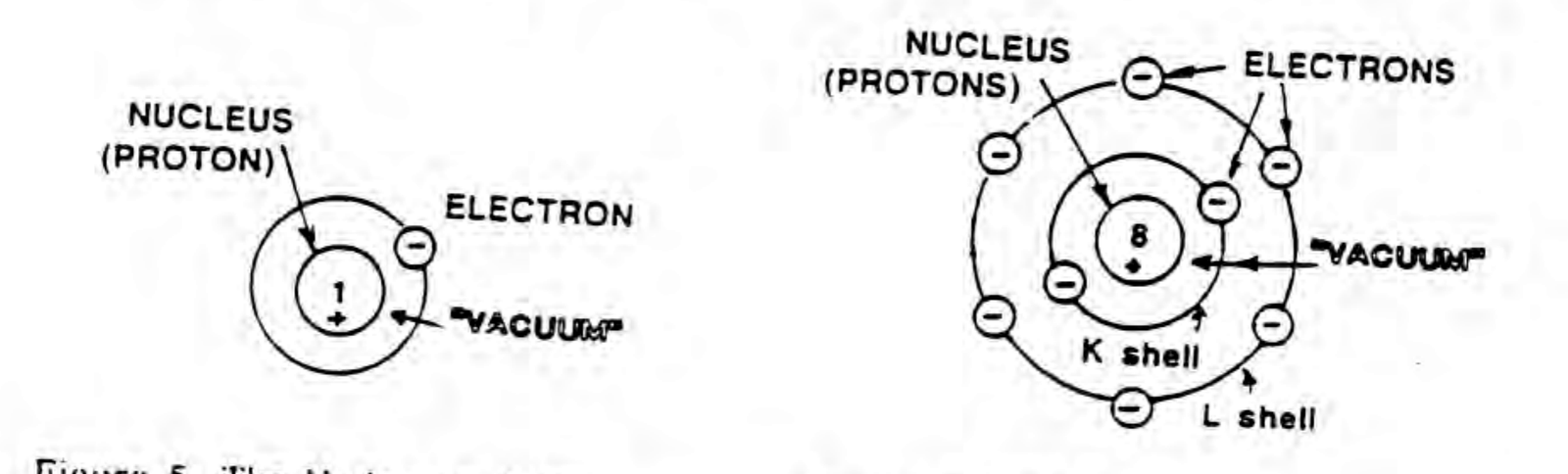
Note the orbital paths of the electrons and their 'shells'; the magnetic polarity of an electron and a nucleus; and the space occupied by the so-called vacuum.
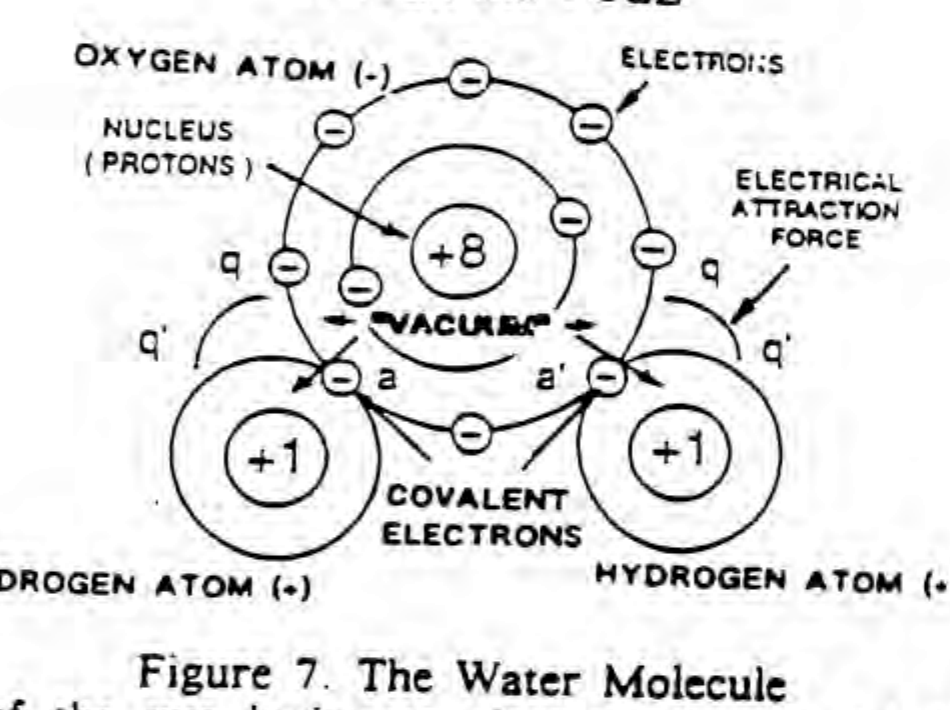
Note the presence of the two hydrogen electrons in the 'L' shell of the oxygen atom. These are known as the covalent electrons which are bonded in position by considerable electrical force. In the case of normal electrolysis the energy needed to break these bonds and produce separate hydrogen and oxygen atoms from water is roughly 3 times the energy of the hydrogen released. It is thus a highly inefficient process because of the considerable amount of waste heat which is generated.
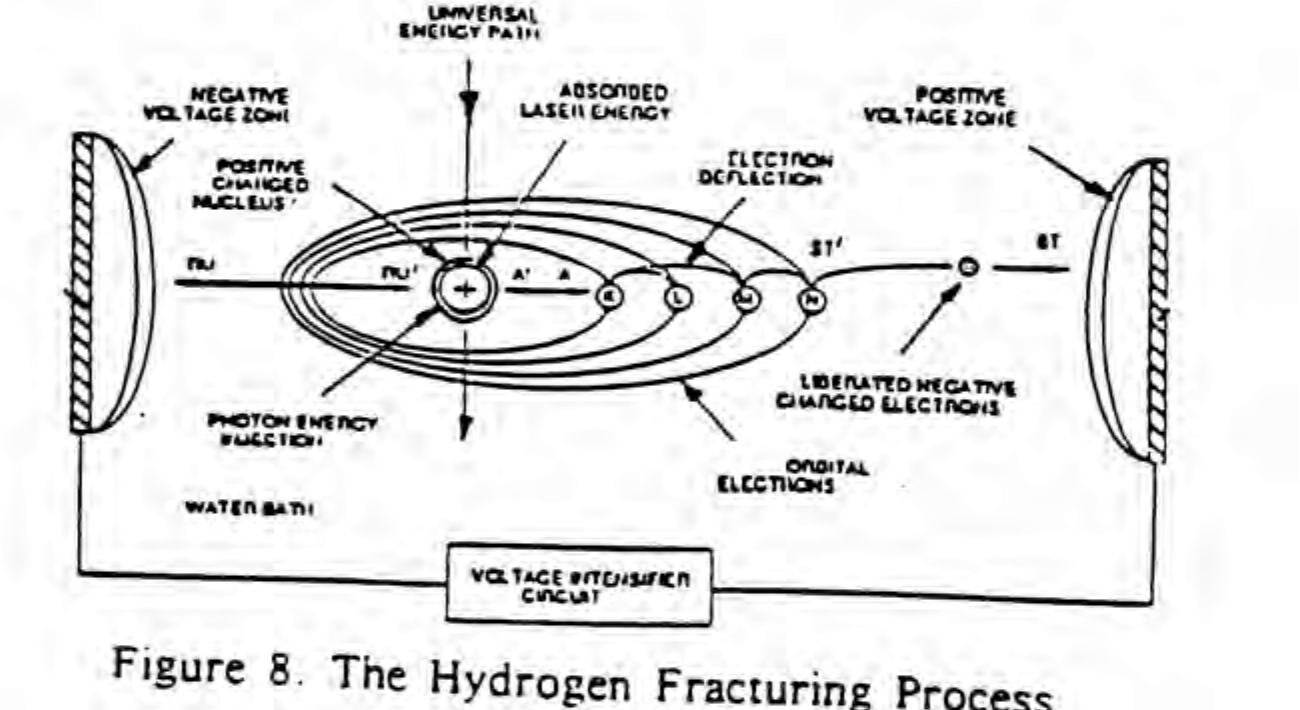
The energy extracted from water by the WFC derives from two distinct but virtually simultaneous processes. The first, the hydrogen fracturing process which dissociates the hydrogen gas from the water molecule and the second, the electron ionisation process, which enhances the explosive energy of the gases released.
The hydrogen fracturing process. Meyer [1]
The basis of this process is the subjection of the water molecule to very high voltage (20,000 +) pulses at a particular frequency and within positively and negatively charged voltage zones at a very low current (less than 1 milliamp).
The effect is to attract the negatively charged electrons towards the positive voltage zone and the positively charged nucleus towards the negative zone. The electron orbital path is changed from a circle to an ellipse and this, coupled with the effect of pulsing, causes such electrical stress on the molecule that the covalent bonds between the hydrogen and oxygen atoms are broken and the two gases are separated. Thereafter they require substantial energy to be applied before they can be recombined. Because the current is so low very little heat is generated. It is worth noting that, weight for weight, hydrogen contains about 2½ times the energy of gasolene and the latent energy in the hydrogen content of a pint of water amounts to over 9 million joules, or enough to run 2½ 1000 watt electric radiators for an hour. See Figure 8.
Explosive energy enhancement
Two distinct questions arise over explosive energy enhancement. First, Where does the additional energy come from? And second, How is it to be obtained and controlled?
The answer to the first question is the so-called vacuum within the electron shells. For many years this vacuum was regarded as a void. But James Clerk Maxwell, in his 'Treatise on Electricity and Magnetism' published in 1873, pointed out [2] that the vacuum in fact contains a considerable amount of energy. Subsequent work bears this out and it is now generally accepted that the vacuum is in fact seething with energy which has been variously described as, for example, 'universal energy', 'gravity field energy' or 'Zero Point Energy' (ZPE). John Archibald Wheeler of Princeton University and a leading physicist who worked on the US atomic bomb project, has calculated that the flux density of ZPE is of the order of 10⁹³ grams per cm³. [3] It is also recognised that the state of this so called 'sea of energy' is chaotic. Hence it needs to be 'engineered' or made coherent before it can be translated from a microscopic to a macroscopic state. In other words it requires special treatment before it can be tapped and controlled for normal external use.
Various answers, mostly theoretical, have been given to the second question. Recent examples include Ilya Prigogine's book 'Order Out of Chaos' [4] which describes the work which won him the Nobel Prize for Chemistry in 1977, Moray B. King's 'Tapping the Zero Point Energy' [5], Dr J. Huber's paper 'Phenomena of the Free Energy in Nature and Technology' [6], John Davidson's 'The Secret of the Creative Vacuum' [7] and, from the Kansas State University, Gary L. Johnson's 'Electrically Induced Explosions in Water' [8]. Some 30 supposedly practical devices have been made or suggested over the past 80 years, but although some have been demonstrated none has been developed or engineered to a preproduction standard.
Meyer's WFC Technology stands out as the only apparent exception. It has encountered deep scepticism but no argued rejection. Indeed an increasing number of scientists and engineers in the USA, Europe and Asia accept the technology and are prepared to invest in it on the basis of current evidence. A practical demonstration is in fact due to take place within the next few weeks based on a fully designed system, engineered to a preproduction standard and fitted to a running 'dune buggy'.
The technical basis [9] for Meyer's extraction and control of ZPE lies mainly in the effect produced on an atomic nucleus by continuation of the same high voltage pulsing that causes the dissociation of the water molecule. The nucleus consists of one or more positively charged protons bound together with a number of neutrally charged neutrons. The electrical effect of the electron pumping action mentioned earlier causes an annulus to appear in the middle of the nucleus. The ZPE is drawn in a helical motion through the annulus and, in doing so, becomes coherent and hence a usable source of energy. The voltage dictates the size of the annulus and hence controls the energy obtained. Since the basic structure of the atom is retained no α or γ radiation occurs. The effect might be illustrated by a bath full of water. So long as the plug is in place the water remains still and apparently powerless. However when the plug is removed the water swirls away with a helical motion down the plug hole and, under the influence of gravity, forms a powerful jet which can be directed to do work.
Meyer further stimulates the energy yield by injecting laser energy into the ionised water vapour. A diagram of the energy enhancement system is shown in Figure 9.
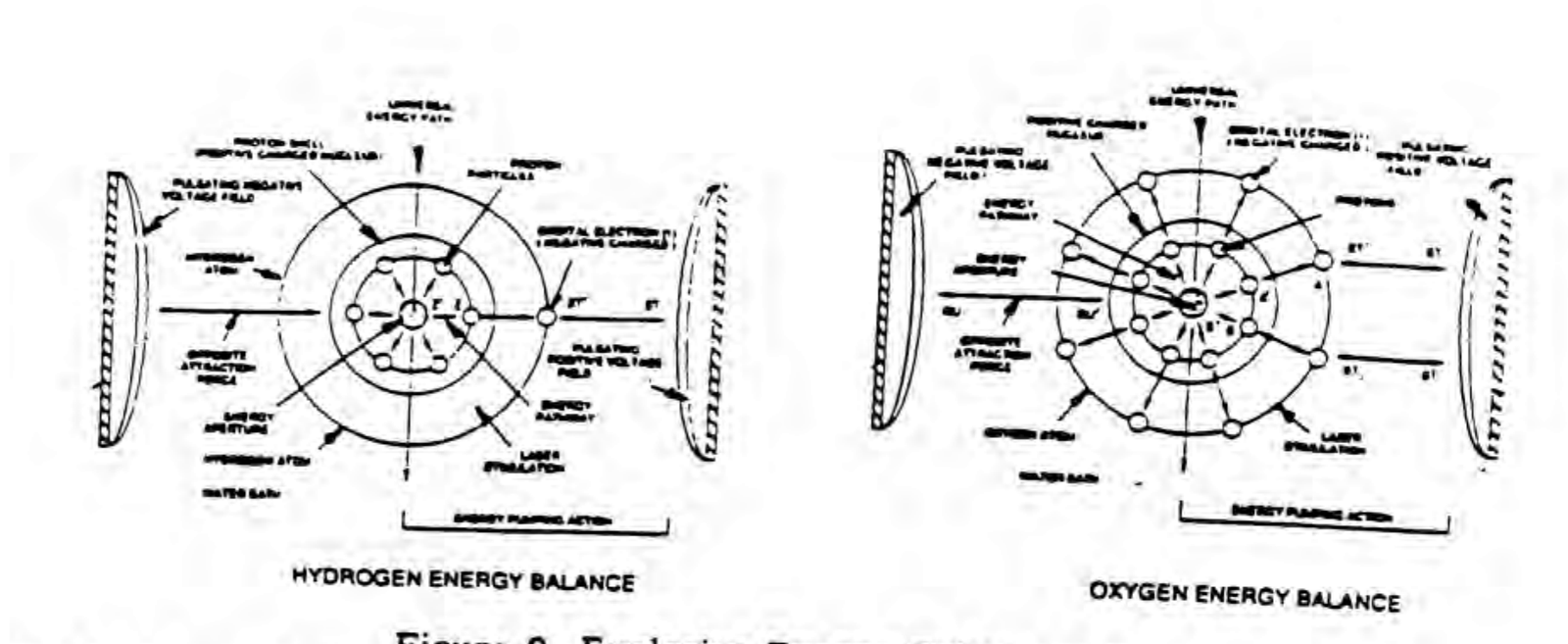
The hydrogen fracturing process and the energy enhancement of the gas occur almost simultaneously within the fuel injector. This, in an internal combustion petrol or diesel engine, replaces an existing spark plug or diesel fuel injector, and the output is ignited by a high voltage pulse on entry into the cylinder. Consequently the hydrogen does not have to be stored and the fuel tanks of land or air vehicles contain nothing but water. Vessels floating on water need no fuel tanks. The system is thus not only extremely safe but also inexpensive. Meyer has quoted the in-production cost of a conversion kit for a 1600cc Volkswagen engined car as $1500.
WFC and the first and second laws of thermodynamics
WFC technology encounters a credibility gap because it appears to run counter to the long established human laws governing our interpretation of Nature. Some people therefore reject WFC because it appears to be un-natural and just one more spurious claim for perpetual motion. In fact WFC is entirely natural. It merely demonstrates a new and revolutionary way of harnessing what nature has always had on offer. It does not infringe the two main laws of thermodynamics, i.e.:—
The First Law: 'The total energy of a thermodynamic system remains constant although it may be transformed from one form to another.' In the case of WFC technology the system is global. The energy required to drive the engine comes from the ZPE contained in water, a virtually inexhaustible source. The exhaust from the engine is water vapour which returns to the atmosphere.
The Second Law: As originally formulated by R. Clausius in 1865, this law states that 'The Entropy of the World strives towards a maximum'. As recently formulated by Prigogine and Stengers [10] this law 'contains two fundamental elements: (1) a negative one that expresses the impossibility of certain processes (e.g. heat flowing from a cold to a hot source) and (2) a positive, constructive one. It is the impossibility of certain processes that permits us to introduce a function, entropy, which increases uniformly and behaves as an attractor for isolated systems.' It is at maximum when the system is in equilibrium. Non equilibrium is the source of order and brings order out of chaos. Since WFC technology postulates non equilibrium it can be said to be supported by the positive element of this Law.
The vehicle system
The system starts with a normal 12v car battery and a tank full of water (salt, fresh or distilled). Under computer control the Voltage Intensifier Circuit is energised by the battery to generate high voltage pulses at a very low current, <1 milliamp, the voltage being responsive to the throttle. Simultaneously water and ambient air are mixed into a water mist which is injected with laser energy and fed into each fuel injector. There it is subject to high voltage pulses which, virtually simultaneously, lead to the separation of the hydrogen and oxygen gases, and the explosive energy enhancement. A specially high voltage pulse, applied at the exit of the fuel injector, ignites the gases as they enter the cylinder. The system is outlined in Figure 10.
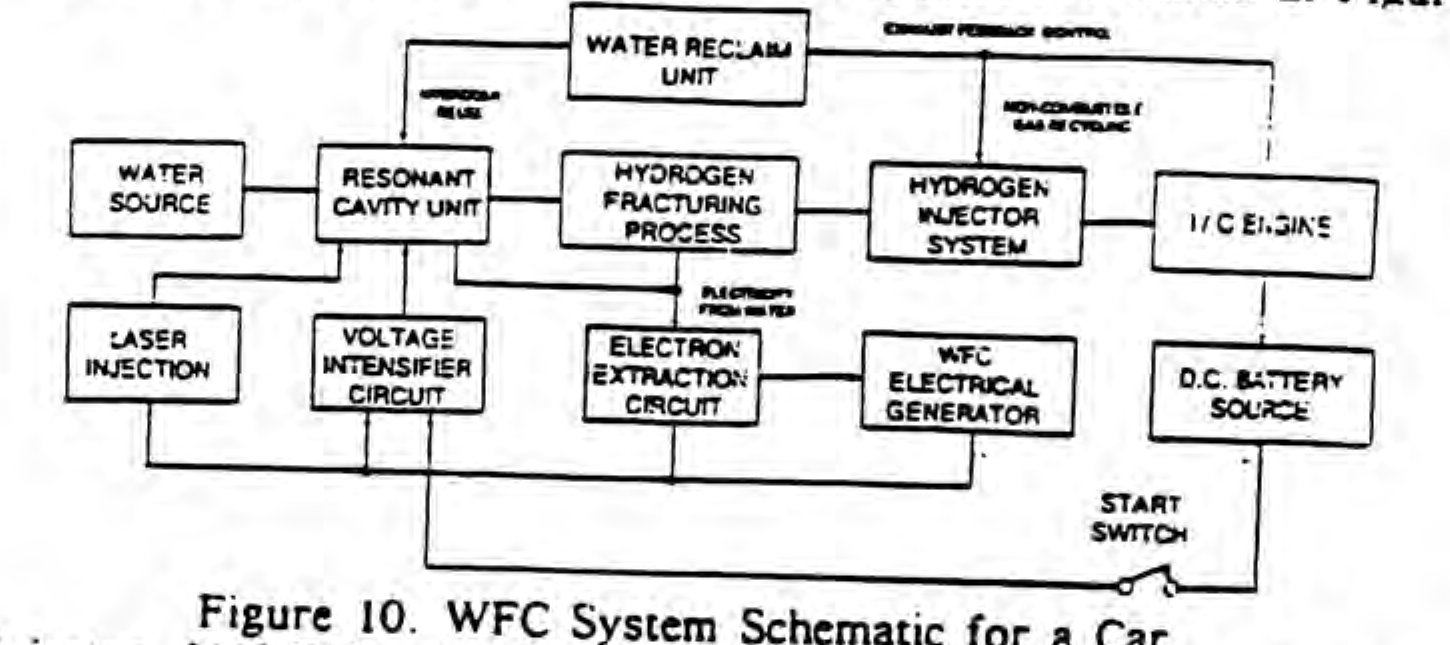
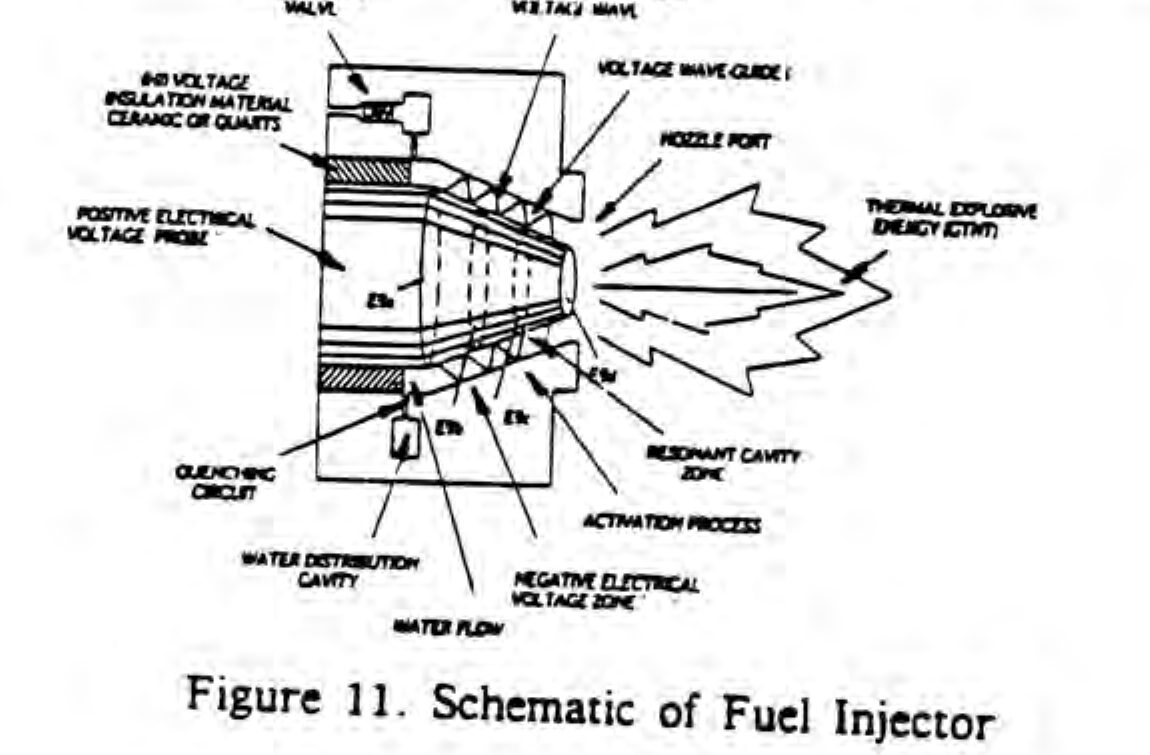
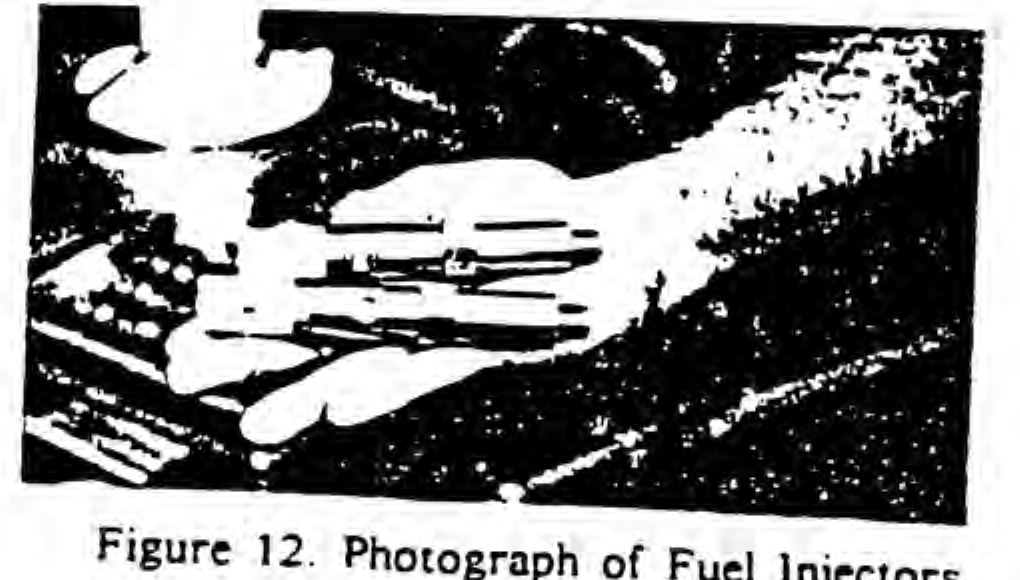
The Fuel Injector. [11] This highly innovative development accounts for the compactness of the vehicle conversion kit. It replaces the 'resonant cavity unit' which formed a relatively bulky and expensive component of the system as originally designed; eliminates the need for a special hydrogen conduit between the cavity unit and the fuel injection system; and reduces the variety of such systems by allowing any adjustments to be made through a newly designed universal computer. A schematic diagram is shown in Figure 11, and a photograph in Figure 12.
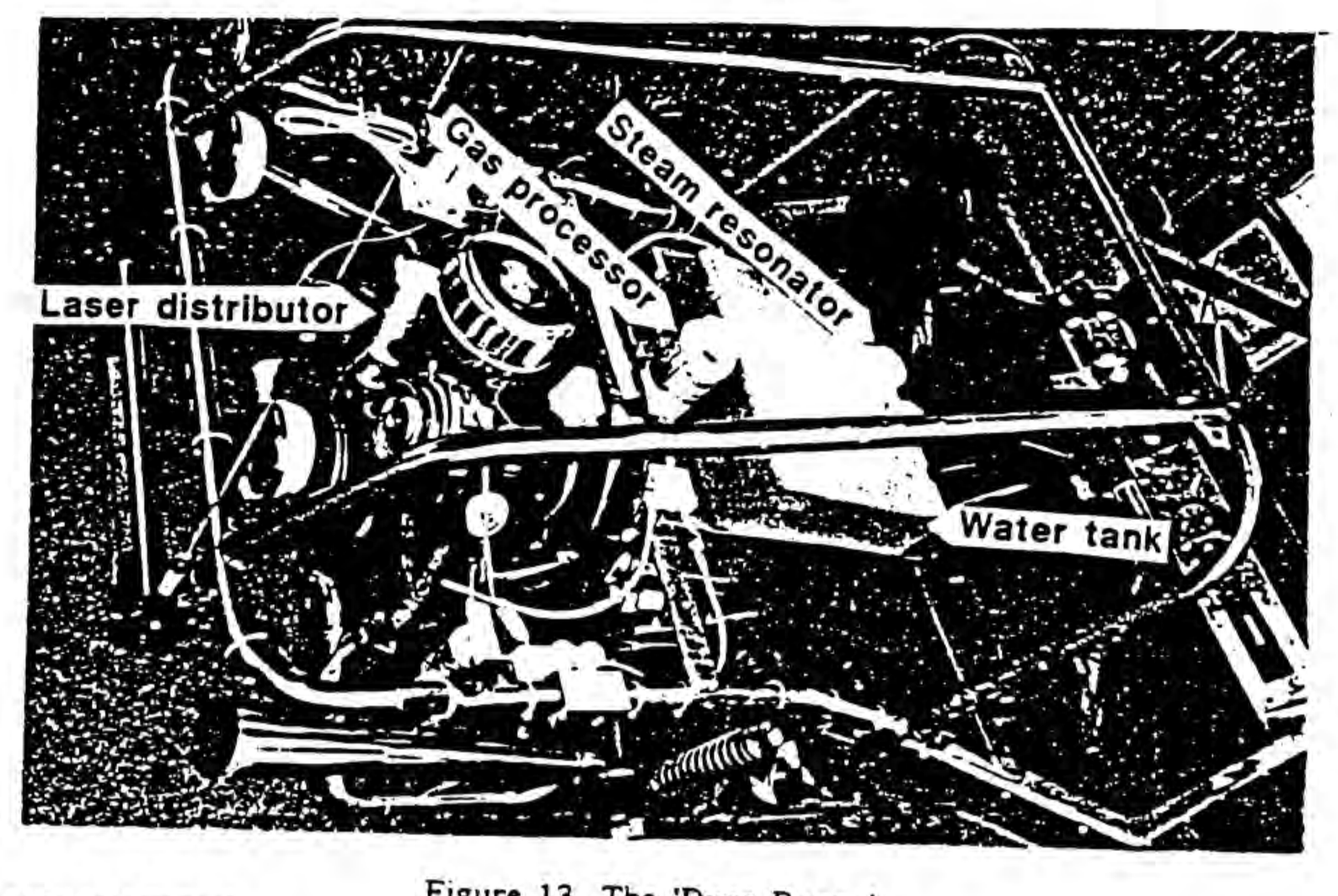
A photograph of the nearly completed 'Dune Buggy' is shown in Figure 13. The missing parts at the time the photograph was taken in 1992 are the computer which is located in the front compartment and the voltage intensifier coils which are to be mounted on the body frame each side of the engine.
Applications
General. In its current state of development, which is to a preproduction engineering standard, WFC technology can provide a safe, economical and pollution free source of universal energy for all internal combustion petrol or diesel engines of up to 400 bhp. In addition it can readily be adapted to gas turbines (both marine and aerial), to desalination plants, home heating boilers and industrial furnaces. A Dublin food processing company is now, with Irish Government support, manufacturing a water fuelled furnace under licence from Meyer. When WFC technology reaches its full production stage, Meyer intends to market a range of conversion kits.
Given some conventional engineering development, WFC technology could be applied to very much higher powers, such as electricity generating plants (both fossil and nuclear fuelled), slow speed diesels, and space rockets. It could also provide both the propellants and the explosives for many types of weapons.
In all these cases energy would be in the form of hydrogen, obtained from the dissociation of water, coupled with ZPE itself through energy enhancement.
Meanwhile Meyer has a further development in hand which he calls 'Hyperdrive'.
Hyperdrive. [12]
This new development does not require the generation of hydrogen and its subsequent combustion. It applies the energy, made available electrically from high voltage pulsing of the ZPE, directly to the generation of a water jet. It does not require an engine and has no moving parts. The power level is governed, as before, by the applied voltage. Direction is controlled by feeding the jet through manoeuvring nozzles such as those fitted to Harrier V/STOL aircraft or space rockets. It is thus of special significance to marine transport.
Application of WFC to marine transport
Existing Vessels. With the application of a straightforward and inexpensive conversion kit, the present engines of these vessels could be modified to run on hydrogen extracted from the water on which they float. All auxiliary machinery, powered lifeboats etc could be similarly fuelled. The use to be made of redundant fuel tanks, pumps and heaters etc would be a matter of choice.
Vessels Designed for Water Fuel. As these would be designed from the outset to run their existing machinery on hydrogen, any space or deadweight which would previously have been devoted to fuel etc could usefully be reallocated by design. Performance, especially speed, need not have to take account of endurance.
Vessels Designed for Hyperdrive. These would be subject to radically new design to accommodate the Hyperdrive power units, including the electrical plant, and manoeuvring nozzles. No propulsion machinery, propellors, rudders, stabilizers, hydroplanes or fuel pumps, heaters etc, would be required. These vessels would be considerably cheaper than conventional vessels to build and run. Auxiliary machinery and powered lifeboats would probably have to be run on their own hydrogen plants. A possible configuration might include four self contained hyperdrive units, two main ones aft and two smaller ones for'ard. They might well be made readily detachable for refitting.
Cargo Submarines. The advent of hyperdrive could allow the case for cargo submarines to be reopened. The advantages of such vessels are; first, independence of the weather, hence increased reliability of schedules; second the fact that below a depth of about 100 metres less power is required for speeds of over 20 knots; and third, given a closed cycle engine, advantage could be taken of some very much shorter trade routes under the Arctic ice cap. See Figure 14.
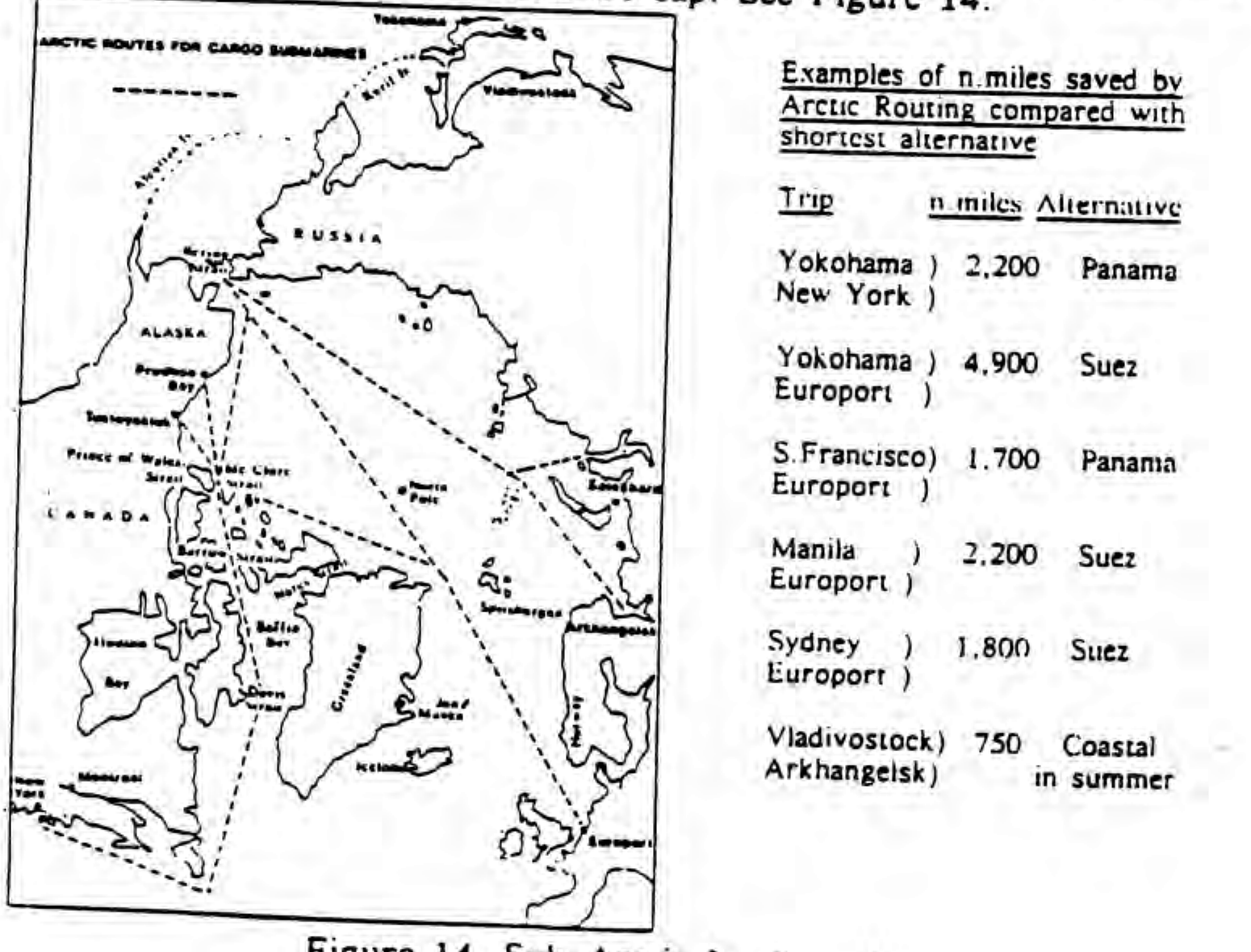
Seasonal ice coupled with the shallowness of the water restrict submarine passage through the Bering Strait to August and September. However, given commercial demand it is possible that this restriction could be eased.
Other trading opportunities lie amongst the considerable mineral deposits in the Queen Elizabeth Islands off northern Canada from where under ice submarine passage eastwards would not be affected by conditions in the Bering Strait.
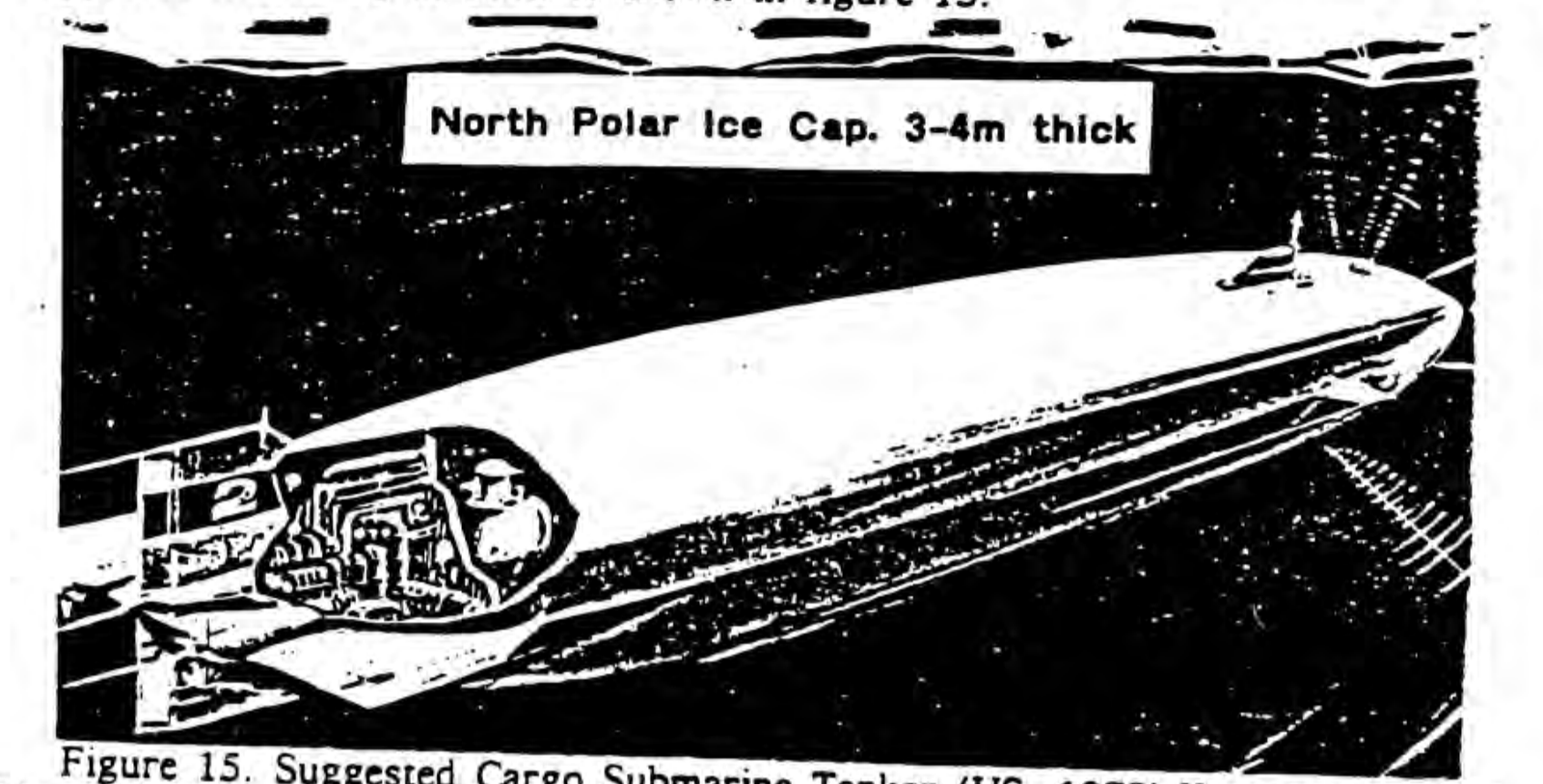
The possibility of exploiting these advantages commercially has been studied extensively, notably by General Dynamics [13] on behalf of the US government. Scores of conceptual designs have been suggested which offered speeds of up to 60 knots and deadweights of up to 500k tons. An example of an advanced tanker design suggested in the US in 1973 is shown in Figure 15.
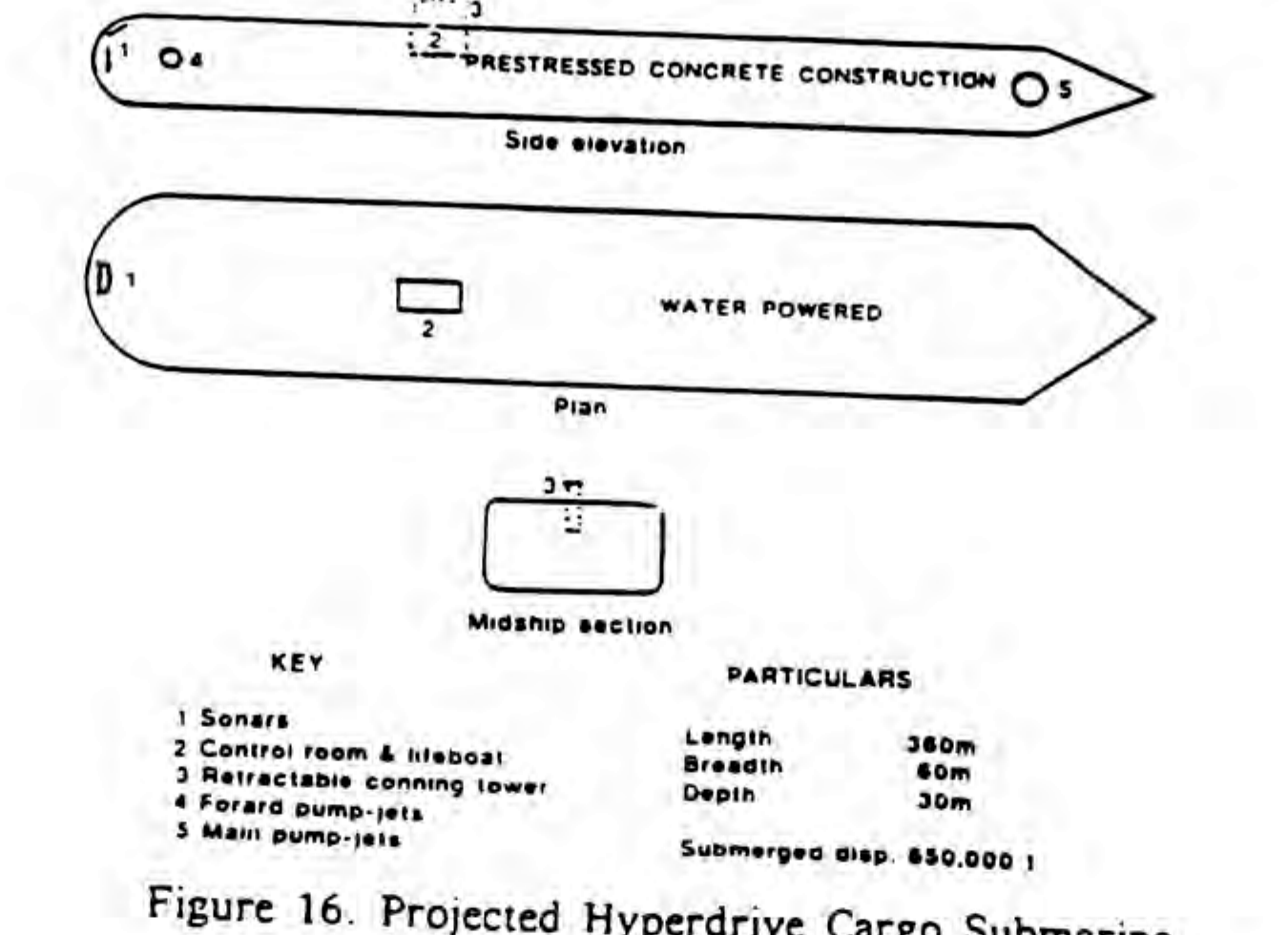
Regardless of their size or projected performance, all these vessels were judged to be uneconomical and their nuclear plants would have barred them from commercial ports. However, given hyperdrive, these disadvantages would no longer apply and an illustration of such a possible future cargo submarine is shown in Figure 16.
Water Refuelling of Aircraft. Aircraft which can fly low over water, notably helicopters, but also including certain fixed wing aircraft, could readily be adapted to include water scoops in the same way as French Riviera fire-fighting aircraft are now fitted for replenishing their water tanks. The endurance of aircraft so fitted would not be restricted by the capacity of their water fuel tanks.
The potential benefits of WFC technology
Elimination of Fossil Fuel Pollution. This would apply both locally and globally. In urban areas, such as Los Angeles, Athens, Tokyo and many other cities, pollution is an increasingly serious and apparently insoluble problem. Similarly prevailing weather patterns are said to spread pollution internationally and at the Rio de Janeiro conference concern was expressed about harmful damage being done to the World's ecosystem. Meanwhile vast resources are being expended on partial palliatives such as desulphurisation plants for power stations and the elimination of CFCs.
Elimination of Accidental Nuclear Fall Out. The effects of the Chernobyl nuclear disaster in April 1986 are still apparent in Wales and Scotland. The Russian nuclear power industry comprises scores of reactors which are reported now to be dangerously out of date and decrepit. There are about 50 such plants within about 10 miles of the Kremlin. A massive disaster threatens which demands immediate action and substitution by WFC power plants as soon as possible.
Elimination of Nuclear Power. The hazards and expense of nuclear power both at sea and on land, not forgetting massive problems over the disposal of nuclear waste and spent reactors, could be mitigated and eventually eliminated.
Cost Savings in Energy Production. Huge financial savings could be made over the research, production and distribution of almost all current forms of energy. (Hydro-electric and geo-thermal plants excepted).
Cost Savings in Energy Consumption. According to 'The Economist's 'Vital World Statistics' the World's total energy consumption in 1987 amounted to about 9.6 billion tons of coal equivalent. In 1990 the marine industry, according to the OECD, bought about 100M tons of bunker fuel, costing at today's prices about $10B. The cost of marine transport could be further reduced as vessels make better use of the weight and space currently taken up by their fossil fuel arrangements.
The Developing World. The most pressing and extensive need of the developing world is energy, especially for clean water and transport as necessary conditions of improvement of food production, infrastructure and health.
Defence. This factor is two edged. On one hand many weapons and vehicles, whether land sea or air based, would be cheaper, safer and more economical to run. On the other hand these factors could well encourage potential troublemakers. It will therefore be essential, presumably under the auspices of the UN, for peace-keeping and peace-making forces to be sufficiently well armed to deter offensiveness.
Possible adverse implications of WFC technology
Reaction of Current Energy Interests to Threat of Displacement. Vast resources have been committed in people and money to develop, promote and maintain whole energy industries in the fields of coal, gas, oil, and nuclear power. These investments cannot sensibly be closed down precipitately without causing major disruption and unrest. In several areas, such as the Middle East, Central America and Indonesia, national economies have become heavily dependent on national sources of fossil fuel. Consequently whole areas of the world could well become politically destabilised. Such a prospect, together with the natural concern of energy producers, could well threaten the introduction of WFC technology, as has frequently been foreshadowed during recent years by death threats and several proffered multi-million dollar inducements.
Desalination. Massive desalination of sea water could give rise to an excessive concentration locally of brine. Remedies need to be identified and applied.
Counter arguments to threats against WFC
The following arguments could usefully be deployed:—
a. The World's energy demands are increasing especially because the World's population, now about 10 billion, is forecast to double during the next century. Existing sources of energy should therefore be maintained so far as solutions to the pollution and nuclear problems allow.
b. Fossil fuels are likely to be exhausted within the next century.
c. The pollution problem needs urgent solutions.
d. There is a serious and increasing risk of major accidents amongst many nuclear power stations.
e. It may well take several decades before the application of WFC technology becomes significant.
f. There are more constructive uses, such as fertilizers and plastics, for fossil products than just burning them. It is possible that new fossil products could attract higher prices than are now obtainable for fuel.
g. WFC offers major global benefits, not least for the Developing World where competition for scarce resources causes civil war and starvation. The need is urgent. Plentiful free energy should provide such widespread economic benefits as substantially to reduce future threats to World peace.
h. With the exception of the urgent action needed to deal with pollution and dangerous nuclear power plants, there should be enough time to make reasonably orderly adjustments to the World's current energy supply industries.
Conclusions
General
a. WFC Technology offers a real prospect of a universal, ecologically friendly, economical and inexhaustible source of energy.
b. Its introduction would solve all the pollution problems now caused by fossil and nuclear fuels.
c. WFC technology would greatly benefit the world's economy as a whole. In the developing world, such tensions as civil wars and starvation, brought about by competition for scarce resources, could be significantly eased.
d. Weapons would be cheaper and hence tend to proliferate. This could result in increased threats to world peace. The UN would have to be prepared to provide adequate safeguards.
e. Major opposition must be expected to the introduction of WFC technology because of the threat it appears to pose to powerful vested interests and, in certain areas, political stability. There are powerful arguments for countering such opposition.
Impact on marine industries
a. As vessels would be floating on their own fuel, propulsion and other machinery in existing vessels should be converted to WFC technology as soon as possible. This would save all fuel costs, (except lubricants) amounting to about 30% of total running expenses. In many cases it should be possible to make further gains by putting existing bunker spaces and fuel facilities to better use.
b. Designs for new vessels should be modified as soon as possible both to include hydrogen fuelled conventional machinery and to design out, to commercial advantage, the need for bunkers and associated pumps, heaters etc.
c. There are major opportunities, especially in the marine field, for collaboration with Meyer over WFC developments for the immediate future. Potential conversion kits range from small outboard motors through, for example, auxiliary machinery and refrigeration plants to slow speed marine diesels and marine gas turbines of many thousands of horsepower.
d. A further substantial R&D programme is required, in close collaboration with Meyer, to bring Hyperdrive into service. Considerable technology is already available amongst existing marine pump jets and the control systems installed in aircraft and space vehicles.
e. More radical designs for vessels and submarines of all sizes should now be initiated to incorporate Hyperdrive with its elimination of the need for conventional propulsion machinery, propellors, rudders, stabilizers and hydroplanes.
f. Consideration should be given to the introduction of cargo submarines, powered by Hyperdrive, and constructed out of a new form of concrete material.
References
- Meyer, Stanley A. Hydrogen Fracturing Process. Memo WFC 420. Grove City, Ohio. 1990 © Stanley Meyer.
- Maxwell, James Clerk. A Treatise on Electricity & Magnetism. 1873. Paperback New York 1954, Vol 2 p.472 & 473.
- King, Moray B. Tapping the Zero-Point Energy. Provo, Utah 1989. © King, p.158.
- Prigogine, Ilya and Stengers, Isabelle. Order out of Chaos. New York 1984. Chapter IX.
- King, Moray B. ibid. 1989. Electrolytic Fusion: A Zero-Point Energy Coherence?
- Huber, J. Phenomena of the Free Energy in Nature and Technology. raum&zeit 49/91, Jan/Feb 1991.
- Davidson, John. The Secret of the Creative Vacuum, chapter 11. C. W. Daniel 1989.
- Johnson, Gary L. Kansas State University, 'Electrically Induced Explosions in Water'. Johnson's description of his technology has much in common with WFC.
- Meyer, Stanley A. Atomic Energy Balance of Water. Memo WFC 424. Grove City, Ohio 1991. © Stanley A. Meyer.
- Prigogine, Ilya and Stengers, Isabelle. Order out of Chaos. New York 1984. Chapter IV.
- Meyer, Stanley A. Water Fuel Injector. Memo WFC 425. Grove City, Ohio 1992. © Stanley A. Meyer.
- Meyer, Stanley A. Hyperdrive. Memo WFC 455/455DA. Grove City, Ohio 1991. © Stanley A. Meyer.
- General Dynamics Corporation. Summary of a Feasibility Study on Submarine Tankers. 1958.
- Kummerman Foundation. Ships and Shipping of Tomorrow 1983. p.108.
4th July 1993
In the archive: reference 6 is Huber's paper in translation, reference 8 is Johnson's SAE paper, both bound into the same report. References 1, 9, 11 and 12 are Meyer's memos WFC 420, 424, 425 and 455; the memos index says which of those the archive has recovered.
Provenance
- Shelf
- Stan Meyer Publications
- File
- database/content/pages/water-as-fuel-southampton-1993.json
- Rights
- Admiral Sir Anthony Griffin, 1993. Reproduced from the copy Meyer bound into his 1995 International Independent Test-Evaluation Report, for the record of what was said about his work.