patent · US3417274
Metallic members for insertion into glass
17 December 1968
Page 1
Drawing sheet — no readable text.
Page 2
United States Patent Office 3,417,274 Patented Dec. 17, 1968
In accomplishing the above object of the invention there 3,417,274 is provided a support member whose skirt portion, that
METALLC MEMBERS FOR INSERTION is, whose glass entering or insertion portion, has a con
INTO GLASS
Robert W. Bennett, Corning, and Lloyd G. Sprague, 3 heretoforefiguration differing from that of the support members Bath, N.Y., assignors to Corning Glass Works, Corning, employed.
N.Y., a corporation of New York Other objects and characteristic features of the inven Filed Sept. 27, 1966, Ser. No. 582,282 tion will become apparent as the description proceeds. 5 Claims. (Cl. 313–89) The invention will best be understood with reference to the accompanying drawings wherein:
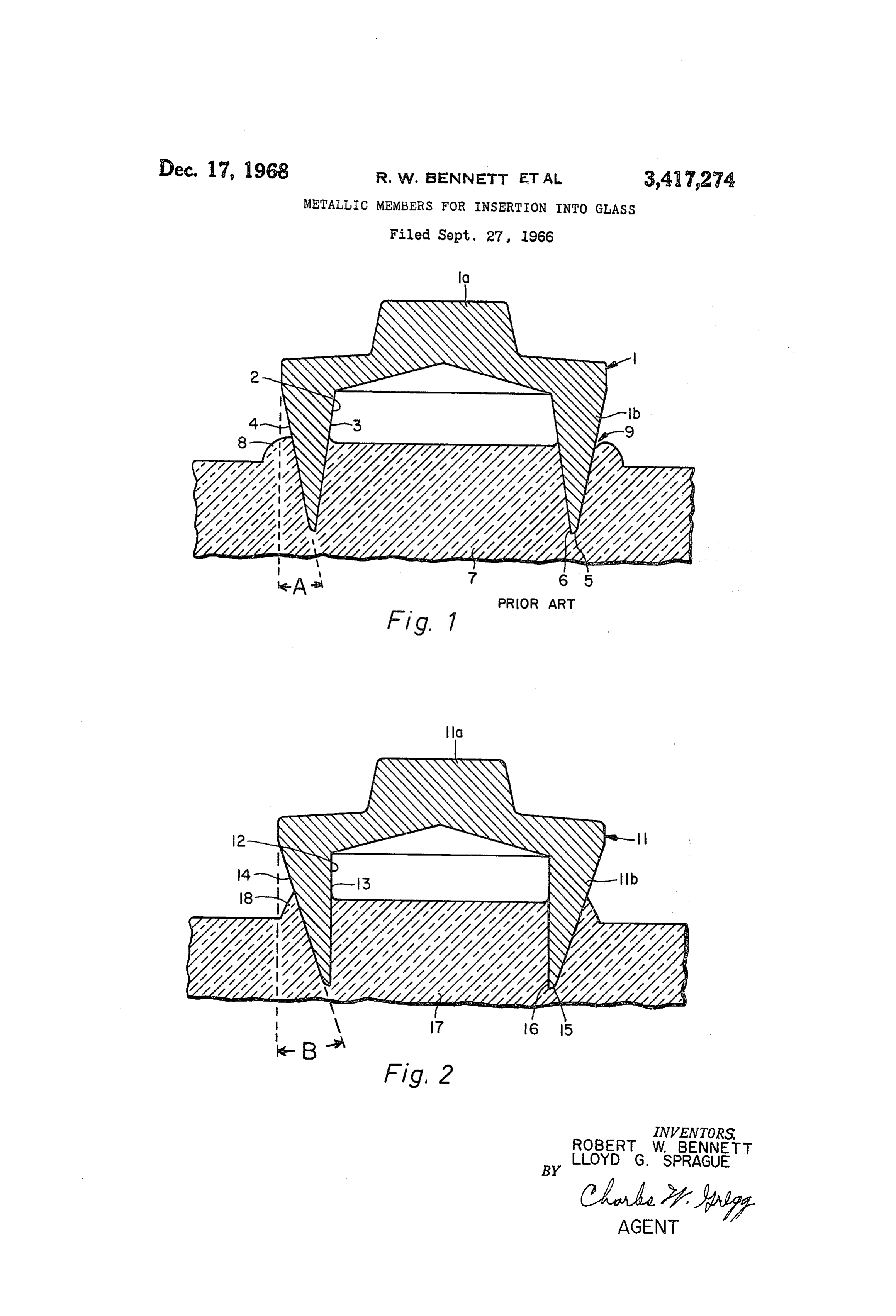
FIG. 1 is a diametric cross-sectional view of a support
ABSTRACT OF THE, DSCLOSURE member Such as heretofore employed and ilustrated as A metallic member for insertion into a glass body for inserted and sealed into aglass body; and Support of a load. Such body and load may, for example, FIG. 2 comprises a view similar to FIG. 1 but illus be the skirt portion of a glass television picture tube trating the configuration of the improved support mem viewing panel and a part of an aperture mask for such a ber in accordance with the invention. panel, respectively. Referring to the drawing in detail, there is shown in FIGS. 1 and 2 the respective support members 1 and 11,
respectively. It will be moted that members 1 and 11 are
The present invention relates to support elements or each shown as having identical tapered portions 1a and members for insertion and Sealing in the face plate or i 11a, respectively, each of which are of a lesser diameter viewing panel of a television picture tube. More specifi than the remainder of the respective member. These por cally, the invention relates to metallic elements or mem tions of the support members are intended to provide a bers which are to be inserted and sealed in the skirt portion Seating portion for an electronic element, such as an aper of a face p?ate of a cathode-ray television picture tube for ture mask, to be provided within the hollow of a wiewing support of an electronic element to be later mounted 25 panel or face p?ate in which the support members are in within the hollow ofsaid face plate. serted and Sealed. This is now well known in the art and There is disclosed, for example, in Letters Patent of reference may be made to the previously cited Blanding the United States 2,949,702, issued Aug. 23, 1960 to et al. patent if further information is desired. W. S. Blanding et al., a method of insertion and sealing 30 Portion 1b of support member 1 (FIG. 1) opposite sup hollow metal inserts in the skirt portion of a skirted glass port portion 1a, is the glass entering or insertion portion article such as the viewing screen or face plate portion of the support member. Portion 1 b overall is substantially of an al-glass television picture tube, said metal inserts of a frustoconical configuration and is provided with a being provided for the purpose of supporting an aperture hollow or cavity 2 which is also substantially of a frusto mask within the hollow of said face plate portion. Refer conical configuration. Inner and outer wall surfaces 3 and ence character 63 in FIGS. 1, 2, 7 and 8 of the patent 4, respectively, of portion 1b, converge to form an annular designates a hollow metal insert which is inserted, as il rim 5 defining an entrance or opening 6 leading into cav lustrated in FIG. 8 of the patent, through the wall sur ity or hollow 2. As previously mentioned, outer surface 4 face 62 of a television picture tube viewing panel P and of portion 1b of a support member, such as 1, uniformly is Sealed within the glass of the viewing panel as discussed tapers at a maximum angle of 12° toward the axis of in said patent. the support member. This angle is indicated by the letter Heretofore, the metal insert elements or members, such A shown in FIG. 1.
as member 63 shown in the Blanding et al. patent, were When a member Such as 1 is heated and inserted into a each provided with a skirt orglass insertion portion whose glass body, such as 7 (FIG. 1), in the manner and by the outside Surface uniform?y tapers at a maximum angle of method discussed in the afore-cited Blanding et al. patent, 12° towards the axis of the insert member, while, using a fillet of glass such as 8 is formed by the softened glass the method of Said patent, said insert memberswere satis filowing up the outside of the support member. Such a factorily inserted and sealed into the skirt portions of the filet of glass provides a satisfactory glass-to-metal seal. Viewing panels or face plates of television picture tubes However, as illustrated in FIG. 1, the fillet of glass Some in the majority of instances, for economic reasons it hi(s times falls away from the support member to form a re become increasingly expedient to provide for an even entrant angle, Such as 9, thereby providing a possibly un higher Selection of face plates or wiewing panels having satisfactory or unacceptable g?ass-to-metal Seal. As pre the insert or support memberssatisfactorily sealed therein. viously discussed, glass body 7 may, for example, be the That is, im order to help reduce the average cost of telewi Skirt portion of a television picture tube viewing panel or sion picture tubes having face plates or wiewing panels i5 5 face plate.
with the metal insert or support members provided therein, Referring now to FIG. 2, the improved support member it has been found expedient to search for ways and means 11 will be discussed in detail.
for improvement of the Sealing of such support members The glassentering or insertion portion of member 11 is in the face plates or wiewing panels, thereby providing for designated by the reference character 11b and corresponds a higher percentage of approved panels from each quan to portion 1b of member 1 in FIG. 1. Portion 11b is also Substantially of frusto-conical configuration and has a tity of panels in which the support members are inserted hollow or cavity 12 provided therein. Hollow or cavity 12 and Sealed. Accordingly, the metal insert or support mem has a Substantially cylindrical configuration rather than ber having the configuration herein described was devel the frustoconical configuration of cavity 2 of member 1 oped to provide for improved Sealing between each such and the axis of Such cavity coincides with that of portion member and the glass of a face plate or wiewing panel im 11b of member 1. Inner and outer wall surfaces 13 and which it is inserted. 14, respectively, of portion 11b converge to form an an In the light of the above discussion, it is an object of the mular rim 15 defining an entrance or opening 16 leading present invention to provide an improved support member into cavity or hollow 12. Outer surface 14 of portion 11b for insertion and Sealing into the skirt portion of a face tapers toward the axis of support member 11 and, thereby, plate or wiewing panel for an all-glass television picture toward inner surface 13, at an angle which is indicated by tube. the letter B and which is somewhat greater than the 12°
Page 3
angle A of F1C. 1: Extensive experimentation has dis portion and a glass insertion portion the support portion closed that angle B may be any angle in the range of being of a lesser diameter than the glass insertion portion from 14° to 20° and improved g?ass-to-metal sealing and of a configuration Suitable for support of said load characteristics over those of the so-called i 2 * member of thereon, and said glass insertion portion having a frusto FIG. 1 are attained. However, it has been found by such 5 conical configuration and embodying a cylindrical cavity, experimentation that optimum glass-to-metal Sealing char such portion and cavity having a common axis, the outer acteristics are attained when angle B is an 18° angle. surface of Said glass insertion portion uniform?y tapering When a member such as II, having an 18° angle B, toward said axis at an angle in the range of from 14° to is heated and inserted into, a g?ass body, Such as 17 and 20° and converging at a corresponding angle with the which may, for example, be the skirt portion of a televi inner surface defining the perimetric limits of Said cavity sion viewing panel or face p?ate, a fillet of glass Such as to form an annular wedge-like rim for insertion of such 18 is formed by the Softened glass filowing up the outside glass insertion portion into said glass body. of the support member. It will be noted that glass fillet 18 2. A member in accordance with claim i and in which has a considerably less convex configuration than the glass Said load is part of an aperture mask, said glass body is fillet 8 of FIG. 1 and, therefore, the possibility of the the skirt portion of a viewing panel for a television picture formation of a re-entrant angle, such as angle 9 of FIG. tube, Said support portion protrudes from said glass in 1, is substantially reduced or eliminated. It is also pointed sertion portion for partial support of said aperture mask, out that a support member such as 11, as compared to, a and said angle is an 18° angle. member Such as 1, can be inserted deeper into a glass 3. A metallic member for insertion into a glass body body before the fillet glass extends above or beyond sim for Support of an electronic element, such member com ilar prescribed limits on the periphery of the glass inser prising, a hollow frustoconical glass insertion portion and tion portion of the respective members. This feature is an element Support portion, the hollow in said glass inser attained because the amount of glass forced into the fillet tion portion having a cylindrical configuration and an axis area, when a member, such as 11, is inserted into a glass which coincides with that of such portion, the outer sur body, is less than when a member, such as 1, is similarly face of Said glass insertiom portion uniformly tapering inserted into a glass body. Furthermore, a support member toward said axis and converging at an angle within the such as 11, that is, a member whose glass entering or range of 14° to 20° with the inner surface defining the insertion portion tapers at an angle in the range of from perimetric limits of said hollow to form a wedge-like rim 14° to 20°, provides betterwetting of the member by the for insertion into Said glass body; and said support portion glass than does the so-called 12° member of FIG. 1. This protruding from said glass insertiom portion at the end isbelieved to be a result of the greater force against the thereof opposite and in a direction away from said rim, reduced amount of glass filowing into the fillet area when such support portion having a configuration suitable for a member, such as 11, is inserted into a glass body as support of said electronic element. compared to when a member, such as 1, is likewise in 4. A member in accordance with claim 3 and in which Serted. 3 3 said angle is an 18° angle.
It is pointed out that an optimum glass-to-metal seal 5. A member im accordance with claim 3 and in which is attained whem a support member, such as 11, is em said electronic element is an aperture mask, said glass ployed in conjunction with apparatus for electrical induc body comprises the skirt portion of a television picture tion heating of the member for insertion into a glass body.
However, when a member, such as 11, is heated and in 4 () tube viewing panel, and said angle is an 18° angle. serted into a glass body by the method and apparatus de References Cited scribed in the aforecited Blanding et al. patent, there is also attained improved glass-to-metal Sealing characteris UNITED, STATES PATENTS tics over those attained by a similar insertiom of a member 2,457,144 12/1948 Goodale ------------- 65–59 such as 1. 45 2,878,623 3/1959 Vincent ----------- 315–85 X Although there is herein shown and described only a 2,949,702 8/1960 Blanding et al. --------- 65–41 single embodiment of the invention, it is to be understood 3,004, 182 10/1961 Pfaender ---------- 3 i 3–85 X that such is not intended to be in any way limiting but that warious changes and modifications may be made JAMES W. LAWRENCE, Primary Examiner. therein within the scope of the appended claims without V. LAFRANCHI, Assistant Examiner. departing from the spirit and scope of the invention.
What is claimed is: U.S. C1.X.R. 1. A metallic member for insertion into a glass body for support of a load, such member comprising, a support 65–59, 154; 313–240
Provenance
- Collection
- Cited prior art
- Original PDF
- patentimages.storage.googleapis.com →
- Filed
- 1966-09-27
- Pages
- 3
- Method
- pdftotext (the PDF's own text layer) + pdftoppm 300dpi page scans
- Source
- Google Patents bibliographic record
- Granted
- 1968-12-17
- Inventors
- Robert W Bennett; Lloyd G Sprague; Corning Glass Works
- Transcribed from
- patentimages.storage.googleapis.com →