Roughly 14 times the combustive force than gasoline of equal volume
Started by tree Of Meraki · · 9 posts · last reply 29 October 2018
-
#1 ·
https://www.researchgate.net/publica...4uWRObOhNZBcJw
Using this process to dissociate water with sodium chloride electrolyte and 10-25% NaOH or KOH mixture would catalyze the sodium ion to be transverse between the chloride and OH group. Rendering the chlorine to bubble off with greater redox flow than normally witnessed. The benefit of this is the photochemical reaction of Hydrogen with Chlorine gas. If the HHO stream is passed through an electron extraction mesh electrode, the resultant gas can be subjected to UV light and cause the spontaneous photoelectrochemical reaction between Chlorine and Hydrogen. Roughly 14 times the combustive force than gasoline of equal volume.
see here:
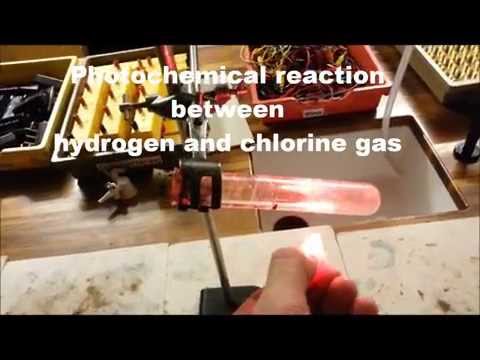
With water injection into the exhaust all chlorine radical can be purified out of the exhaust stream. -
#2 ·
Superb!tree Of Meraki wrote:
https://www.researchgate.net/publica...4uWRObOhNZBcJw
Using this process to dissociate water with sodium chloride electrolyte and 10-25% NaOH or KOH mixture would catalyze the sodium ion to be transverse between the chloride and OH group. Rendering the chlorine to bubble off with greater redox flow than normally witnessed. The benefit of this is the photochemical reaction of Hydrogen with Chlorine gas. If the HHO stream is passed through an electron extraction mesh electrode, the resultant gas can be subjected to UV light and cause the spontaneous photoelectrochemical reaction between Chlorine and Hydrogen. Roughly 14 times the combustive force than gasoline of equal volume.
see here:
With water injection into the exhaust all chlorine radical can be purified out of the exhaust stream.
Rgds
Faraday88. -
#3 ·
That's very interesting!
Can you give the exact protocols you used to do this experiment?
A full video of the entire process would be very helpful. I downloaded the paper, but a video walk through of your particular experiment would be valuable.
Are you one of the writers and experiments of the paper? -
#4 ·
Hi Tree of meeraki,tree Of Meraki wrote:
https://www.researchgate.net/publica...4uWRObOhNZBcJw
Using this process to dissociate water with sodium chloride electrolyte and 10-25% NaOH or KOH mixture would catalyze the sodium ion to be transverse between the chloride and OH group. Rendering the chlorine to bubble off with greater redox flow than normally witnessed. The benefit of this is the photochemical reaction of Hydrogen with Chlorine gas. If the HHO stream is passed through an electron extraction mesh electrode, the resultant gas can be subjected to UV light and cause the spontaneous photoelectrochemical reaction between Chlorine and Hydrogen. Roughly 14 times the combustive force than gasoline of equal volume.
see here:
With water injection into the exhaust all chlorine radical can be purified out of the exhaust stream.
Although the above experiment is enlightening, I see that the other colour lights are from LED sources. Why not use a the UV source from a UV LED as well,that would be essentially very conclusive!
Best Regards,
Faraday88. -
#5 ·
Hi Tree of meeraki,Aaron Murakami wrote:
That's very interesting!
Can you give the exact protocols you used to do this experiment?
A full video of the entire process would be very helpful. I downloaded the paper, but a video walk through of your particular experiment would be valuable.
Are you one of the writers and experiments of the paper?
Although the above experiment is enlightening, I see that the other colour lights are from LED sources. Why not use a the UV source from a UV LED as well,that would be essentially very conclusive! the intensity and the quality (Frequency usually measured in wavelength means(nm)) of the light are the two attributes to the 'Ignition' this reaction.. in my school days I did this experiment with Halogen lamp which has good proportion of both.(UV light with Intensity and Quality(nm)) Chlorine+Hydrogen Photo-triggered reaction.
Best Regards,
Faraday88.[/QUOTE] -
#6 ·
Hello, i would like to clarify that the video and research are not mine and i have no place in them except for that i am interested in the chemistry and the feasibility of Radio-frequency induced dissociation and further usage of a chlorine-hydrogen fuel. The research link is to stimulate conversation and thought about the concepts. Correct, @Faraday88, had this video used a UV led as well it would have been more conclusive, however the reaction between H-CL is very well known and very "old" chemistry. -
#7 ·
Hello Aaron, it's cool that you replied! I would like to clarify for you that i am not apart of the research team or nor-did i make the posted video. I am posting them to stimulate thought and conversation. However i am currently building the RF power source, i have the frequency generator and will be experimenting with the set-up presented in the research paper. My idea is however to use a cationic membrane based water reservoir with a NaCl electrolyte on one side and a NaOH electrolyte on the other, or kCl and KOH respectively. In theory that should minimize the glow discharge of sodium ion's reacting with water and hydrogen gas at the "pinch" point, which would allow the device to liberate chlorine gas and use it as an "oxidant" as a working gas. -
#8 ·
I haven't experimented with this exact concept but I recall talking to "Tutanka" about it years ago. The UV seemed to have a very narrow window to work.tree Of Meraki wrote:
Hello Aaron, it's cool that you replied! I would like to clarify for you that i am not apart of the research team or nor-did i make the posted video. I am posting them to stimulate thought and conversation. However i am currently building the RF power source, i have the frequency generator and will be experimenting with the set-up presented in the research paper. My idea is however to use a cationic membrane based water reservoir with a NaCl electrolyte on one side and a NaOH electrolyte on the other, or kCl and KOH respectively. In theory that should minimize the glow discharge of sodium ion's reacting with water and hydrogen gas at the "pinch" point, which would allow the device to liberate chlorine gas and use it as an "oxidant" as a working gas.
This looks like someone trying to utilize this concept in an engine - not sure what progress they've made so far:
 Log into Facebook to start sharing and connecting with your friends, family, and people you know.
 -
#9 ·
Guys,Aaron Murakami wrote:
I haven't experimented with this exact concept but I recall talking to "Tutanka" about it years ago. The UV seemed to have a very narrow window to work.
This looks like someone trying to utilize this concept in an engine - not sure what progress they've made so far:
https://www.facebook.com/photo.php?f...type=3&theater
This Attached Patent looks close to the Optically Triggered methods, although its is closer to the Joseph Papp Variant of Nobel Gas Plasma Engine.US3977191.pdf
Rgds
Faraday88.
Sign in to reply, or ask for an account.