patent · US2029748
Storage of gasoline
4 February 1936
Page 1
Drawing sheet — no readable text.
Page 2
Patented Feb. 4, 1936
SORAGE OF GASON:
Harold C. Weber, Milton, Mass, assignor to Uni versal Oil Products Company, Chicago, il, a corporation of South Dakota
Application March 14, 1932, Seria No. 5981
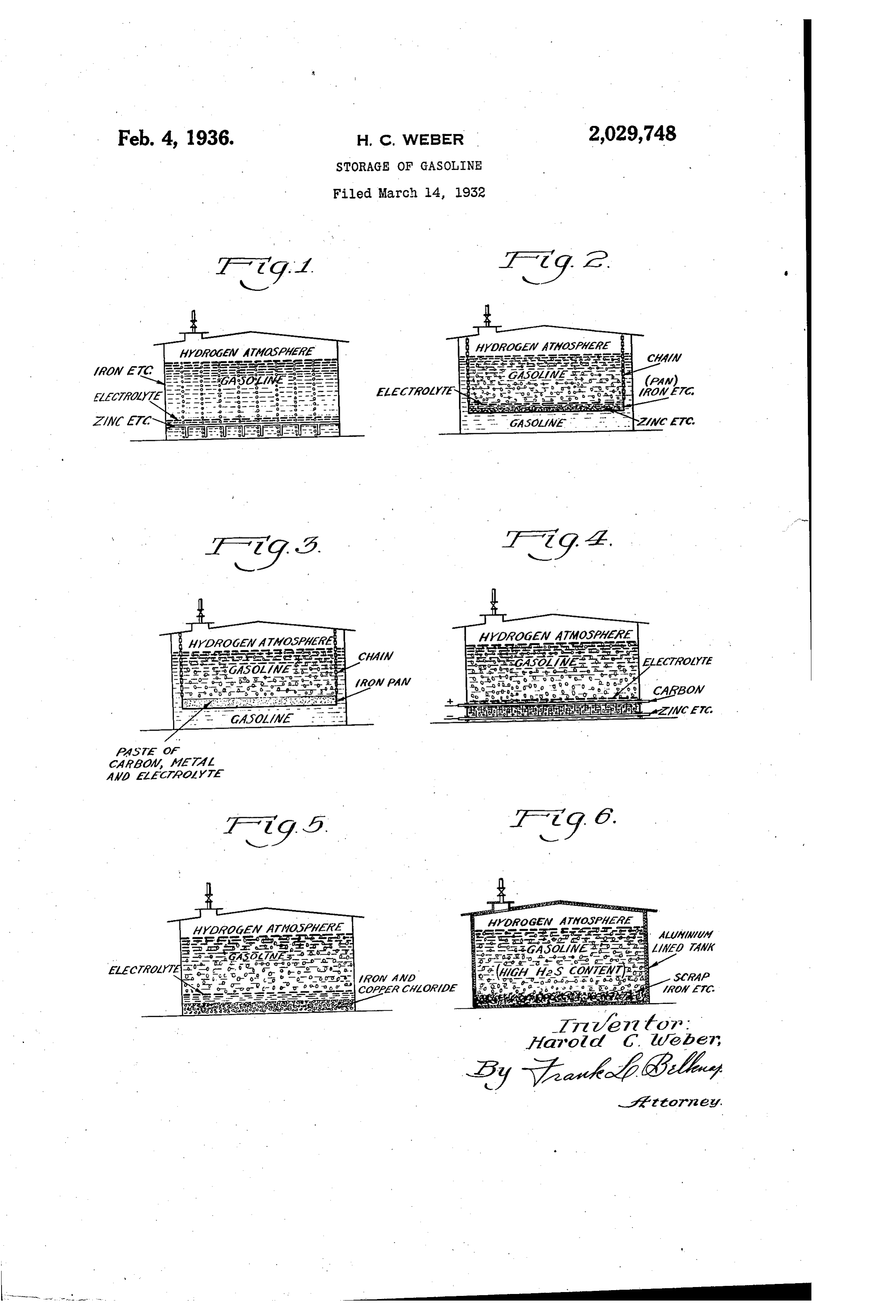
This invention relates to the treatment of motor fuel, and refers more particularly to the It is preferred to employ hydrogen as a reduc treatment of motor fuels produced by cracking. ing atmosphere, and the invention further com relatively heavier portions of crude petroleum. prises the generation of hydrogen in contact with In a more specific sense the invention provides the gasoline, this being possible of accomplish a process or method of treatment whereby the ment by a number of methods which may readily deterioration of gasolines during storage with re be applied in practice. To illustrate some of the Spect to Color, gum Content, knock rating, et methods which may be employed, the attached cetera, may be substantially prevented, the drawing has been provided which indicates six methods of generating hydrogen, though other 10 method of treatment disclosed eliminating the methods than the ones shown may be employed 0. principal causes contributing to the deterioration of the properties of the gasoline above mentioned. as the invention is broad in this respect. Gasolines produced from petroleum, and par Referring to Fig. 1 of the drawing, a simple ticularly those produced in cracking the heavier electrolytic method of generating hydrogen is 5 portions thereof, contain constituents in ninor shown. A solution of an electrolyte is main percentages which are unstable on standing, par tained below the surface of the gasoline in a stor ticularly in the presence of light and air and at isagesupported tank and a 2inc frame or grid of suitable type in the electrolyte so that an electric times contact with metallic surfaces, which cata couple is set up between the two metals of dif lyze the reactions. It has been established that the development of color and gums and loss of ferent position in the electro-chemical series, this knock rating suffered by gasolines in storage is resulting in the generation of hydrogen at the 20 surface of the iron, which return serves the two due to a large extent to the presence of di and tri fold olefinic hydrocarbons which have a pronounced for purpose of providing a reducing atmosphere tendency to polymerize and form high molecular iron.theThe gasoline and preventing corrosion of the latter may comprise various solutions weight aggregates of a gummy or resinous nature, the initial stage in this gum formation being evi of indirganic acids, bases or salts and may, for 25 dently attributable to the initial formation of . example, be a simple solution of sodium chloride, peroxides or other Oxygen addition compounds. caustic soda or even the natural brine separated 30 Other components may contribute to the overall from crude oil. The strength of the electrolyte, result or act to accelerate. the reactions of the amount of zinc used and the efficiency of con polymerization, such as unstable sulfur coma tact may be readily adjusted so that hydrogen is SO pounds either inherent in the raw gasoline or generated at a moderately slow rate and no re resulting from treatment with sulfuric-acid or . . . moval of spent materials is needed until the other chemicals. The net result of these re gasoline is removed for sale. M actions, whatever their exact character may be, ployed in Fig. 2 a modification of the method en
is to depreciate the color of the gasoline, increase generation is shown,being the conducted electrolysisinfora pan the 3.
its gum content and decrease its knock rating or series ofofpans suspended in the gasoline at a and practically all commercial treating processes are aimed at treating out a sufficient amount of point near the bottom of the tank, this method 40 the undesirable unstable components to permit allowing the introduction of new electrolytic ma storage over several months without rendering tank. terials without removing the gasoline from the the gasoline unsaleable unless retreated.
The accomplishment of this end has thus far contain in Fig. 3 a pan is again employed which may been attacked from two general standpoints, the materials similar to those employed in
first being to remove the trouble-making com til so-called dry cells, hydrogen being generated un ponents by suitable chemical treatments which the materials are spent at which time the pan 45 are frequently tedious and expensive, and the may be raised and the dresh charge introduced. second to add inhibiting materials to the gasoas. In Fig. 4 a system of hydrogen generation is lines which counteract the tendency of the fuel force shown which employs an Outside electromotive 50 toward deterioration. to deco an electrolyte to produce re The present process is distinct from these two ducing gases. A positive electromotive force is 50 general methods stated, and in One specific em impressed on a carbon or iron electrode of suit- . bodiment consists in providing a reducing atmos able design immersed in an electrolyte and insu phere in contact with stored gasolines, thus lated from the tank proper, the current passing 55 eliminating the principal cause of deterioration. to a second electrode of similar design and sim ilarly insulated, placed in opposite relationship 55
Page 3
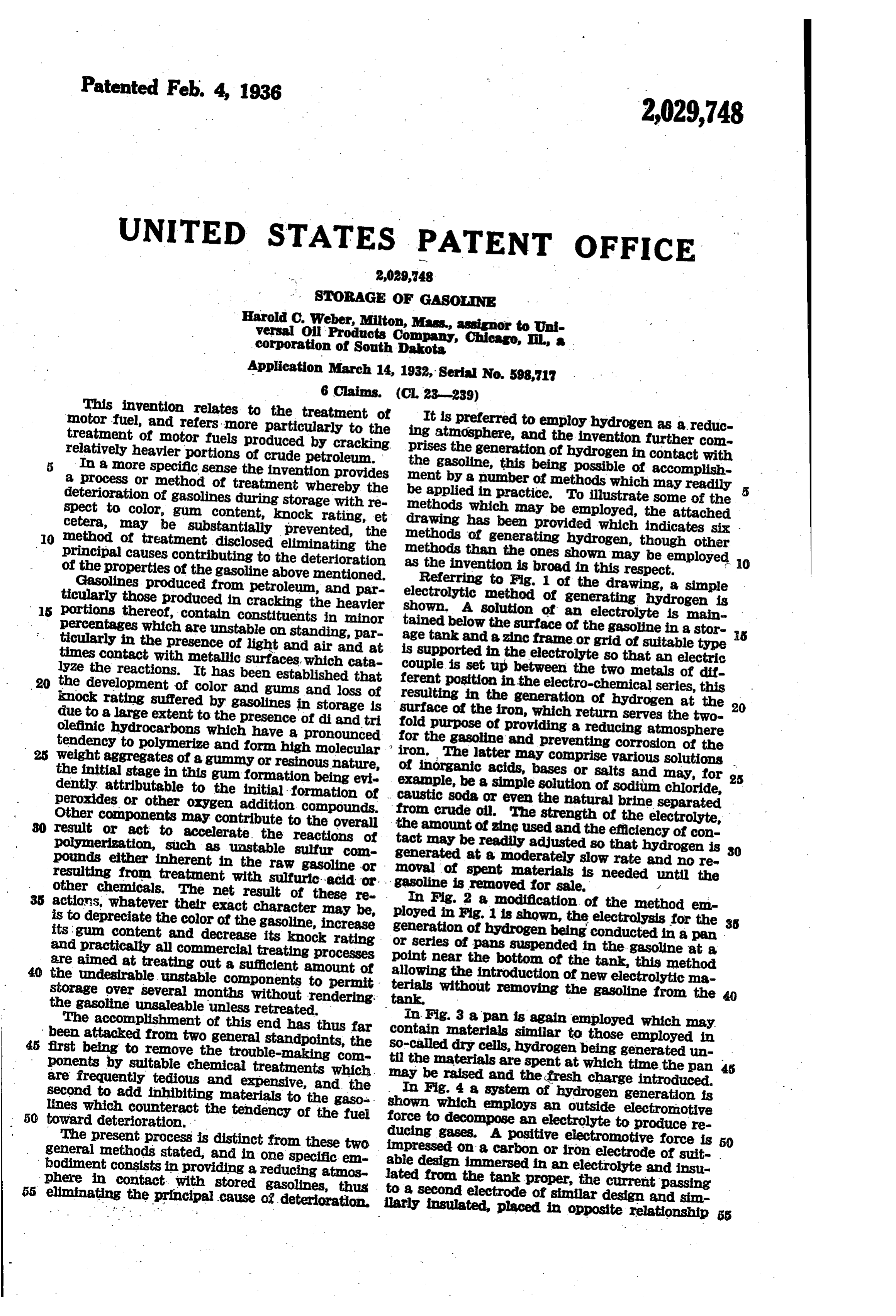
thereto. Assuming that the essential reaction is sulfuric acid per barrel of gasoline. By main taining a reducing atmosphere in the gasoline, the decomposition of the water in the electrolyte, the amount of acid necessary for producing a the net result will be the release of hydrogen. On Saleable product before and after storage may be the second electrode and oxygen on the carbon Or other electrode which will result in the formation reduced to four pounds per barrel. The following tabulation shows in column 1 the of oxides S0 that the reducing atmosphere in this properties of the gasoline from the fractionator, case will consist of hydrogen or a mixture of the of the process prior to chemical treatment; col various gases evolved. umn 2 shows the properties after treatment with O Fig. 5 shows a convenient method of slowly gen ten pounds per barrel of Sulfuric acid; Column erating hydrogen from Water. Or aqueous electro 10 lytes by the interaction of iron therewith, the 2A shows the properties of this treated gasoline rate of reaction being controllably accelerated by after two months' storage; column 3 shows the properties after treatment with four pounds of incorporating Small amounts of copper chloride with the iron particles. This method is of simple acid and column 3A snows the properties which 15 and ready application and results in the gradual this ing treated gasoline may have after storage dur the slow generation of hydrogen beneath its formation of iron oxide with the simultaneous liberation of equivalent amounts of hydrogen to Surface.
effect the results desired. 2 2A 3 3A Fig. 6 shows a method of generating hydrogen 20 20 somewhat different than the five preceding in that use is made of the sulfur which may be pres Gravity, A. P. I.------- 56.1 56.2 55.8 56.3 56
ent in some gasolines, particularly those result Color, Saybolt---------- 10 --30 23 29 28 ing from the cracking of high sulfur charging Gums, copper dish------ 340 20 55 30
stocks to produce the necessary amount of hydro Octane number.-------- 76 71 69 74 74 25 gen. By employing an aluminum lined tank which is resistant to the corrosive action of hy Consideration of the figures in the preceding drogen sulfide and homologous Sulfur compounds, tabulation will make the advantages of the proc scrap iron may be added to the gasoline to react ess readily apparent. It will be observed that slowly with the sulfur compounds with the for while the color produced in the ten pound acid 30 30 mation of iron sulfides and the liberation of gas treatment was --30, that the color dropped after eous hydrogen, the efficiency of the reaction be two months' storage to 23, the gum content ris ing somewhat promoted by the contact of the iron ing at the same time from 20 to 55 mgs. Fur with the aluminum lining, although the conduc thermore, the relatively heavy acid treatment tivity of the gasoline is of a low value. reduced the octane number 4%, this dropping 35 The foregoing examples of methods for pro still further on storage to a final value of 69%. ducing reducing atmospheres essential to the The lighter acid treatment producing the gaso preservation of desirable properties in gasoline line having properties shown in column 3 pro are merely illustrative of many different methods duced a 29 color which was slightly below the that may be employed. The rate of generation color resulting from a ten pound treatment, of the gas may be controlled in a variety of ways, which, however, dropped Only One point after and in general will be maintained only at a point two months' storage So that the final value was sufficient to prevent the depreciation of proper five points higher than the color of the ten ties in any particular gasoline being stored. It pound treated gasoline after a similar period of has been found that with gasolines of fairly good storage. The lighter acid treatment had notice stability that the amount of hydrogen necessary ably less effect upon the octane number, the value is very small, and in some cases it is sufficient of 74% undergoing no further change upon stor merely to provide enough for the initial displace age in the reducing atmosphere. The gum con ment of oxidizing gases in the storage tank, while tent underwent substantially no change. in others the generation of hydrogen must be The preceding description of the invention and 50 50 maintained at a higher rate to insure effective the examples of results obtainable by its use will inhibiting action. serve to define its character and show its advan The particular method of hydrogen generation tages, but neither is to be construed as imposing employed and the rate of generation will also de limitations thereon.
pend on a number of other factors such as the By the term "electrolytic means' as used in SS 55 temperature of storage and the relative amounts the Specification and claims is meant a process of unsaturated and Sulfur compounds present in which not only includes the use of electric cur the gasoline, etcetera. It will be noted that the rent for generating hydrogen, but also the use tanks shown in the drawing are provided with of metals or other substances in conjunction with a vent for the release of excess gas pressure SO a medium whereby a difference in electromotive 60 that they will not be subjected to unsafe internal potential exists between two or more of the sub pressures. Automatic release devices or "breath stances, and as a result hydrogen is generated. ing' systems may be employed and if necessary The expression "storage over prolonged time the evolved gases may be subjected to absorption periods', used in the claims, is intended to dif to recover gasoline constituents although in many ferentiate from the customary refining of oil 65 65 cases the process has the added advantage of wherein the time of contact between the oil and producing a gradual stabilization or weathering refining agents in treating apparatus is only of so that the gasoline is thus further improved. relatively short duration as compared with the As an example of the results which may be ob customary long time periods during which oil is tained by the application of the process, the case kept in storage vessels while awaiting disposal. 70 70 of storage of a gasoline made by cracking heavy I claim as my invention: Mid-Continent residuum may be cited. To suff 1. The method of preventing deterioration of ciently stabilize the gasoline produced from the gasoline containing gum and color forming con process so that it may be stored for two months. stituents during storage thereof over prolonged without undue depreciation in properties may time periods, which comprises generating nas necessitate the use of 8 to 10 pounds of 66 Bé.
Page 4
cent hydrogen beneath the surface of the gas 4. In the storage over prolonged time periods oline in storage, permitting the hydrogen to free ly contact with the gasoline, and maintaining an of gasoline containing sulphur compounds and . atmosphere of the hydrogen above the surface gum and color forming constituents, the method of the gasoline during the storage period to pre which comprises reacting upon the sulphur com pounds to form hydrogen during storage, per vent access of oxidizing gases to the gasoline.
2. In the storage over prolonged time periods mitting the hydrogen to freely contact with the of gasoline containing gum and color forming gasoline, and maintaining an atmosphere of the constituents, the method which comprises gen hydrogen
O erating nascent hydrogen beneath the surface above the surface of the gasoline.
5. In the storage over prolonged time periods of the gasoline in the storage vessel, permitting of gasoline containing sulphur compounds and gun and color forming constituents, the method 10 the hydrogen to freely contact with the gasoline, which and maintaining an atmosphere of the hydrogen reactingcomprises adding iron to the gasoline and the same with the Sulphur compounds to in the vessel above the surface of the gasoline form hydrogen during storage, permitting the during the storage period to prevent access of hydrogen to freely contact with the gasoline, and oxidizing gases to the gasoline. maintaining an atmosphere of the hydrogen 5 3. The method of preventing deterioration of above the surface of the gasoline. gasoline containing gun and color forming con 6. In the storage over prolonged time periods stituents during storage thereof over prolonged of gasoline containing sulphur compounds and time periods, which comprises storing the gas gun and color forming constituents, the method oline in the presence of electrolytic hydrogen which comprises adding iron to the gasoline and 20 generating means immersed in the body of gas reacting the same in the presence of aluminum oline, electrolytically generating hydrogen during with the sulphur compounds to form hydrogen storage, permitting the hydrogen to freely contact during storage, permitting the hydrogen to freely with the gasoline, and maintaining an atmos contact with the gasoline, and maintaining an 25 phere of the hydrogen above the surface of the of atmosphere of the hydrogen above the surface gasoline. the gasoline.
BAROD C, WBR
Provenance
- Collection
- Cited prior art
- Original PDF
- patentimages.storage.googleapis.com →
- Filed
- 1932-03-14
- Pages
- 4
- Method
- pdftotext (the PDF's own text layer) + pdftoppm 300dpi page scans
- Source
- Google Patents bibliographic record
- Granted
- 1936-02-04
- Inventors
- Harold C Weber; Universal Oil Products Co
- Transcribed from
- patentimages.storage.googleapis.com →