patent · US1797374
Thermal insulation of electrolytic cells
24 March 1931
Page 1
Drawing sheet — no readable text.
Page 2
Drawing sheet — no readable text.
Page 3
Patented Mar. 24, 1931 1,797,374 UNITED STATES PATENT office
JAMES NORMAN SMITH, OF TORONTO, ONTARIO, CANADA, AssIGNOR, BY MESNE. As
SIGNMENTS, TO WIESTINGHOUSE, ELECTRIC & MANUFACTURING comPANY, A coR
PORATION OF PENNSYLVANIA
THERMAL INSULATION OF ELECTROLYTIC CELLs
Application filed August 21, 1928. serial No. 301,143.
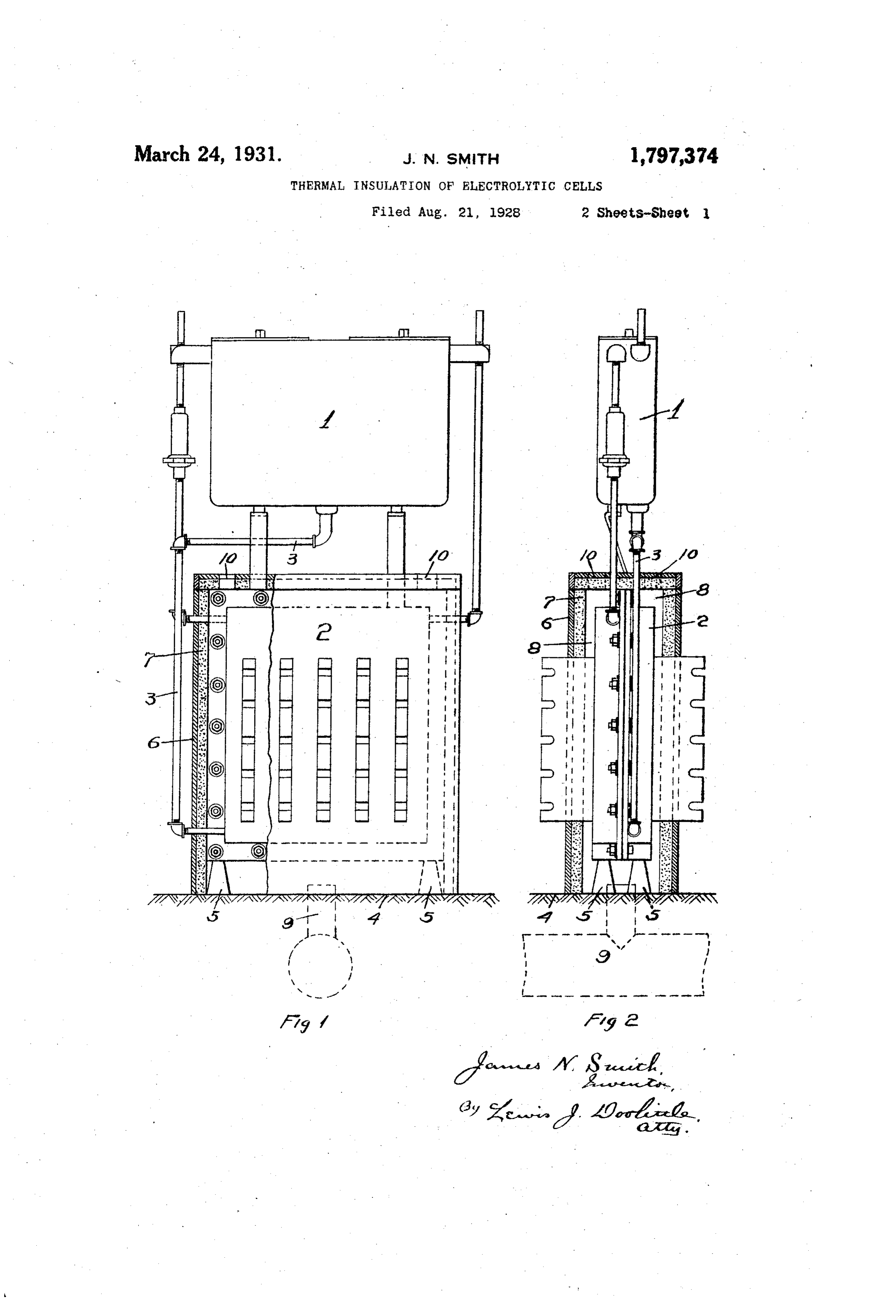
This invention relates to means for and said hood being spaced from the cell so as to method of increasing and conserving or regu aprovide passages 8, 8, for the circulation of lating the temperature of electrolytic appa heat conducting fluid, such as air, nitrogen or hydrogen gas, etc., which may be injected ratus, particularly of the type employed in into the electrolysis of water. or- removed from the hood through The invention, as applied to electrolytic ducts 9, 9. i .. . .. cells, comprises, generally, the thermal in In some cases the circulating fluid is in sulation of the cell by enclosing the electro troduced from duct 9, leaving at openings 10 in sufficient amount to cool or heat the lyzer cells of the apparatus in a heat insulat cell as the case may be, and, if required, but 60 ing hood, causing a heat conductive fluid the supplying of heat conductive fluid will which is electrically non-conductive, to flow not always be required, since, to some extent, in said hood and through passages about said the heat, insulating hood cells so as to effect an exchange of heat, and closed, the openings beingwith all openings closed by insert 65 also permitting an exchange of heat to take 5 place, if desired, through vents between the ing Suitable plugs therein, may be relied upon to conserve the heat fluid and the tanks associated therewith, the prevent of the cells, and object of this invention being primarily to Whereitsandissipation into the atmosphere. - additional heating of the tanks thermally insulate the cells from the atmos 1 is desired the heated air within the hood 6 phere, and, at the same time, to conserve and 20 regulate the temperature of the cells and, Will be vented and pass through the openings. 70 when desired, their associated 10, 10, the plugs being removed therefron, tanks. hood in the top thereof and heat the tank 1 and
Another function of the insulating as applied to the electrolyzer or to the sepa the electrolyte therein, so that, as nearly as rating tank, or to both, is to prevent heat loss possible, the temperature of the electrolyte
from the cell to the surrounding atmopshere in the tank shall approach that of the cell.i. so that the heat caused by the electrical re beIn many cases the fluid supply ducts 9 may sistance of the cell may thereby produce a an exchangeand omitted the openings iO closed, where of heat between the.cell. hood. and greater increase of temperature than could the tank is not required. .. .
be otherwise obtained by said resistance heat. The hood and its lining are preferablyi80 An embodiment of my invention as ap made in sections so that it may be readily plied to an electrolytic cell, is illustrated in positioned around or removed from the cell. the accompanying drawings, wherein:- Having described my invention, what I Fig.1 is an elevation, partly in section, of claim is: : electrolytic apparatus showing the 35 ing hood enclosing a single cell unit;
insulat 1. An insulating hood for apparatus of 85 - the character described provided with a heat
Fig. 2 is a side view of Fig. 1, partly in insulating lining enclosing and spaced from
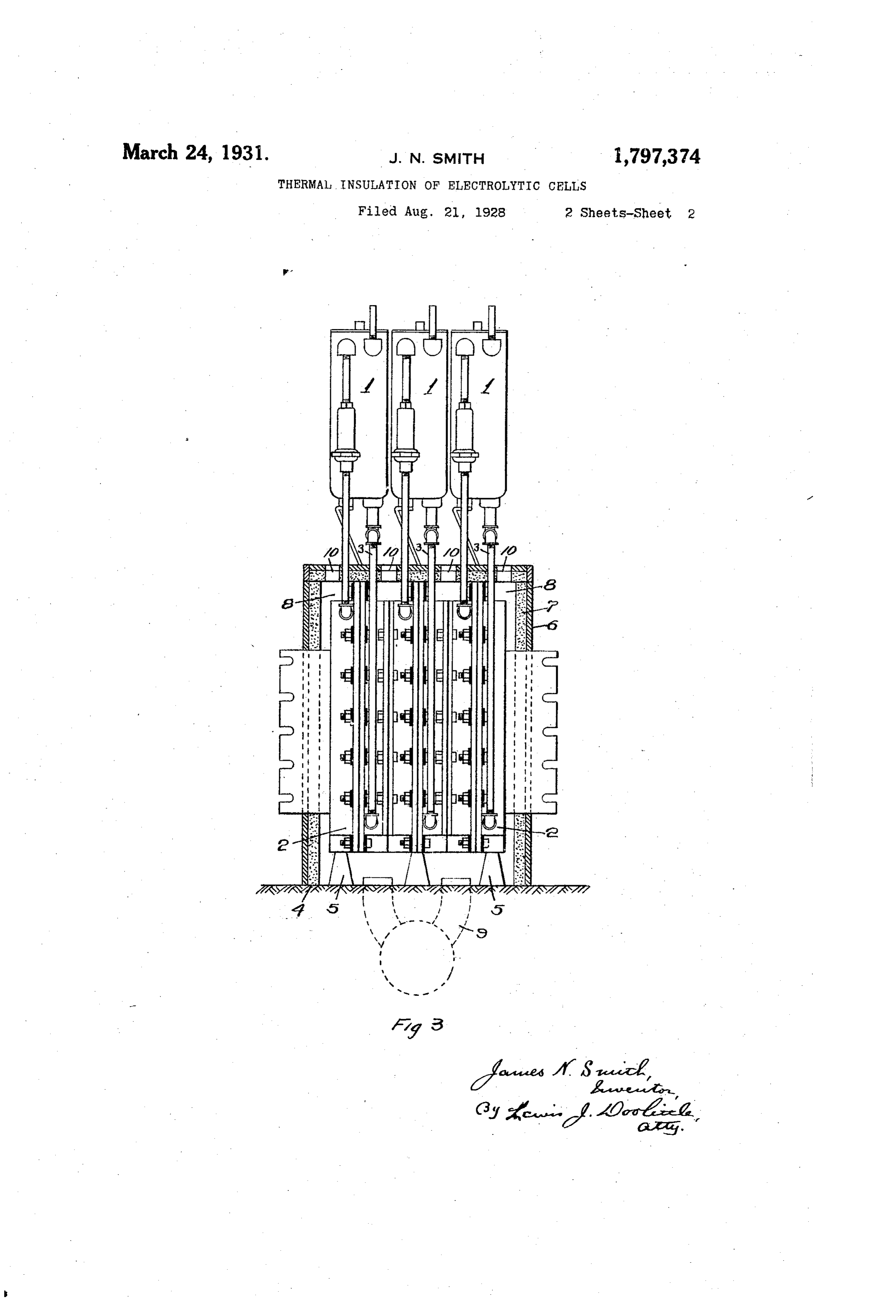
Fig. 3 is a view similar to Fig. 2 of electro the apparatus to provide passages for a heat conducting and electrically non-conducting
lytic apparatus made up of a plurality of fluid to circulate and having closable inlets 90 interconnected cells and tanks. and outlets to permit said fluid to pass The electrolytic apparatus to which my through said hood.
invention is applied, for the purposes of ill lustration in the present application, com lytic 2. Athermal insulation cells comprising a heatdevice for electro insulating hood prises one or more tanks 1 supplying electro
lyte to the electrolyzer cells 2 through the aadapted heat to enclose conducting the and cells and provide electrically for 9.
pipe or pipes 8. The cells are shown as ducting fluid to circulate therein between said raised above the floor level 4 and supported cells and hood to cause a heat exchange be by insulators 5.
Placed around and enclosing the cell is a tween the cells and prevent heat radiation "...loo
hood 6 lined with heat insulating material 7, the exterior of said hood,
Page 4
3. A thermal insulation device for electro lytic cells comprising a heat insulating hood adapted to enclose the cells and provided with means for introducing a heat conducting and electrically non-conducting fluid into said hood and causing said fluid to flow through . said hood about the cells, said hood being also provided with means for regulating the flow of said fluid therethrough.
4. The combination with electrolytic ap paratus comprising electrolyzer cells and sep arating tanks associated there with, of a heat insulating hood enclosing said cells and pro vided with means for introducing a heat con ducting and electrically non-conducting fluid into said hood and causing said fluid to flow through said hood about the cells, and means for causing said fluid to flow from said hood - about said tanks to maintain the temperature 20 the tanks at approximately that of said
Signed at Toronto, Province of Ontario, in the county of York, and Dominion of Canada, this 16th day of Aug., A. D. 1928.
Provenance
- Collection
- Cited prior art
- Original PDF
- patentimages.storage.googleapis.com →
- Filed
- 1928-08-21
- Pages
- 4
- Method
- pdftotext (the PDF's own text layer) + pdftoppm 300dpi page scans
- Source
- Google Patents bibliographic record
- Granted
- 1931-03-24
- Inventors
- Smith James Norman; Westinghouse Electric Corp
- Transcribed from
- patentimages.storage.googleapis.com →