Skip to content
Stan’s Legacy

Radiant_Science

11 posts · 1 thread started · 7 more in threads this archive does not carry · writing between May 2009 and Dec 2009

An identity on Energetic Forum as it was harvested, not an account on this site. Nobody here has claimed it, and nothing connects it to a person by name.

Atomic Emission=Atomic Absorption

H2OPower is correct...you need to choose the wavelength based on what you are trying to ionize.

If you wanna keep it cheap and stick with "Kiss"...that means visible light. (However, if you understand what you are doing...you will wanna move to UV/Far UV...and when you are no longer novice...Ultra Far UV/Soft X-rays)
*****This Stuff IS DANGEROUS*****************So I will show only visible frequencies...you must research the non-visible ones (and how to make em)

(Infrared also has some standing here...but, generally speaking you want the more energetic waves.)

All you need to do is research the elements "Emission Spectrum". Because the Emission Spectrum is equal to the Absorption Spectrum.

If you don't believe me...look here at Hydrogen (visible frequencies only)

Notice dark lines in the spectrum...this is what IS NOT being bounced back...aka absorbed. They directly mirror the emission spectrum below it.

Here is oxygen (sorry scales are different )


Now it would seem that both Hydrogen and Oxygen absorb red light...

(it should also be noted that all emission charts are pure "Atomic" elements (single atoms)...All elements (for the most part) ionize into single atoms...they only interact with other atoms as the energy levels "bump down". (the whole reason Meyer uses extra photon energy is to prevent this "bump down")

Extra Photon energy sustains otherwise short lived, unstable orbits.
I believe this Multipactor effect explains a mysterious glow observed by WFC replicator Ravi....he sent me an email describing a faint glow in between the tubes.
Imagine that the water is the neutral gas atoms in this example of CR (or Corona effect)

In MP, the discharge occurs at vacuum, and is caused by the collision of electrons with the walls. In CR, the discharge occurs
at low pressures, with the presence of a gas in the waveguide and is produced by ionization of the gas neutral atoms. For
certain pressure ranges, we may find both kind of processes (ionization and wall collisions) contributing to the discharge.
This region is known as Multipactor plasma

I believe he was witnessing Multipactor Plasma...this effect was also reportedly seen by another...
I believe Warp (hydrocars) also seen glows in his wfc replication.
I found this to help us calculate the proper frequency according to gap size
http://repositorio.bib.upct.es/dspac.../659/1/ame.pdf

But, i need to know how to (or if I need to) alter the equations to account for ions instead of electrons....I must have to due to the larger mass of ions.
If anyone has any ideas on how I come to that conclusion it would help immensely. Until then I will try and figure it out...keep u posted.
Very interesting thread...I will have to check into that for sure. However, I don't see how exactly it relates to this topic. Are you insinuating I shouldn't waste time on this complicated process or something?
You're welcome Armagdn03...I'm glad you enjoyed the post. Also, thank you, I try pretty hard to show people valid science that connects Stan's claims to reality...I'm usually met with strong opposition, or ignored completely (like my conclusion about the ultimate product used is "Atomic" or "Nascient" Hydrogen)...but, I keep on researching and testing though (so the few who look into it, and can understand...can know)
While studying possible "passive" oscillators, I stumbled upon the Multipactor effect...more precisely the "Farnsworth Multipactor".
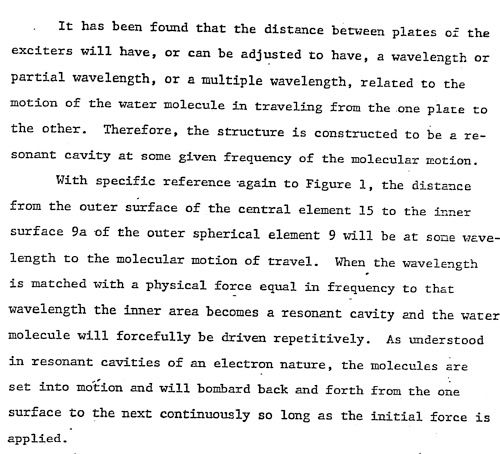
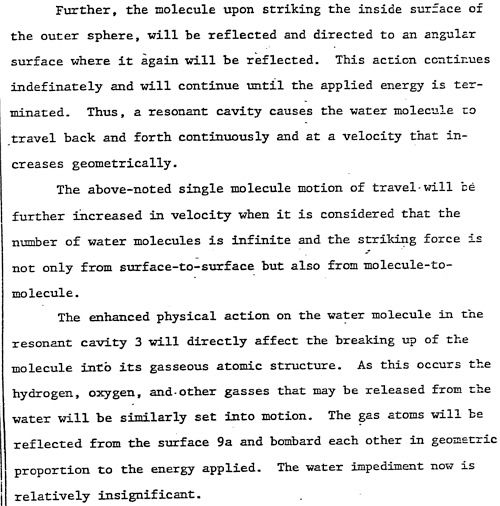
It then dawned on me the significance of "matching the electrode gap (in respect to the time it takes a water molecule to traverse it) to the frequency of the physical pulse applied to the electrodes" as stated by Stanley Meyer

Let me first describe the "Multipactor" effect...
It was noticed by the "Father of Television" P. Farnsworth, that at certain modes of operation there was a faint blueish glow in a region between the cathode filament and the anode plate of simple diode tube rectifiers . This observation led to the discovery of the "Multipactor" effect, which is very similar to the "Photoelectric effect" in nature. This being that high velocity electrons will slam back into the cathode under very controlled conditions, and release 2-8 more electrons per impact

Two-surface multipactor on metals
This is a multipactor that occurs in the gap between metallic electrodes. Often, an RF electric field is normal to the surface. A resonance between electron flight time and rf field cycle is a mechanism for multipactor development.

The existence of multipactor is dependent on the following three conditions being met: The average number of electrons released is greater than or equal to one per incident electron (this is dependent on the secondary electron yield of the surface) and the time taken by the electron to travel from the surface from which it was released to the surface it impacts with is an integer multiple of one half of the RF period and the average secondary electron yield is greater than or equal to one.

Single-surface multipactor on dielectrics

This is a multipactor that occurs on a dielectric surface. Often, an RF electric field is parallel to the surface. The positive charge accumulated on the dielectric surface returns electrons back to the surface. A single surface multipactor event is also possible on a metallic surface in the presence of a crossed static magnetic field.

With that being said let me show you now why I believe this effect is paralleled in Meyer's process


The statement "As understood in resonant cavities of an electron nature..." is a direct reference to "Multipactor" action...if that isn't enough this blatantly spells it out for us.


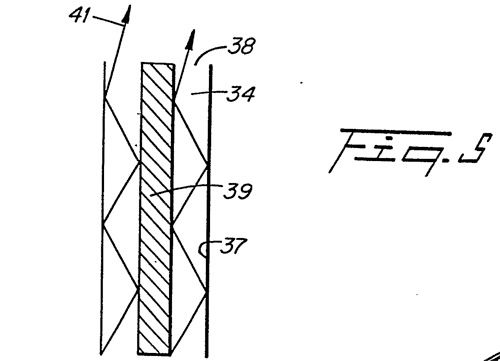
This explains the "Physical" aspect Meyer was talking about...it explains why he states the gap distance is critical...and it explains this image (and all waveguides shown by Meyer)


It is showing the back and fourth nature of electrons/ions in a precisely timed resonant pulse/cavity interaction

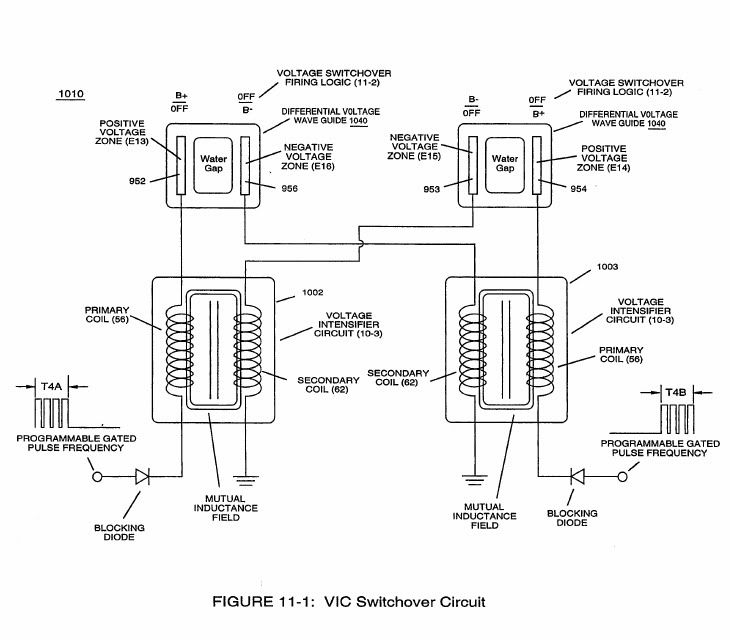
To figure this out we need to figure out how fast the water molecule/water ions (Hydrogen and Oxygen BEFORE neutralizing) move towards the electrodes (I suspect this variable depending on the electrode potential). Then we must figure out how to supliment extra energy into the system (as the atomic collisions lose some energy during their collisions). I suspect the VIC being wound around the cell and the extra photon energy does exactly this in the Meyer system (that's why the LED array is pulsed at the same resonant frequency).

Anyway, I strongly encourage all readers to research the Multipactor effect and the Farnsworth Multipactor called the "Fusor" to come to a conclusion of their own.