patent · GB2495787A
A gas generating cell that uses resonant frequency excitation to separate gases
24 April 2013
Page 1
« UK Patent Application «GB .,2495787
agAA
(30) Priority Data:
Andrew Gregory Foy 4 Acacia Walk, TRING, Hertfordshire, HP23 4DU, United Kingdom
Andrew Gregory Foy
(74) Agent and/or Address for Service:
Andrew Gregory Foy 4 Acacia Walk, TRING, Hertfordshire, HP23 4DU, United Kingdom
(56) Documents Cited:
(58) Field of Search:
INT CL C02F, C25B
Other: WPI, EPODOC, XPESP, XPESP2, XSPRNG
(54) Title of the Invention: Improved hydroxy generator
Abstract Title: A gas generating cell that uses resonant frequency excitation to separate gases
(57) A hydroxy generation cell that uses a tubular or
concentric electrode geometry and a wiring configuration
that, when combined, allow the cell to use resonant excitation techniques to enable gas generation by molecular separation without excessive heating. Potassium hydroxide (KOH) may be used as the electrolyte. The tubes may comprise 316 stainless steel.
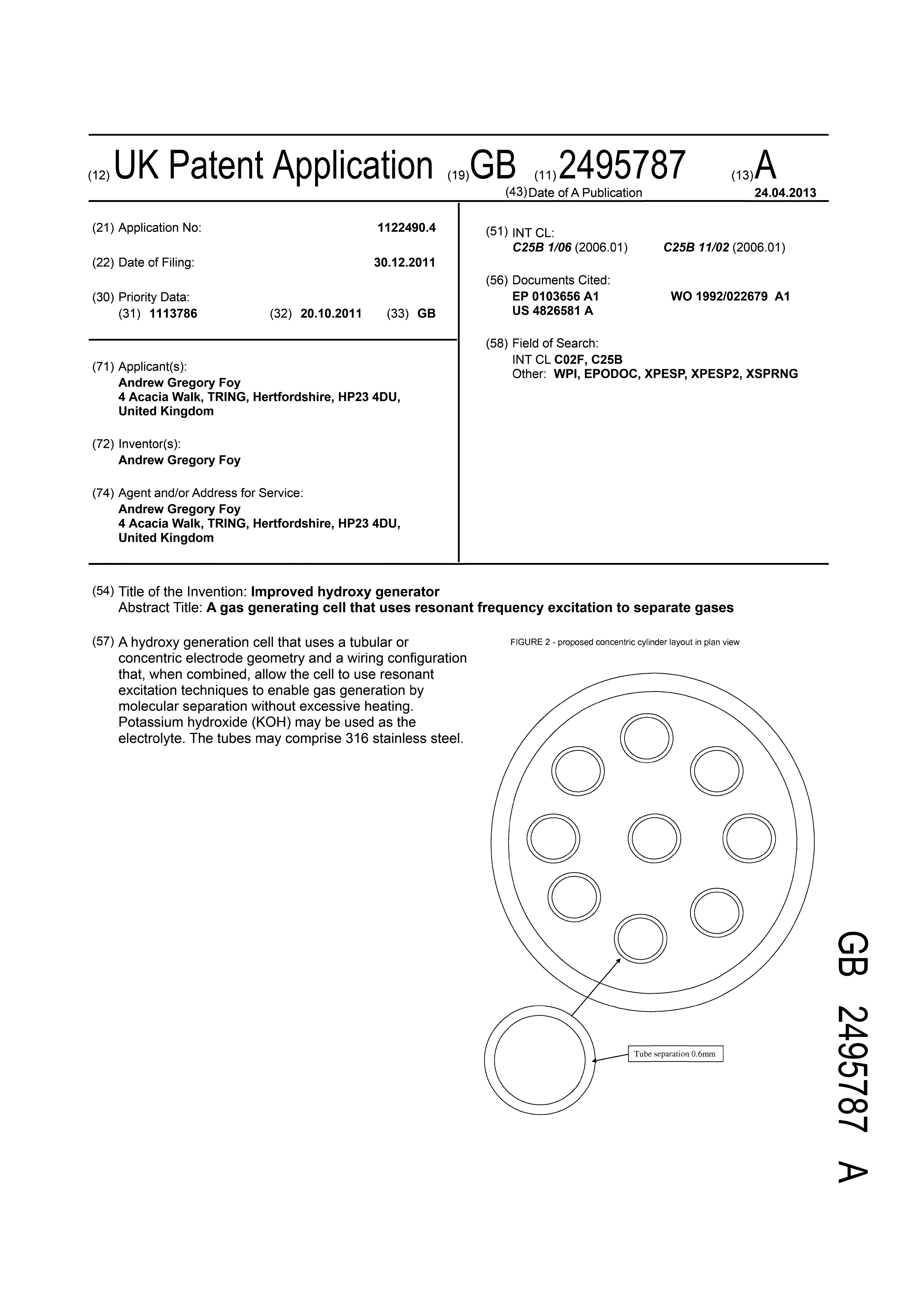
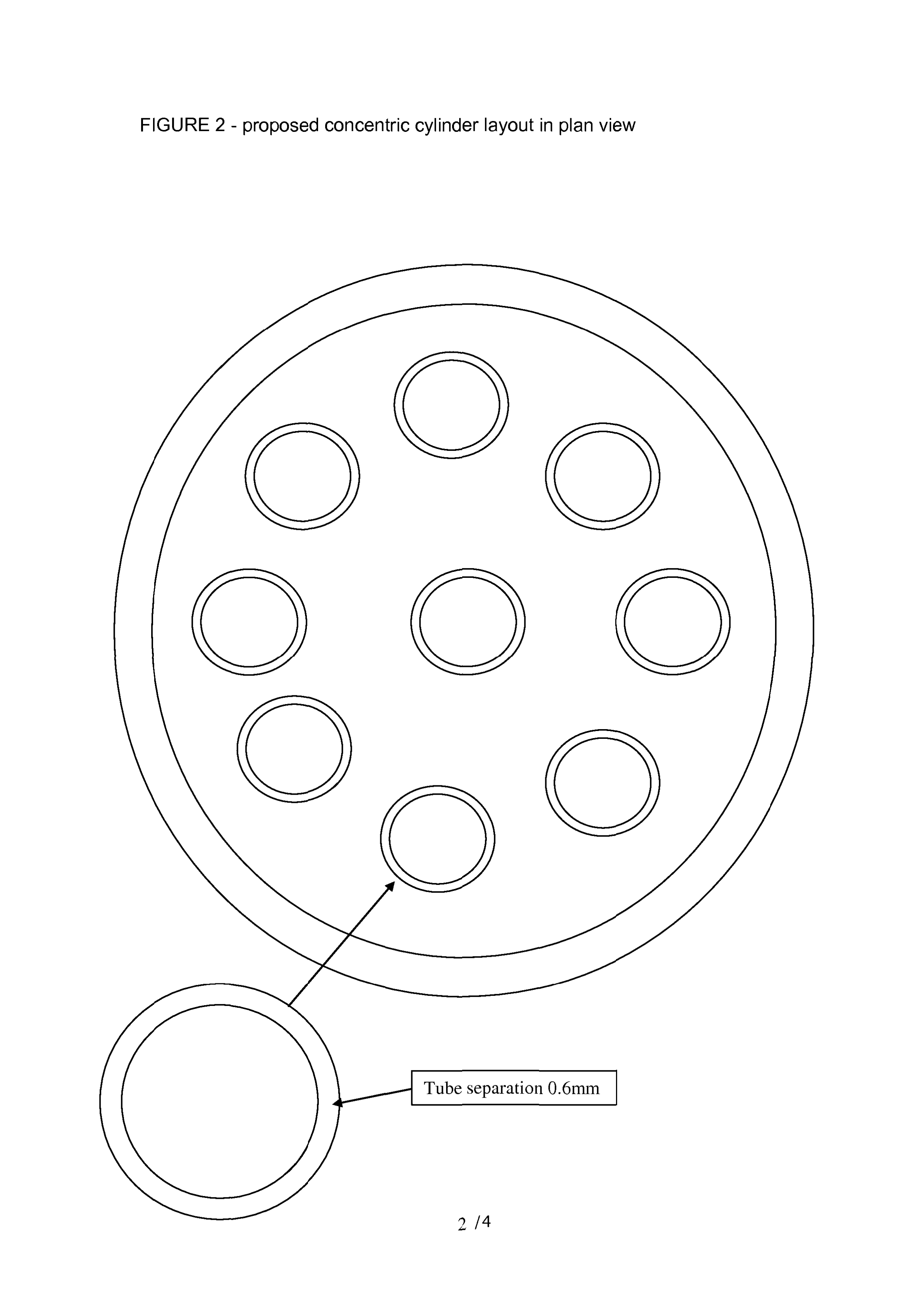
FIGURE 2 - proposed concentric cylinder layout in plan view
Tube separation 0.6mm
Page 2
Drawing sheet — no readable text.
Page 3
Drawing sheet — no readable text.
Page 4
Drawing sheet — no readable text.
Page 5
Drawing sheet — no readable text.
Page 6
Drawing sheet — no readable text.

Page 7
BACKGROUND:
This invention relates to a Hydroxy (HHO) gas generator
Hydroxy gas (HHO) burns with an intense flame and can be used either as a
supplement to, or a replacement for, traditional carbon fuels in internal combustion engines
Page 8
STATEMENT OF INVENTION
To assist this. The present invention proposes an internal structure and pattern of electrical connections that improve gas yields to commercially acceptable levels. This is achieved by building and connecting the generator in such a way that enables gas production by resonant frequency excitation rather than previously used high voltages.
Page 9
ADVANTAGES
The hydroxy generator will generate 40-50% by volume greater levels of highly combustible gas than conventional hydroxy generators. .
Preferably, the generator has 9 tubes per cell
Preferably the generator has 3 parallel wired banks; each consisting of three series wired cells
Page 10
INTRODUCTION TO DRAWINGS
An example of the invention will now be described with reference to the accompanying drawings
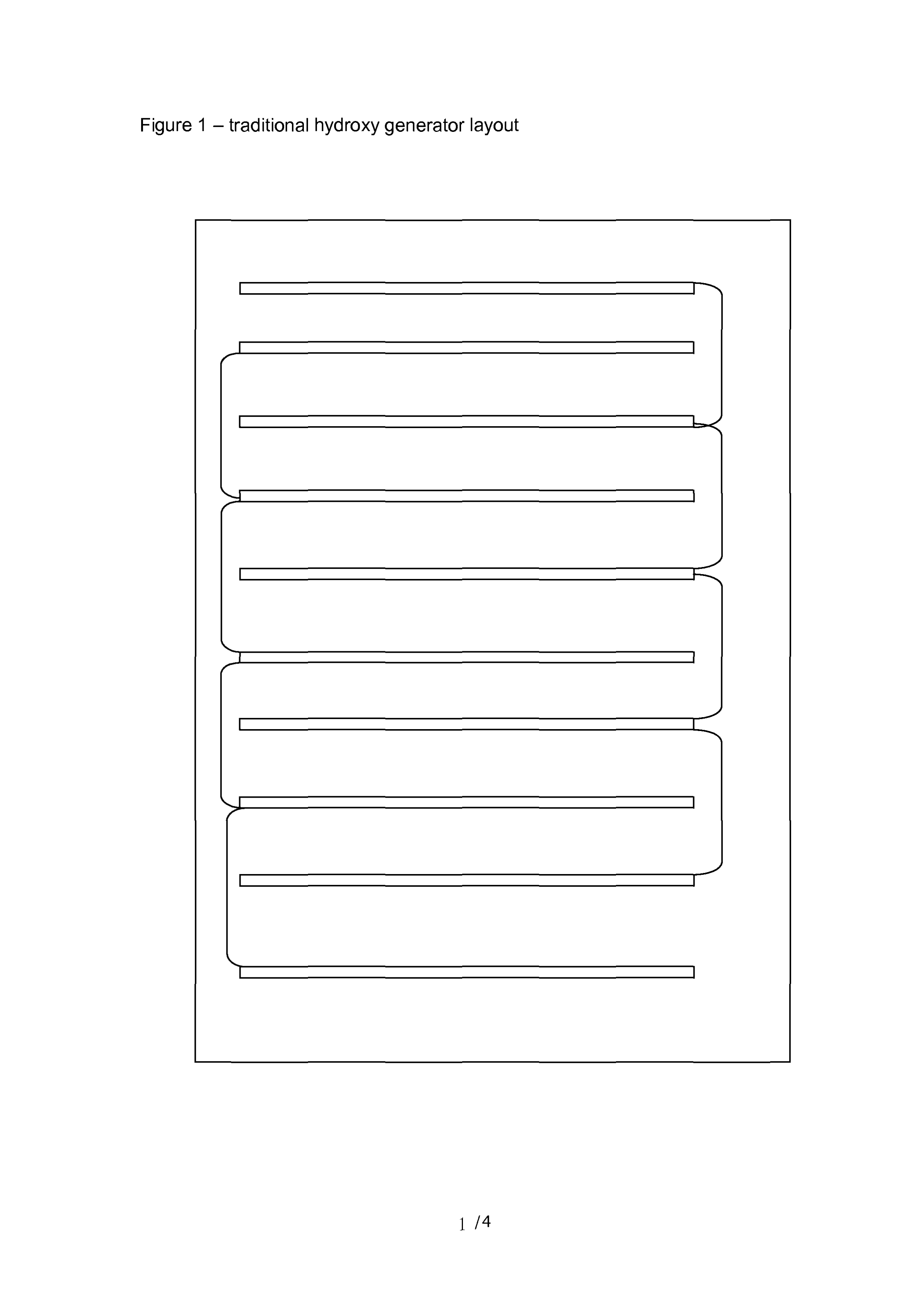
Figure 1 shows an example of the traditional layout hitherto used in hydroxy generation devices
Figure 2 shows the proposed concentric cylinder layout in plan view
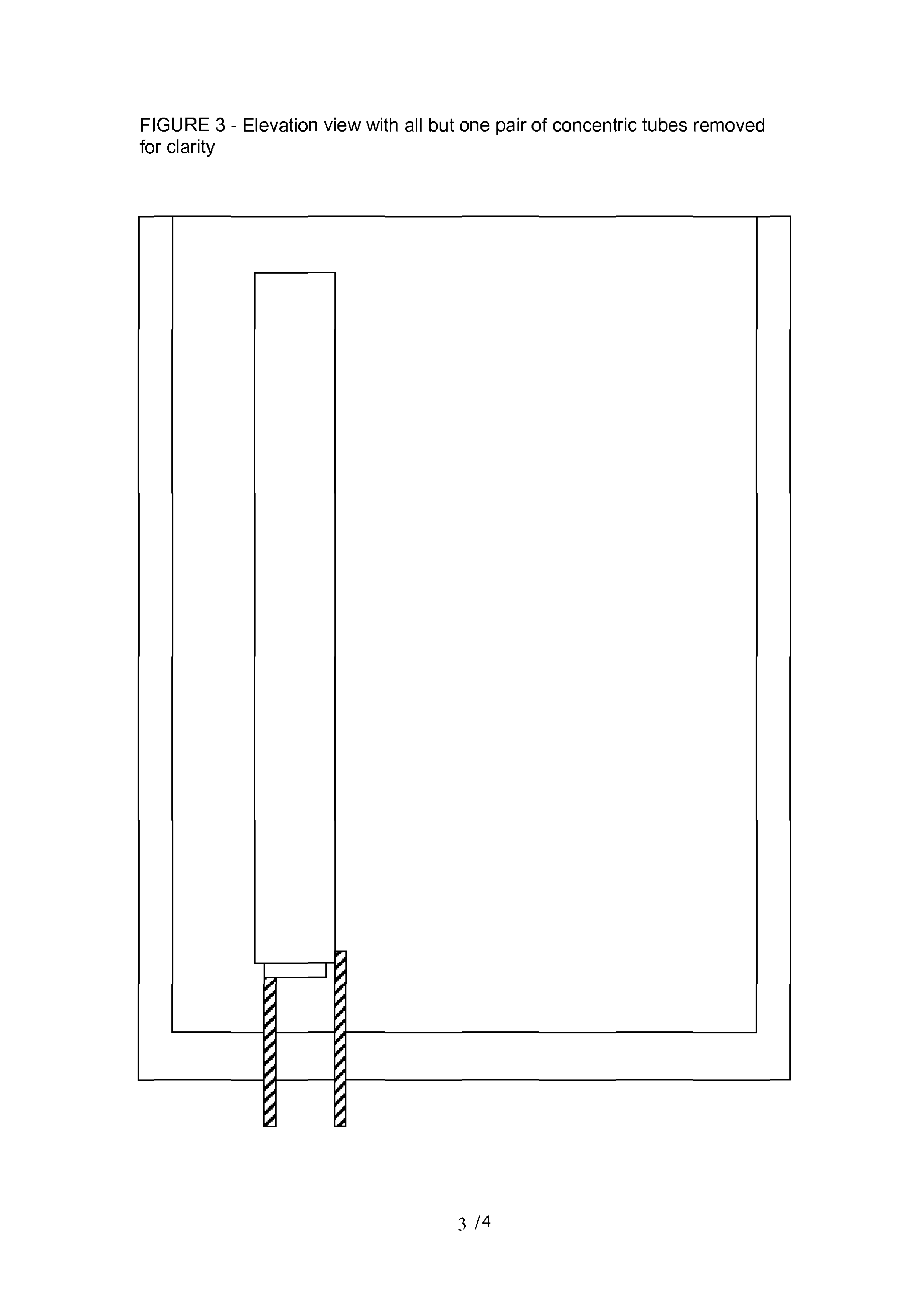
Figure 3 shows the proposed generator in plan view with all but one pair of concentric tubes removed for clarity
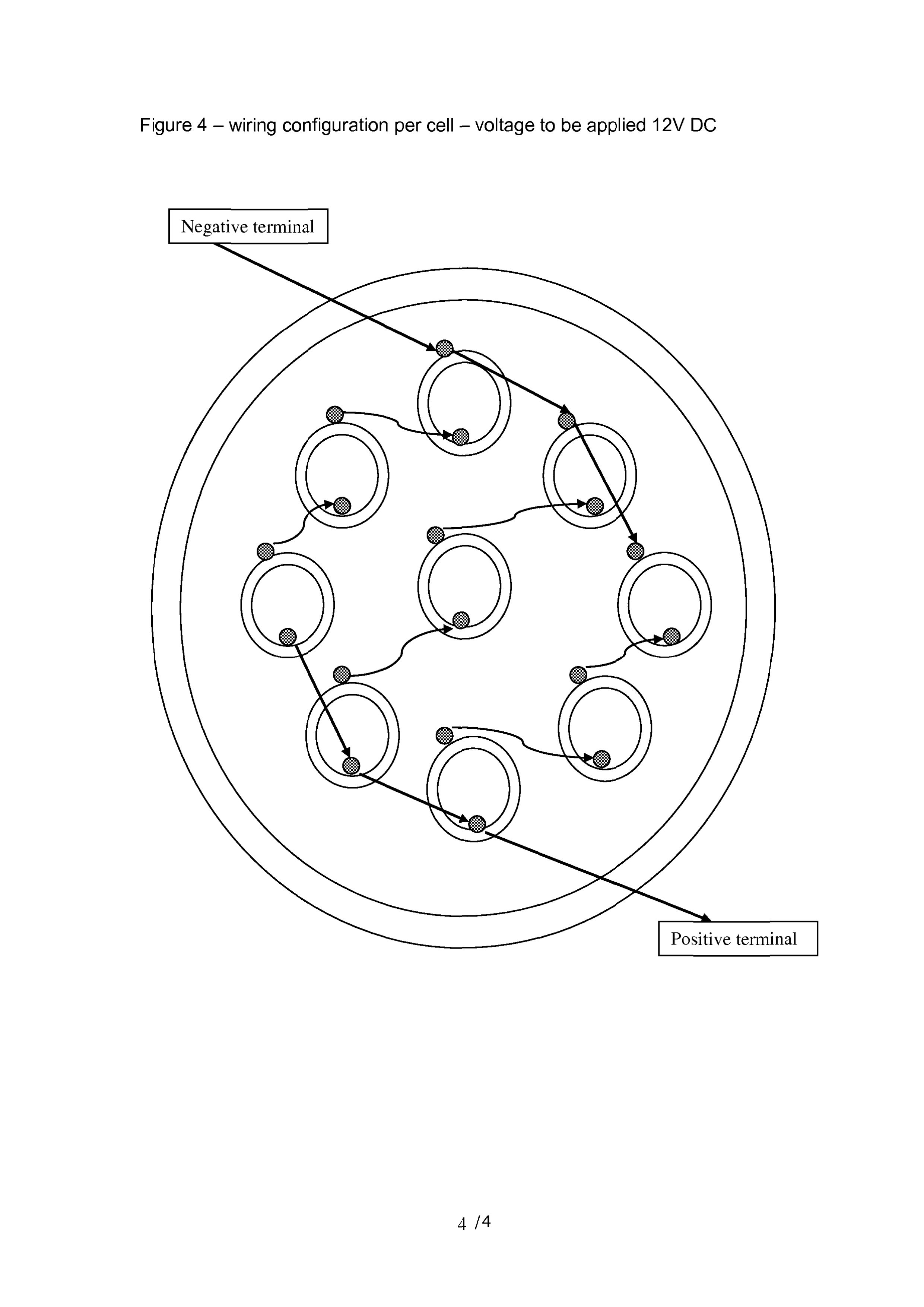
Figure 4 shows the proposed electrical connection arrangements required to generate sufficient product without excessive heating of the circuitry
Page 11
DETAILED DESCRIPTION
The Hydroxy Generator uses a unique geometry and electrical connection layout to achieve gas generation by means of resonant vibration rather than conventional electrolysis.
The Hydroxy Generator consists of a variable number of cells (depending on required capacity) each of which is a cylindrical, non-conductive container (length 28 cm, diameter 13.5 cm, with a minimum wall thickness of 1.0 cm) being capable of withstanding a pressure of 7 bars.
The Hydroxy Generator cells contain an electrolytic solution of water and Potassium Hydroxide (KOH) — (10 grammes of KOH per litre of water)
The Hydroxy Generator cell plates are tubular in form and paired in concentric circles to form an anode/cathode combination(figure 3) in each of nine pairs. In each cell, eight tubes form the outer ring around a single central pair (figure 2). The tubes are seamless and fashioned from 316 stainless steel.
Tube dimensions and separations are critical to the success of the process. Each outer tube is 180mm in length, 25 mm in diameter with a 2mm wall thickness. Each inner tube is 210mm in length, 19.8 mm in diameter and wall thickness is 1.25 mm. As a result the separation between inner and outer tube is 0.6 mm at all points. The overall effect of this is to produce HHO gas largely by breaking down the electrolyte by resonance rather than traditional electrolysis.
Tube separation is maintained by a minimum of three and preferably four equally spaced lengths of nylon wire 0.6mm in diameter. Each tube pairing has 3mm stainless steel studding attached at the lower end to both inner and outer tubes.
Each stud length is sufficient length to pass through the base of the cell and allow for low resistance electrical connectors to be attached.
Also critical is the wiring connection configuration (Figure 4) which utilises a combination of series and parallel connections to achieve maximum resonant excitation of the electrolyte while utilising lower voltages than traditional cells.
Page 12
CLAIMS
A hydroxy gas generating cell that utilises specific tubular configurations and separations to achieve gas generation by resonant frequency excitation of the fluid in the cell.
A hydroxy gas generating cell according to claim 1, which uses a specific wiring configuration to ensure sufficient excitation takes place
A hydroxy gas generation cell according to claim 2, which uses a specific wiring configuration to ensure that excessive wiring heating does not take place
Page 13
Stete'? INTELLECTUAL
688.2) = PROPERTY OFFICE
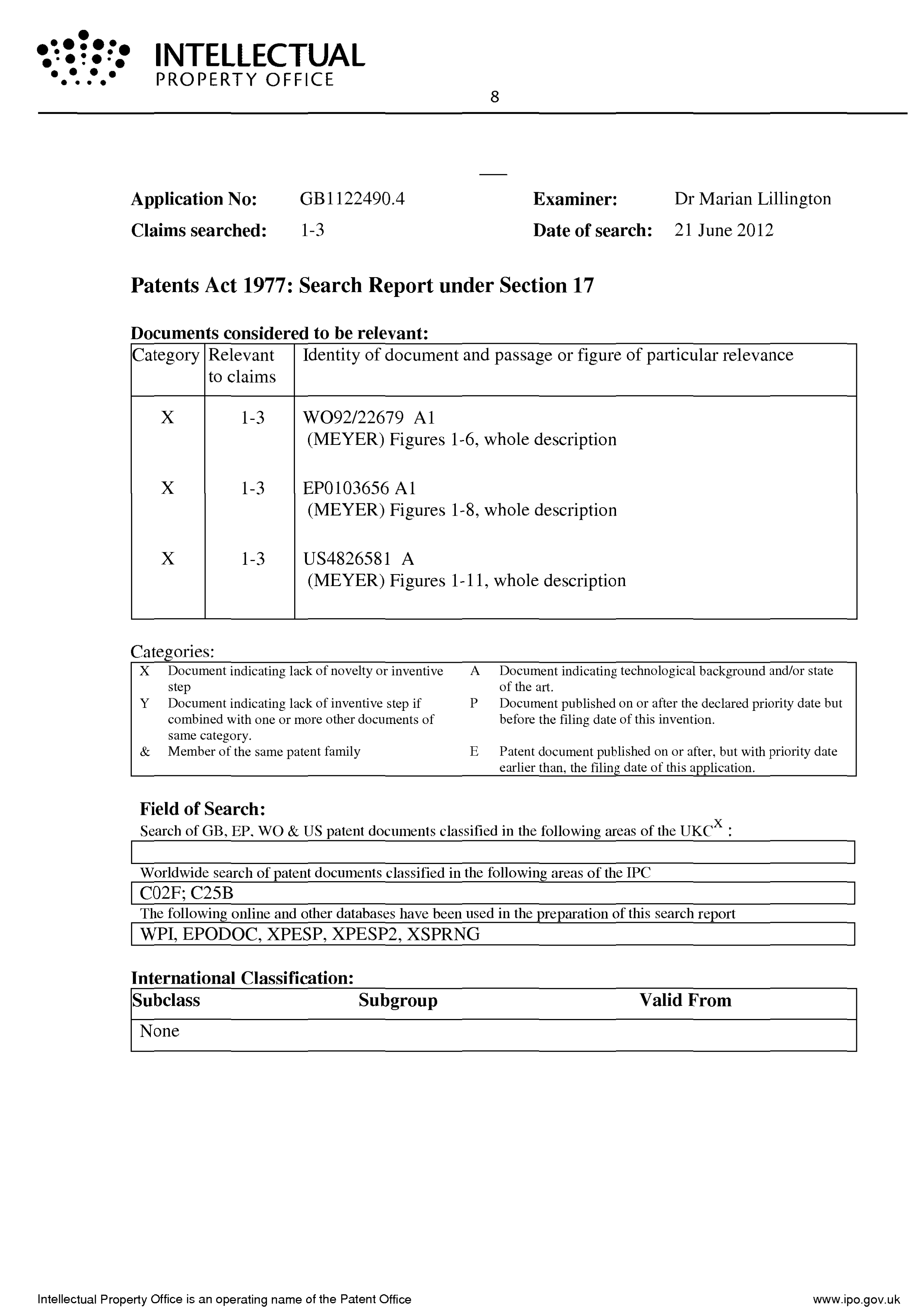
Application No: GB1122490.4 Examiner: Dr Marian Lillington
Claims searched: 1-3 Date of search: 21 June 2012
Patents Act 1977: Search Report under Section 17
Documents considered to be relevant:
Category |Relevant | Identity of document and passage or figure of particular relevance to claims
(MEYER) Figures 1-6, whole description
(MEYER) Figures 1-8, whole description
(MEYER) Figures 1-11, whole description
Categories:
X Document indicating lack of novelty or inventive A Document indicating technological background and/or state step of the art.
Y Document indicating lack of inventive step if P Document published on or after the declared priority date but combined with one or more other documents of before the filing date of this invention. same category.
& Member of the same patent family E Patent document published on or after, but with priority date earlier than, the filing date ot this application.
Field of Search:
Search of GB, EP, WO & US patent documents classified in the following areas of the UKC™ :
Worldwide search of patent documents classified in the following areas of the IPC
The following online and other databases have been used in the preparation of this search report
| WPI, EPODOC, XPESP, XPESP2, XSPRNG |
International Classification:
Subclass Subgroup Valid From
None
Intellectual Property Office is an operating name of the Patent Office www.ipo.gov.uk
Provenance
- Collection
- Patents citing this work
- Pages
- 13
- Method
- pdftoppm 300dpi + tesseract 5 (eng)
- Patent office record
- patents.google.com →
- Source
- Google Patents citing-documents table
- Assignee
- Andrew Gregory Foy
- Inventors
- Andrew Gregory Foy
- Published
- 2013-04-24
- Transcribed from
- patentimages.storage.googleapis.com →